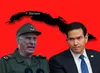

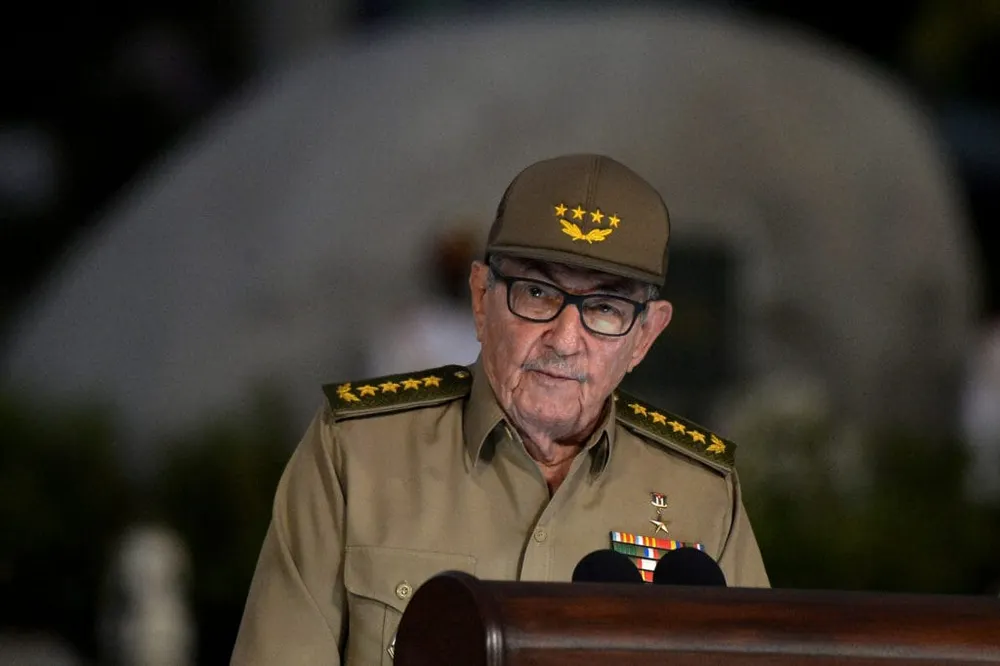
HAVANA — Diario Las Américas is reporting that Raúl Castro, the 95-year-old former Cuban president and first secretary of the Communist Party, is gravely ill, citing confidential sources who say the general may have suffered a stroke and remains in critical condition.
The report has intensified a wave of rumors on the island, circulating alongside separate, unconfirmed claims that Castro has already died.
According to the outlet, Castro’s condition follows what it describes as an urgent hospitalization, with confidential sources telling the paper the veteran Cuban leader suffered a cerebrovascular accident and remains in delicate condition, though alive.
Cuba’s government has issued no official statement confirming or denying Castro’s health status, consistent with the historical opacity surrounding the health of the island’s top leadership.
A document purporting to be a leaked draft funeral protocol from Cuba’s Council of State, dated August 26 and supposedly prepared at the Palacio de la Revolución, has also circulated online, though its authenticity has not been independently verified.
A Familiar Pattern of Unconfirmed Reports
This is not the first time rumors of Castro’s death or grave illness have circulated. Similar reports have surfaced repeatedly since at least 2020, including a wave of speculation in September 2024 and again in September 2025, when reports suggested Castro had been urgently admitted to Havana’s Centro de Investigaciones Médico Quirúrgicas (Cimeq). None of those earlier rumors were ever officially confirmed by Cuban authorities, and several were later characterized by fact-checkers as originating from unverified social media accounts.
Paused Negotiations With Washington
The renewed health rumors arrive during an active, if currently stalled, negotiation between Havana and Washington. Cuban officials confirmed in March that they had been holding talks with the United States, with President Miguel Díaz-Canel describing the discussions as aimed at finding solutions “through dialogue” to bilateral differences, grounded in “equality, respect for both nations’ political systems, sovereignty, and self-determination.”
President Trump had separately confirmed in comments at Mar-a-Lago that Washington was “talking to the people from Cuba, the highest people in Cuba,” days after threatening the island’s economy with what he described as a virtual oil blockade.
The talks proceeded unevenly over the following months.
Reporting based on leaked details of the closed-door discussions indicated U.S. diplomats had proposed allowing free Starlink internet access on the island, while pressing Cuba to pursue economic changes to attract foreign capital, grow its private sector, and transition toward a market economy, along with compensation for American citizens and companies whose property was confiscated in the 1960s.
By April, Díaz-Canel was warning that Cuba would break off negotiations entirely if the United States insisted on regime change as a condition, stating flatly, “The Cuban political system is non-negotiable. It is not part of the negotiating table.”
In May, Cuba’s ambassador to the United Nations, Ernesto Soberón Guzmán, told the New York Times that Havana was willing to negotiate “everything” with Washington without taboo subjects — a notably more open position than Díaz-Canel had struck a month earlier, though Soberón Guzmán still excluded Cuba’s internal political system from any potential agreement.
Confirmation the Talks Have Paused
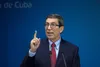
Cuba’s government confirmed more recently that the negotiations, ongoing since early 2026, are currently suspended. Carlos Luis Jorge Méndez, Cuba’s first deputy minister of foreign trade and foreign investment, told USA Today that both governments agreed to pause the dialogue until they can identify sufficient common ground to continue. “We maintain our position and are willing to continue the dialogue,” Jorge Méndez said, marking a shift from Cuba’s earlier posture, which for several weeks had denied any contact with Washington was taking place at all.
As of this article, neither Castro’s specific medical condition nor any claim of his death has been officially confirmed by Cuban authorities or by any independently verified source.
Similarly, no official statement has directly linked the pause in U.S.-Cuba talks to Castro’s reported health situation; the two developments are, at this point, concurrent rather than confirmed as causally connected.
Given the island’s long history of official silence on the health of its senior leadership and the repeated pattern of unconfirmed death rumors involving Castro specifically, both the extent of his illness and any link to the broader diplomatic pause remain unverified.
Sociedad Media will continue to monitor developing events in Cuba.
🚨🇨🇺 | AHORA/MEGA/CUBA: Diario Las Américas informa que Raúl Castro se encuentra gravemente enfermo.
— Sociedad Media (@sociedadmedia) September 1, 2026
Fuentes confidenciales le indican al medio que el general, de 95 años, podría haber sufrido un derrame cerebral y permanece en estado crítico.
Informes independientes también… pic.twitter.com/MdUqhaVD39