

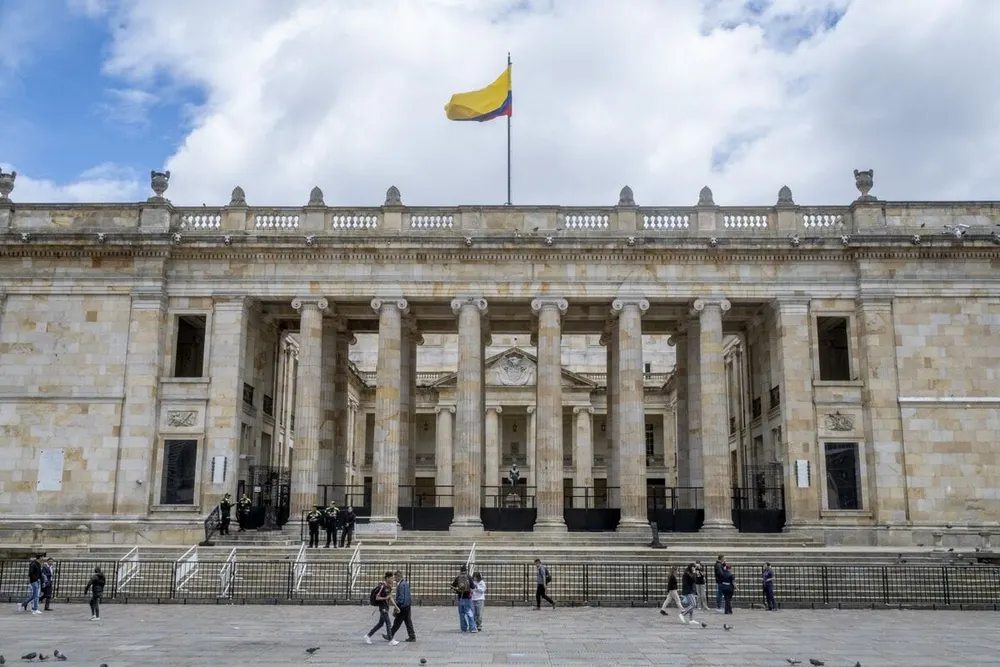
BOGOTÁ – Colombia’s fiscal trouble did not appear overnight. President Abelardo de la Espriella inherited a state whose spending commitments had outrun its revenue. Within weeks of taking office, he made that gap the central argument of his economic agenda.
The core problem was structural. Finance Minister Germán Ávila Plazas warned in the last months of Gustavo Petro’s government that state spending had become increasingly rigid. Pensions, public payroll, debt payments and transfers to health and education claimed most of the budget, leaving little room to adjust.
Business groups described the problem the same way. Amcham Colombia called it serious but foreseeable, and said it was a structural problem rather than a sudden shock, according to Bloomberg Línea.
Budgets, meanwhile, were built on revenue that never arrived. In mid-2025, the government activated the fiscal rule’s escape clause. That suspended the automatic corrections designed to keep deficits and debt in check, and it remains in force through 2027.
Colombia also gave up its precautionary credit line with the International Monetary Fund that autumn, and two of the three major rating agencies now rate its debt below investment grade.
Tax Reform Failure
The turning point came in December 2025 when the Petro government had counted on a financing law to raise about 16 trillion pesos for the 2026 budget. On December 9, a Senate committee rejected it by 9 votes to 4. Petro responded with an economic emergency decree, citing a “grave and imminent” fiscal crisis, but the Constitutional Court provisionally suspended it on January 29 by a 6–2 vote.
The country subsequently entered 2026 without the revenue its budget assumed and without the emergency powers meant to replace it.
The explanations split along political lines. Petro has argued that Congress starved the state of funds and that high interest rates inflated the debt, calling for higher taxes on wealthier Colombians.
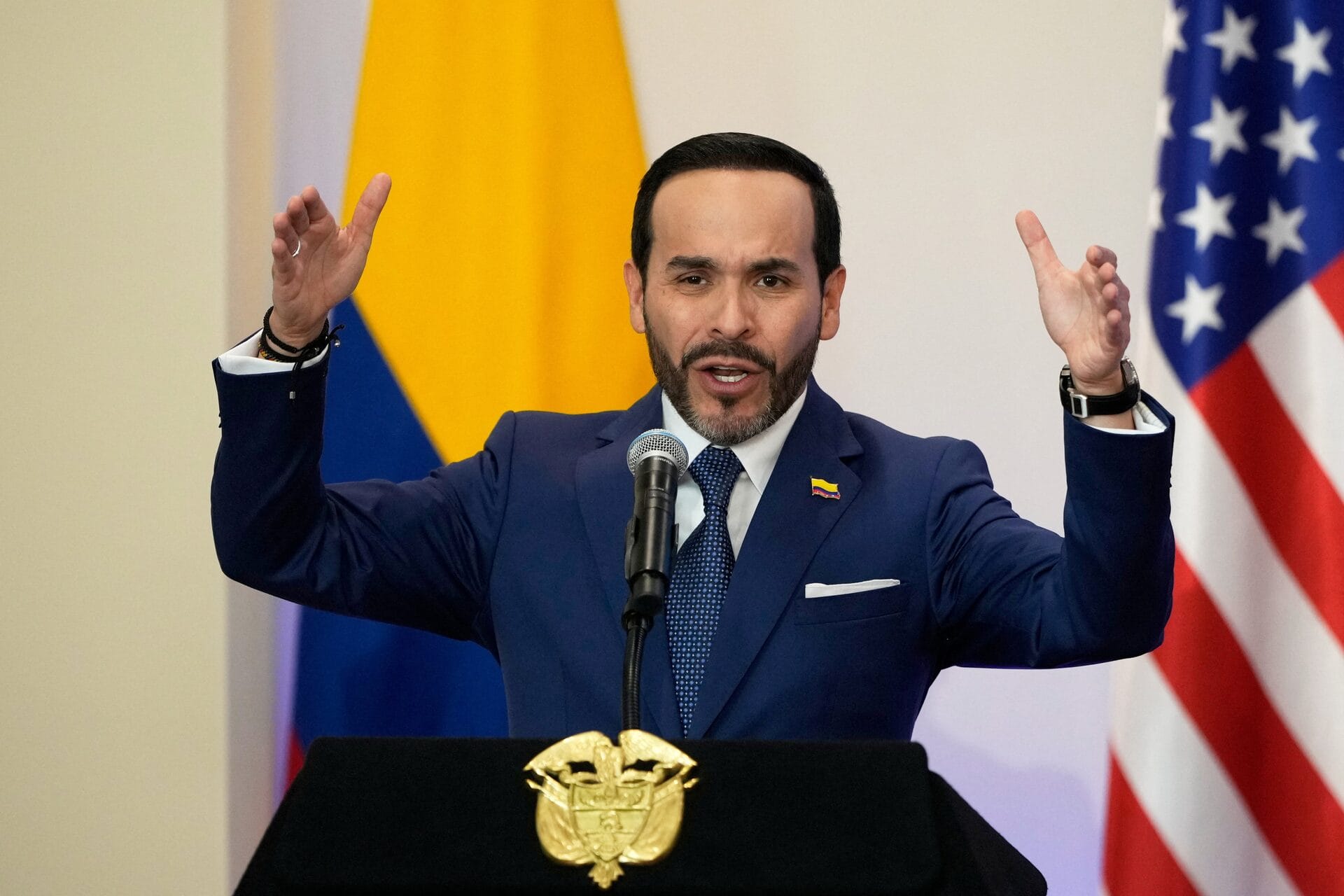
De la Espriella’s team on the other hand, points instead to years of waste, and Deputy Finance Minister Juan Sebastián Betancur has said the goal is to “close the tap” on it.
Independent analysts tend to see elements of both, but most stress that spending grew faster under the Petro government than any realistic revenue plan could cover.
The consequence is easy to see in the budget. Interest payments now consume roughly one of every three pesos collected in taxes, and the independent fiscal rule committee, known as CARF, expects the deficit to reach close to 8% of GDP this year and approach 10% next year.
Government Plan
The administration has laid out a three-stage plan. The first stage is the 2027 budget. It cuts deeply, with the Equality Ministry set to be liquidated and the Presidency, the Mines and Energy Ministry, the Planning Department and the Agriculture Ministry all facing large reductions.
Roughly 60 special funds would be restructured. Social Inclusion, pensions and the security forces would receive more money. Even so, almost half the spending would be financed with new debt, and debt service is the fastest-growing line.
The second stage is a “Rescue Law,” a package meant to cut the primary deficit by about 42 trillion pesos in 2027. Officials describe it as the tool to make debt stop growing, but its contents have not been published, and it has not been sent to Congress. The government first promised it within two weeks, then said “days or weeks.”
Finally, the third stage is structural change through the next national development plan, which would address the rigid spending that created the problem.
The government has also said it will not apply the previous administration’s fiscal rule.
Alongside the domestic plan, the Finance Ministry asked the IMF to bring forward its regular annual review. That is not a loan request, though Reuters, citing unnamed sources, reported that financing was discussed. Officials may hope that an early review and a credible plan would reassure markets and rating agencies.
The plan faces two tests. The first is Congress, which twice rejected the tax measures that Petro’s government treated as essential. De la Espriella is relying on spending cuts instead of new taxes, but a rescue law still needs legislative support.
The second is arithmetic. CARF considers the government’s savings target for this year too optimistic, and it estimates that even if the plan succeeds, a further adjustment of about two points of GDP would be needed in 2028.
There are social risks as well. Public investment is at its lowest level in decades, and cuts to ministries and transfers will reach programs that many Colombians depend on. The government will have to show that it can steady the finances without deepening the slowdown.
CARF projects slow growth, and inflation remains above 6%.
For now, the diagnosis is broadly shared: Colombia spends more than it collects, and the cost of its debt is rising. What remains unsettled is whether the remedy will come from Congress, from the markets, or from the government’s own discipline.