


GUAYAQUIL — Ecuador says it dismantled a cocaine-trafficking network tied directly to Mexico’s Jalisco New Generation Cartel (CJNG) in pre-dawn raids on September 24.
U.S. troops took part in the operation, the first time soldiers from the U.S. Southern Command have joined raids in Ecuador. A judge later ordered 36 people held in pretrial detention.
The Raids
Ecuadorian forces hit properties across Guayas, Los Ríos and El Oro provinces. They included luxury homes in private developments on Isla Mocolí and in Samborondón, near Guayaquil, where authorities say the alleged leader and a financier were captured.
Interior Minister John Reimberg said more than 320 Ecuadorian police took part, along with about 50 U.S. Southern Command soldiers. DEA agents also joined, and a U.S. prosecutor was present.
Ecuador’s police led the operation, and Reimberg went into one of the homes to supervise. Early reports counted more than 30 detainees, and a preliminary count later rose to 39.
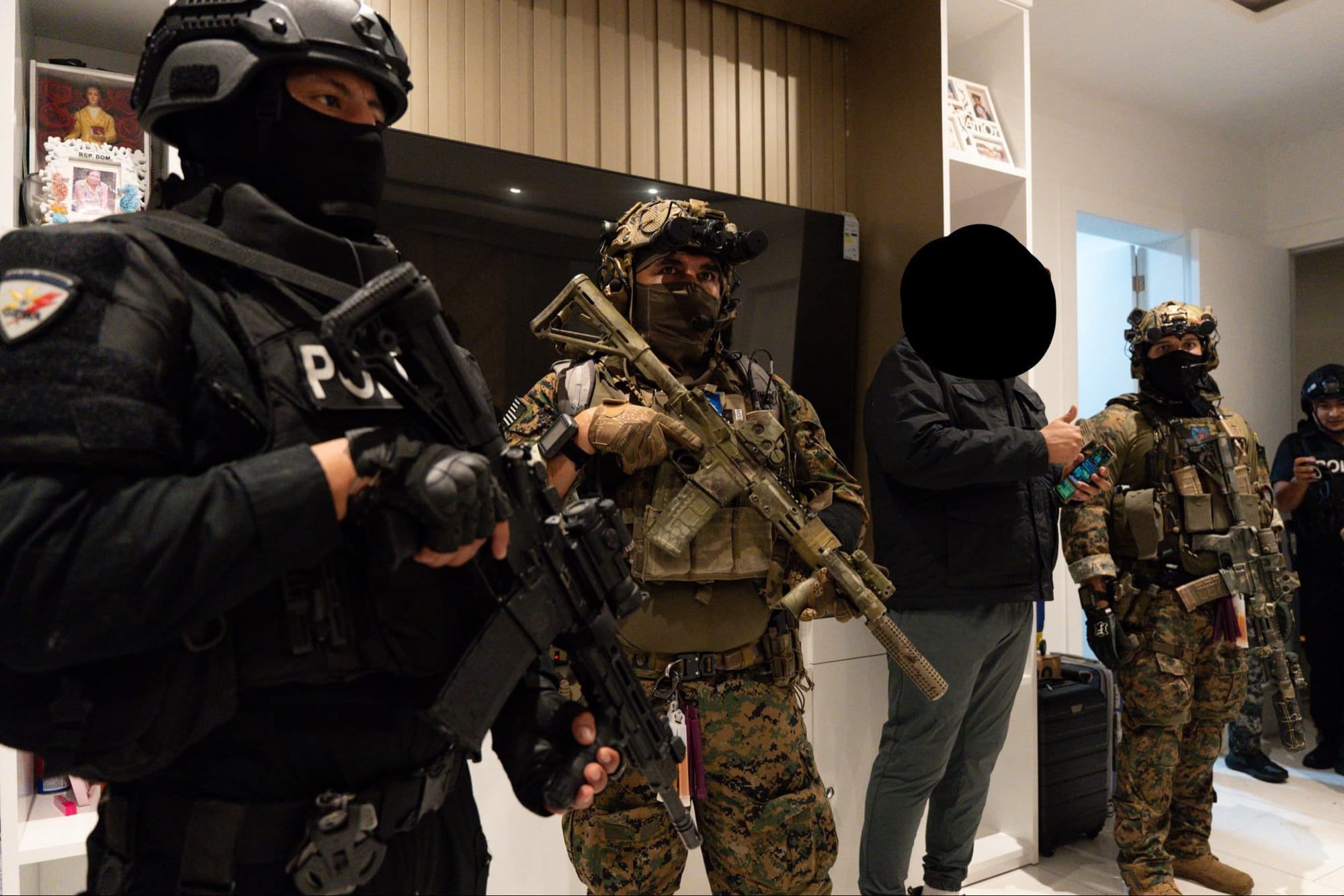
The U.S. role centered on technology and intelligence. U.S. military intelligence helped build the eight-month investigation, and U.S. equipment helped analyze seized phones and computers on site. Reimberg said that without that technology, the analysis could have taken a month or more. Before this operation, cooperation since March had been limited to training, simulations and intelligence-supported work.
Authorities say the group took in cocaine from Colombia, stored it in properties in Guayas and Los Ríos, and moved it by land into banana export containers leaving through Guayas and El Oro.
Vehicles were modified with hidden compartments, and the shipments were destined for Central America, the United States and Europe. Investigators tied the network to five cocaine seizures between February and July, which Ecuador’s government says cost the group about $320 million. Those seizures were not made during the raids.
Reimberg said the organization had no ties to local gangs and a “direct relationship” with the CJNG. Prosecutors described the leaders as linked to a CJNG faction.
The link is the government’s claim and is still under investigation.
Charges
At a hearing on September 25, a judge ordered preventive detention for 36 people on organized crime charges tied to drug trafficking. The offense carries up to 30 years in prison. The judge also barred the sale of assets, mainly seized vehicles, and froze the defendants’ accounts in Ecuador’s financial system.
Prosecutors have 90 days for their investigation. Reimberg said the United States may seek extradition of some of the accused, but no request has been reported.
The raid came a day after President Daniel Noboa told the U.N. General Assembly that “no state can confront alone an enemy that crosses borders,” and two days after a U.S.-backed regional coalition met on organized crime.
It also followed the September 23 killing of an alleged Los Choneros operator in an Ecuadorian military operation backed by the Southern Command, and large August raids against Los Choneros and Los Lobos.