

COLOMBIA — Colombia’s security landscape has shifted dramatically since Abelardo de la Espriella took office on August 7, 2026, becoming president after the narrowest election margin in the country’s history. Where his predecessor pursued negotiated “Total Peace” with armed groups, de la Espriella has taken the opposite path: military pressure, mass captures, and open coordination with Washington against what he calls Colombia’s “narcoterrorists.”
Here is what the public needs to know about the state of the fight on the ground.
On The War Path
Colombia’s pivot from negotiation to confrontation was the direct product of what voters said mattered most. Security ranked as the top concern for Colombian voters in the 2026 election, trailing only healthcare, according to pre-election polling. That anxiety was grounded in a visibly worsening reality: more than 50 massacres were documented across the country in the year before the vote, clashes between rival guerrilla factions killed roughly 50 people, and the campaign itself was marked by the assassination of a presidential candidate, bombings, and the killings of dozens of local political leaders.
Researchers studying the outgoing Petro government’s “Total Peace” negotiation strategy found it had coincided with an expansion, not a contraction, of armed groups’ territorial power and membership — a conclusion that shaped how voters weighed their options at the ballot box.
Each of the three leading candidates offered a fundamentally different answer to that anxiety, and the contrast was stark enough to function as the campaign’s central axis.
Iván Cepeda promised to continue negotiated settlements with armed groups. Paloma Valencia proposed a middle path combining ground troop deployments with coca fumigation. De la Espriella offered the most aggressive alternative: direct military strikes on trafficker camps, maximum-security prisons modeled on El Salvador’s system, and an explicit rejection of talks with groups he labeled narco-terrorists.
That platform carried him through a 13-candidate first round and into a runoff decided by less than one percentage point — a margin narrow enough to suggest the country remains genuinely divided on the question, even as the hardline approach won out.
The operational tempo now visible in weekly arrest and strike reports is, in that sense, less a change in strategy than a direct continuation of the promise de la Espriella was elected to keep.
Major Arrests
The scale of the current offensive is best captured by a single 24-hour period: On September 29 alone, Colombian security forces reported more than 30 captures across multiple simultaneous operations spanning at least six departments.
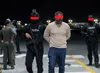
In La Montañita, Caquetá, seven members of the “Rodrigo Cadete” FARC dissident structure were captured. In Chita, Boyacá, two ELN members were arrested. In La Virginia, Risaralda, an operation targeting the “Los Fantasmas” and “La Cordillera” criminal networks resulted in 16 arrests, including two men known by the aliases “Manotas” and “Michael,” on narcotics trafficking and contract-killing charges.
In the Caldas region around Manizales and Neira, 16 more members of the group “Los Invasores” were detained, including a leader known as “Caqueteño,” on charges including aggravated criminal conspiracy and the “instrumentalization” of minors — a charge tied to the broader child-recruitment crisis Colombia and Ecuador are both confronting this year.
In Tibú, Norte de Santander, authorities captured a man known as “El Pollo,” “The Chicken,” identified as the alleged leader of FARC dissident Structure 33’s “Jorge Suárez Briceño” subunit.
Investigators are examining his structure’s suspected role in the forced recruitment of minors, including the death of a 14-year-old girl, Mónica Liseth Beltrán.
Military Operations & Killings
Beyond arrests, Colombian forces have carried out direct strikes against dissident command structures. In Buga, Valle del Cauca, on September 25, a coordinated offensive by the army, police, air force, and prosecutorial investigators targeted FARC dissident Structure 57, known as the “Jair Bermúdez” front. Three members of the group were killed, including a man known as “Norton,” identified as the structure’s third-ranking commander and the operative allegedly responsible for coordinating its financial networks, extortion rackets, and drug trafficking.
A fourth suspect was captured in the act and turned over to judicial authorities.
De la Espriella framed the operation in explicitly financial terms, stating that Colombian forces “struck the command and finances of the narcoterrorists of the FARC dissidents.” That emphasis on hitting armed groups’ revenue streams, not just their fighters, has become a defining feature of the government’s multi-front campaign.
The offensive has not been without cost. Colombian security forces reported two soldiers killed in separate combat incidents in Valle del Cauca and Cauca during the same operational window, a reminder that the government's harder line has not come without casualties of its own.
Takedowns of the Narco-Terrorist Economy
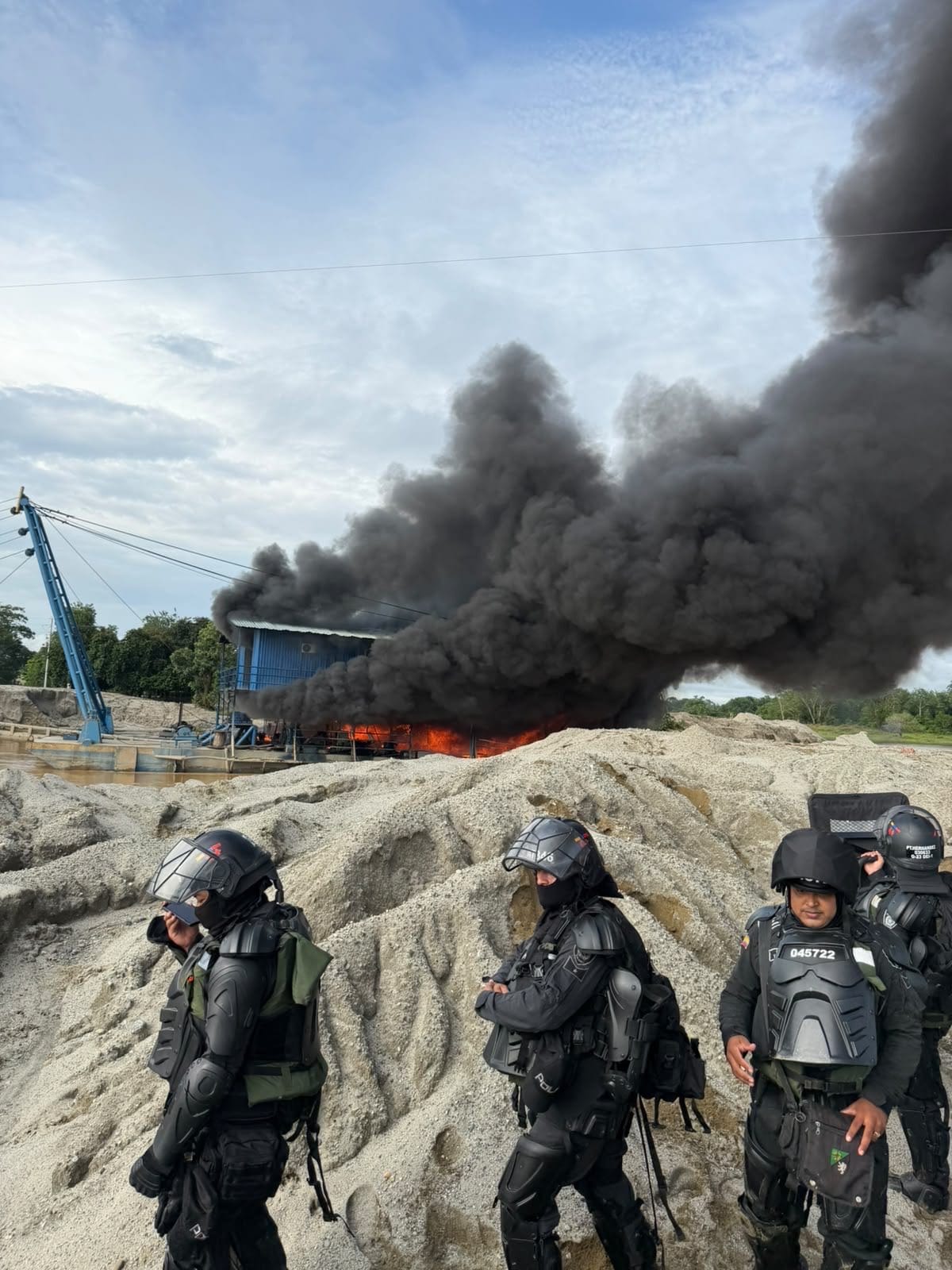
Alongside battlefield operations, the government has focused heavily on dismantling the financial infrastructure that sustains these groups. In Cúcuta, Norte de Santander, authorities seized more than one metric ton of cocaine hydrochloride and destroyed an illegal drug-production complex, along with 125 kilograms of coca paste and 80 gallons of cocaine suspension.
Officials estimated the strike cost the ELN roughly 5.3 billion pesos in monthly revenue.
Fuel theft — a major, often-overlooked revenue source for Colombia’s armed groups — was also targeted directly. In coordinated operations across Aguachica, Cesar, and Orito, Putumayo, authorities recovered 10,500 gallons of stolen fuel, disabled 820 illegal isotanks used to store it, and seized eight industrial motors used in the theft operation.
#ContundenciaOperacional | Así fue la operación militar en la que fue capturado alias «Ñato» o «Cachaco», señalado cabecilla narcotraficante del Clan del Golfo, quien era requerido en extradición por una corte federal de Massachusetts, EE. UU., por su presunta participación en el… pic.twitter.com/8pzNey1UY5
— Fuerzas Militares de Colombia (@FuerzasMilCol) September 29, 2026
Investigators separately discovered illegal valves installed directly on the San Miguel-Orito pipeline, evidence of an established fuel-siphoning network.
In Teruel, Huila, forces destroyed 36 homemade grenades and additional explosive materials, while in Campoalegre, 149 kilograms of marijuana were confiscated.
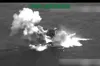
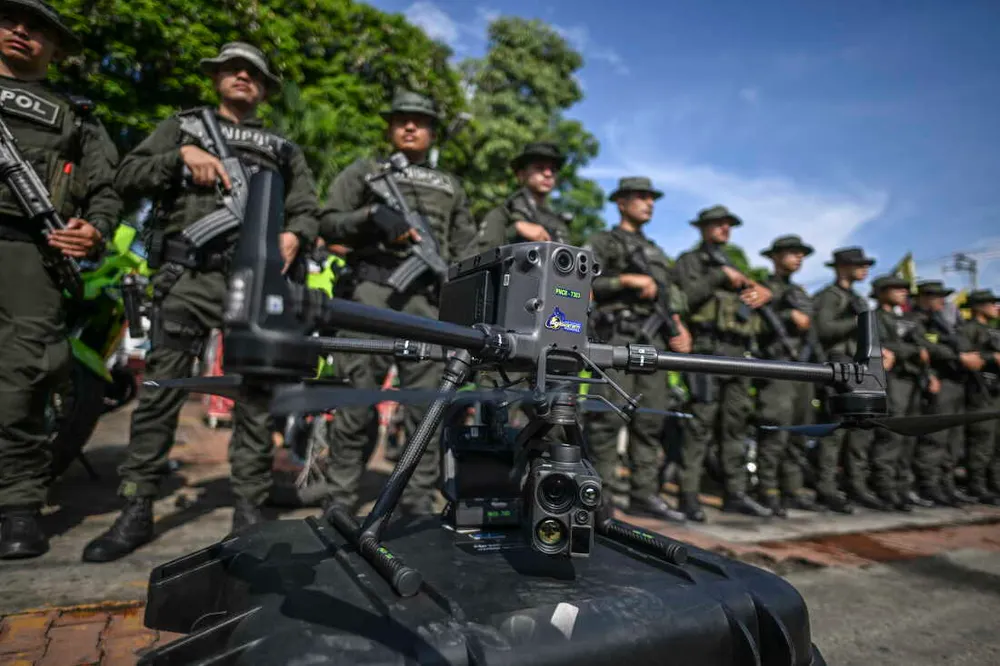
In Turbo, Antioquia, a Clan del Golfo member known by the aliases “Ñato” or “Cachaco” was captured with the assistance of U.S. drone support. Colombian officials describe him as a key figure in cocaine trafficking routes running to Central and North America — underscoring how deeply U.S. intelligence and surveillance assets are now embedded in Colombia’s domestic security operations.
Extradition of “Araña”: A Named Narco-Terrorist Leader Now in U.S. Custody
Colombia also extradited Geovany Andrés Rojas, a 45-year-old known by the alias “Araña,” to the United States on September 25, 2026, delivering U.S. prosecutors one of the highest-profile narco-terrorism defendants to reach American soil this year.
Rojas served as spokesman and leader of Comandos de la Frontera, a roughly 1,000-member armed organization operating in southwestern Colombia, particularly in the cocaine-producing department of Putumayo. He is a former FARC member who signed the 2016 peace agreement before abandoning it to take up arms again, and prosecutors say he publicly identified himself as a high-level commander through social media posts and interviews, often photographed alongside weapons and armed fighters.
His organization is linked to Segunda Marquetalia, a coalition of rearmed former FARC combatants the U.S. State Department designated a foreign terrorist organization in December 2021.
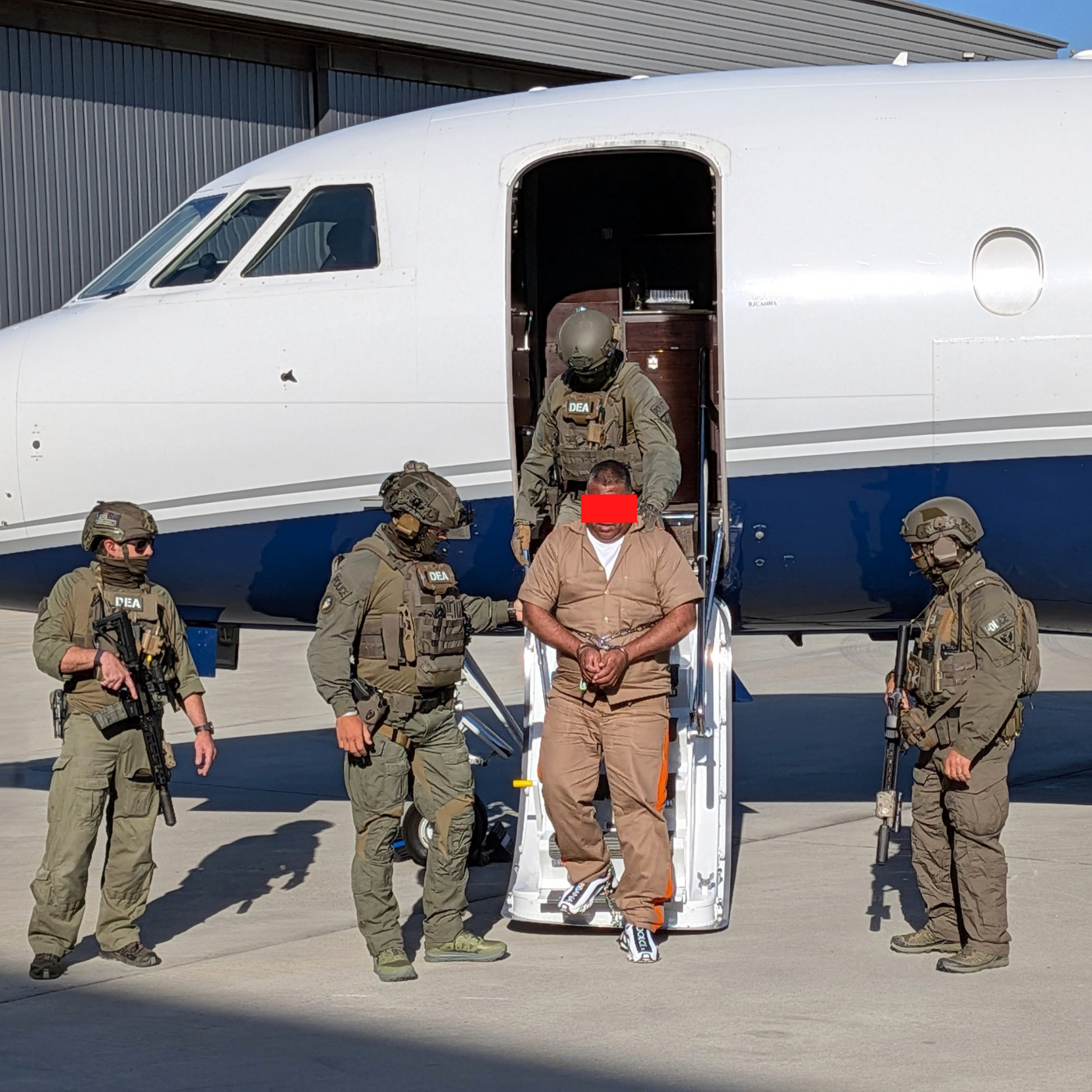
Rojas now faces two federal charges in the U.S. District Court for the Southern District of California: international conspiracy to distribute cocaine, carrying a mandatory minimum of 10 years to life, and narco-terrorism, carrying a mandatory minimum of 20 years to life.
Prosecutors allege he provided economic resources to people and organizations he knew were engaged in terrorist activity, and that he participated in a scheme to move cocaine through Colombia and Ecuador for eventual shipment to the United States.
The case traces back to his arrest by Colombian authorities on February 12, 2025; Colombia’s Supreme Court approved his extradition in October 2025, but then-President Gustavo Petro suspended it amid ongoing peace talks. President Abelardo de la Espriella reversed that suspension and ordered the extradition to proceed on August 26, 2026, making Rojas’ case a direct product of the same policy shift driving the broader security offensive.
Rojas appeared before U.S. Magistrate Judge Marilyn L. Huff in San Diego federal court on September 28, 2026, where he was formally advised of the charges against him; no plea was entered at that hearing, and he remains in custody with his next court date set for October 19, 2026.
U.S. Attorney Adam Gordon framed the extradition as part of a broader campaign, stating that “Colombia and the Department of Justice are making a clean sweep of narcoterrorists, starting with Araña.”
DEA Administrator Terry Cole added that the case demonstrates that “borders, criminal influence, and efforts to conceal illegal activity will not prevent DEA and our partners from bringing major transnational traffickers to justice.”
The Regional Picture: “Shield of the Americas”
De la Espriella’s offensive isn’t happening in isolation. Colombia is one of fifteen countries — alongside the United States, Ecuador, Peru, El Salvador, and others — participating in the “Shield of the Americas,” a Trump administration-led regional security initiative coordinating action against 24 designated “narcoterrorist” organizations across the hemisphere.
The coalition’s target list explicitly includes Colombia’s FARC dissident factions (both the Central General Staff and Second Marquetalia wings), the ELN, and Clan del Golfo, alongside groups like MS-13, Tren de Aragua, and Mexico’s major cartels.
The initiative held its second major meeting during the U.N. General Assembly in New York this September, with Colombia represented by Vice President José Manuel Restrepo and Foreign Minister Omar Bula.
Secretary of State Marco Rubio has described the targeted organizations as sophisticated enough to “rival the State” in financial, military, and intelligence resources, arguing their transnational reach demands a coordinated hemispheric response.
Member states are reportedly pushing to have the Organization of American States formally activate the Inter-American Treaty of Reciprocal Assistance, a Cold War-era mutual-defense pact, to enable collective sanctions and joint action against these groups.
Two things can be true at once: the raw numbers from the past week — 30-plus arrests, multiple dissident commanders killed or captured, tons of cocaine and stolen fuel seized — represent one of the most intensive short-term security pushes Colombia has seen in years. At the same time, this is a fundamentally different strategy than the negotiated settlements Colombia has pursued with armed groups over the past decade, and it is being executed under a president who has explicitly rejected that model in favor of direct confrontation, backed by American military assistance, intelligence, and diplomatic coordination.
Whether sustained military pressure succeeds where negotiation didn’t, or simply drives these groups toward more fragmented and harder-to-track structures, remains the open question hanging over Colombia’s security establishment.
What’s clear for now is that the pace of operations shows no sign of slowing, and de la Espriella’s government continues to treat each week’s arrest tally as a political statement in the fight against the criminal element as much as a security outcome.