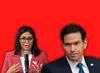


President Donald Trump said on Thursday that he intends to resolve the situation in Cuba before his term ends and would not rule out force to do it. “I want to get Cuba done before I leave,” he told conservative radio host Hugh Hewitt, referring to leaving office in 2029. Asked whether he would order military force if freeing Cuba required it, Trump said, “I would certainly consider that, yes.”
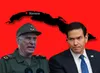
The president said his administration was monitoring Havana “very closely,” calling Cuba a “failed” state and said Secretary of State Marco Rubio, whose parents are from Cuba, “would love to do it.”
The tone is firmer than in late September, when he said he expected a deal with Havana and added, “I don’t think we’ll need the military.” It is also the first time he has put a timeline on a possible operation.
Timeline
The administration’s pressure on Cuba ratcheted up after the January 3 U.S. ouster of Venezuelan leader Nicolás Maduro, whose country was a close ally and crucial oil source for Havana. Trump signed an executive order threatening tariffs on countries that provided a lifeline to Cuba by selling oil to the island’s government.
By mid-March, President Miguel Díaz-Canel said no fuel shipments had reached the island in over three months. Talks followed in parallel. Trump said in March that Rubio would lead negotiations and that the government “is going to fall.”
Díaz-Canel confirmed the talks on March 13. Cuba’s account has since varied. In May, Foreign Minister Bruno Rodríguez confirmed exchanges but said the island’s internal political and economic order is not on the table. By September, Cuban officials were denying that any talks were going on.
Rhetoric & Sanctions
The military language is not new. In early May, Trump said at a Florida event that the U.S. would take control of Cuba “almost immediately” once its troops leave the Middle East.
Díaz-Canel said the threats had escalated “to a dangerous and unprecedented scale.” Rodríguez replied that Cubans “do not let ourselves be intimidated.”
Sanctions have tightened alongside the rhetoric after a May 1 executive order imposed secondary sanctions on non-U.S. companies doing business with designated Cuban entities.
Earlier this month, the administration also announced another wave of sanctions on 10 individuals and entities tied to Cuba’s government, military and oil industry.
Speaking in Paris on November 9 at the G7 foreign ministers’ meeting, Rubio said the U.S. goal is for Cuba to achieve a brighter future and that Washington would “do everything in our power to assist them,” but that “they need to awaken and realize there’s no future in their current trajectory.” He called the leadership “a very stubborn group of individuals” and said the embargo, which is established in law, would not be eased without political change.
Trump’s remarks came a week after Republicans suffered a resounding midterm defeat, driven in part by the administration’s unpopular war in Iran. He said he would like to act on behalf of the Cuban-Americans who voted for him in Florida.
That electorate is not monolithic. Polls suggest Cuban American voters in Florida remain largely Republican despite frustration over the price of basic goods. Trump has previously talked up a “friendly takeover” of Havana, and CNBC reports that further economic pressure appears more likely than a military campaign.
The White House has not said what a military option would involve. It is also unclear whether the talks Cuba confirmed in March are still active.
Havana has not responded publicly to Thursday’s remarks in the coverage reviewed.