
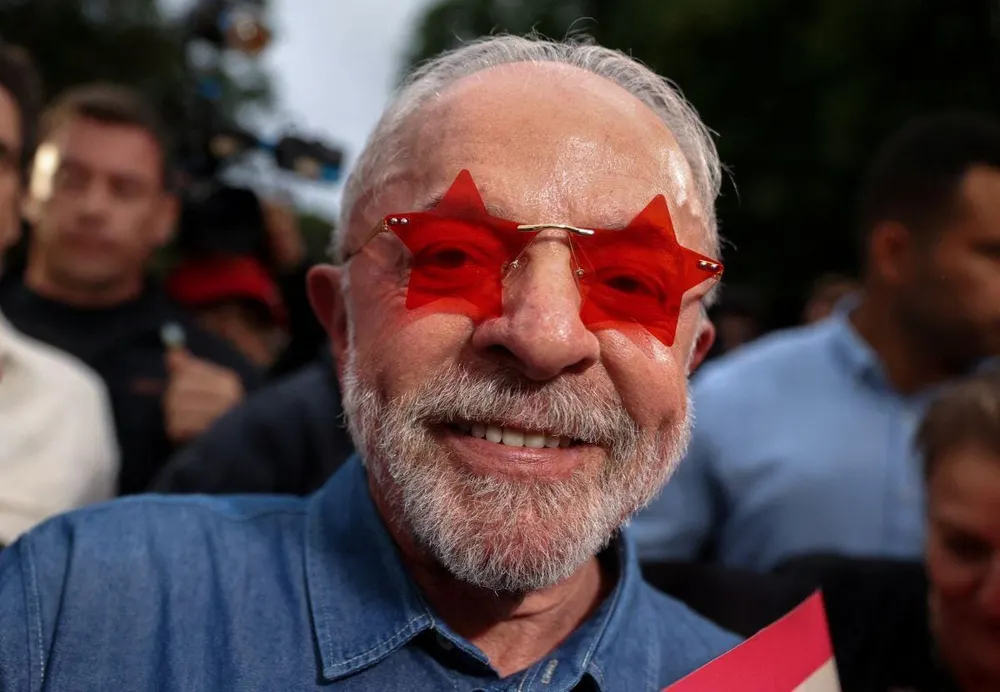
Luiz Inácio Lula da Silva’s victory in Brazil’s October 25, 2026 runoff election returns the left to the presidency of Latin America’s largest economy, at a moment when much of the region has moved the other way.
The result, a contested aftermath and the departure of his opponent, Sen. Flávio Bolsonaro, to the United States have turned a close election into a test of Brazil’s institutions and of its relationship with Washington, leaving open questions into what the outcome means for the broader region.
Lula won a non-consecutive fourth term with about 51.8% of the vote, a margin of nearly 4.4 million votes, and his term is due to begin January 5, 2027. It was a comeback. Flávio Bolsonaro, the eldest son of former President Jair Bolsonaro, led the first round with 47% to Lula’s 45%, and it was the first time since 1985 that the first-round runner-up went on to win.
But Bolsonaro has yet to concede. He says he will challenge the result, pointing to a ruling by Justice Cristiano Zanin, a former Lula defense attorney, that extended voting by two hours on election day after requests from both campaigns.
Although Bolsonaro allies note Zanin’s suspicious past ties to Lula, Bolsonaro’s party, the Liberal Party, has acknowledged the outcome. Whether any challenge succeeds will matter less than how the courts handle it, because the dispute will be decided in legal channels and not on the street.
The Courts, the Bolsonaros & Fears Of Persecution
The nation’s Supreme Court (STF) is once again at the center of Brazil’s political arena. Justice Alexandre de Moraes ordered Flávio Bolsonaro to surrender his passports immediately following the election and barred him from leaving Brazil — citing a money-laundering inquiry involving his lawyer, Willer Tomaz.
Flávio and Tomaz deny any wrongdoing, and no charges against Flávio have been reported. The order is currently under seal.
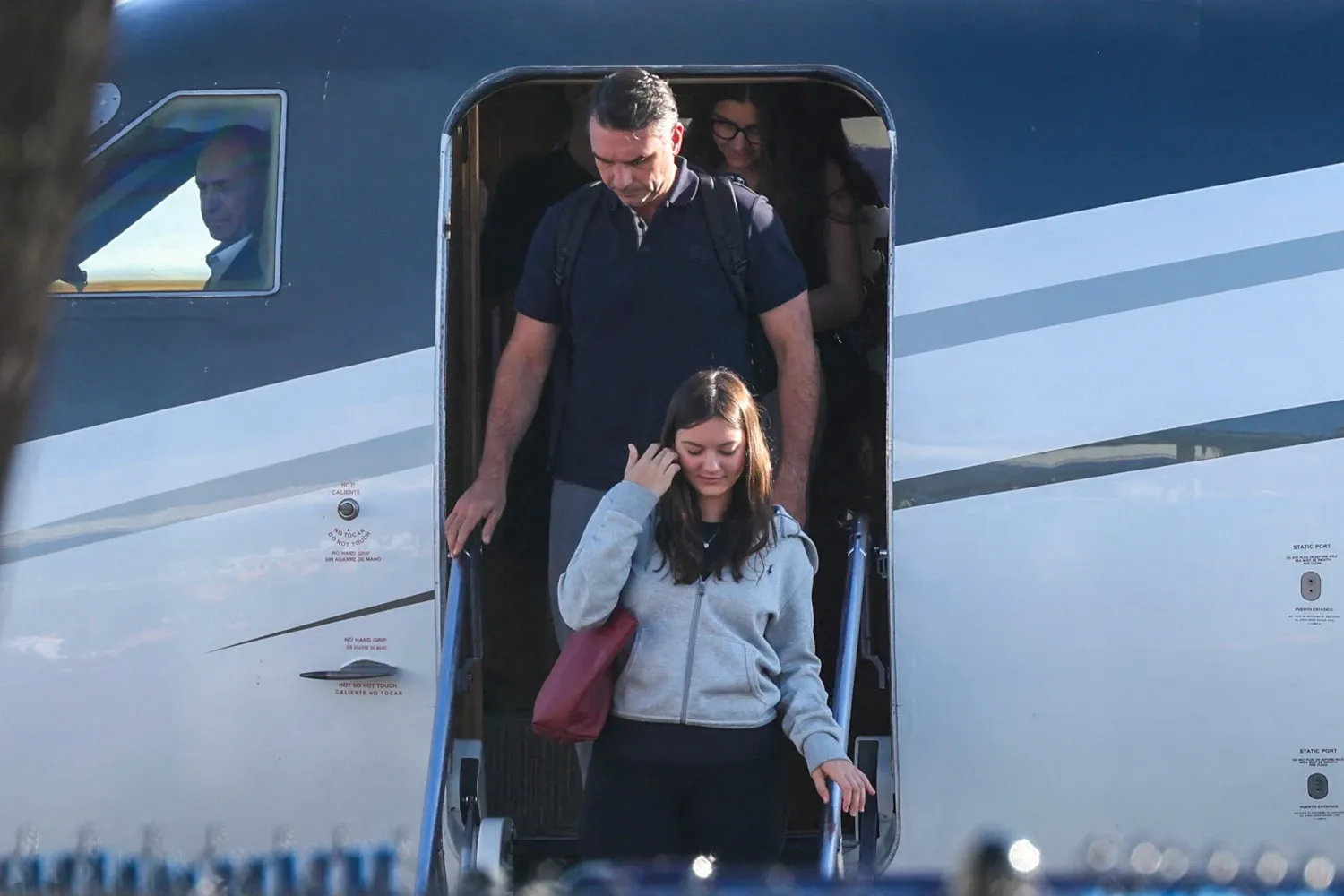
Flávio missed the deadline and fled Brazil across the Brazil-Argentina border using an Italian passport.
U.S. President Donald Trump remarked shortly after Flávio’s arrival in Miami that the former candidate will be permitted to stay in the United States “as long as he wants.”
Secretary of State Marco Rubio denies reports suggesting that Washington helped facilitate Bolsonaro’s departure. Brazilian outlets reported he entered the U.S. under humanitarian parole, a temporary status as allies describe the departure as a self-imposed exile from political persecution by Moraes and the STF.
Another episode feeds that argument. During a televised debate on Band, Lula told Flávio that after October 25 he would lose his “immunity” and that his many investigations would “now move forward,” a clip that resurfaced after the passport order. Bolsonaro supporters read it as a threat.
Political persecution is a charge made by Brazilian right-wing officials since the STF carried out the prosecution against Flávio’s father and former President Jair Bolsonaro over an alleged coup plot after his re-election defeat to Lula in 2023.
But Bolsonaro allies claim that the expanded political targeting a persecution campaigns by the STF has exacerbated in recent years.
The elder Bolsonaro was sentenced to 27 years imprisonment in November of 2025.
The arguments hold that a court is pursuing a political opponent. Other claims say that a court is pursuing a financial inquiry that happens to involve a politician. In polarized presidential systems, courts become the arena where both sides test their distrust. How Brazil handles Flávio’s case, and whether it is seen as even-handed or influenced by the president, will shape confidence in its institutions well beyond this election.
A Leftist Government in a Right-Leaning Region
Lula’s win interrupts a recent spate of conservative victories across the region. Right-leaning leaders won seven of the previous eight presidential races in Latin America, leaving Lula surrounded by governments to his right, with Uruguay as the main exception.
Voters frustrated with crime and economic hardship backed tough-on-crime conservative candidates in countries such as Peru and Chile. Colombia’s Abelardo de la Espriella, who also won by running against the criminal elements, has acknowledged the Lula victory, and says the two countries should cooperate for their people’s benefit.
Brazil’s weight gives Lula room. It is the only Latin American full member of BRICS and a co-founder of Mercosur, whose structure analysts expect to endure despite ideological divisions. But the Atlantic Council’s Jason Marczak cautions that Brazil “should never be assumed to follow regional trends,” and that cuts both ways. Lula faces a strong right-of-center majority in Congress, which can limit what a left government passes.
The Economy Behind The Politics
Brazil’s economy was worth about US$2.28 trillion in 2025, roughly 31% of Latin America’s combined output, ahead of Mexico’s US$1.83 trillion, according to World Bank data.
Brazil is the region’s largest economy, and Mexico is second. The International Monetary Fund projects Brazil at about US$2.65 trillion in 2026, which would make it the world’s 10th-largest.
Analysts flag high debt, slow growth and public security as Lula’s main domestic challenges.
Washington & Brasília
The relationship enters Lula’s fourth term at a low point. After federal prosecutors put Jair Bolsonaro on trial, the Trump administration imposed tariffs on Brazil that reached 50% on many goods. This June it proposed new 25% tariffs under a Section 301 investigation, with exemptions for items such as beef, coffee and rare earths.
Recent data indicates the U.S. runs a trade surplus with Brazil, which undercuts the administration’s stated trade-deficit rationale. Lula met Trump in May and left optimistic, then said Brazil could not accept the June proposal.
The Trump administration openly backed Flávio Bolsonaro with the president himself admitting to watching the election closely while declining to formally endorse a candidate. The U.S. ambassador-designate to Brazil, Danny Perez, has been stalled since August.
Lula’s election-night line was that the country “will not accept being anyone’s backyard.”
Practical interests may still push the two nations closer. Washington wants Brazil’s rare earths, and Lula wants tariff relief. Flávio’s stay in the United States adds a new sticking point. How Washington treats him will be read in Brasília as a signal about the relationship, though neither government has said so.
Several questions, however, will define this period. Will Bolsonaro bring a formal challenge to the result, and how will electoral courts respond? Will Moraes or the Federal Police take further steps in the money-laundering inquiry, and will Brazil seek Flávio’s return? Will tariff talks produce relief before Lula’s inauguration? And can a left president govern with a right-leaning Congress and a hostile region?
The answers will shape not just Brazil’s next four years but how the rest of Latin America reads the limits of both its right-wing wave and the left’s comeback.