

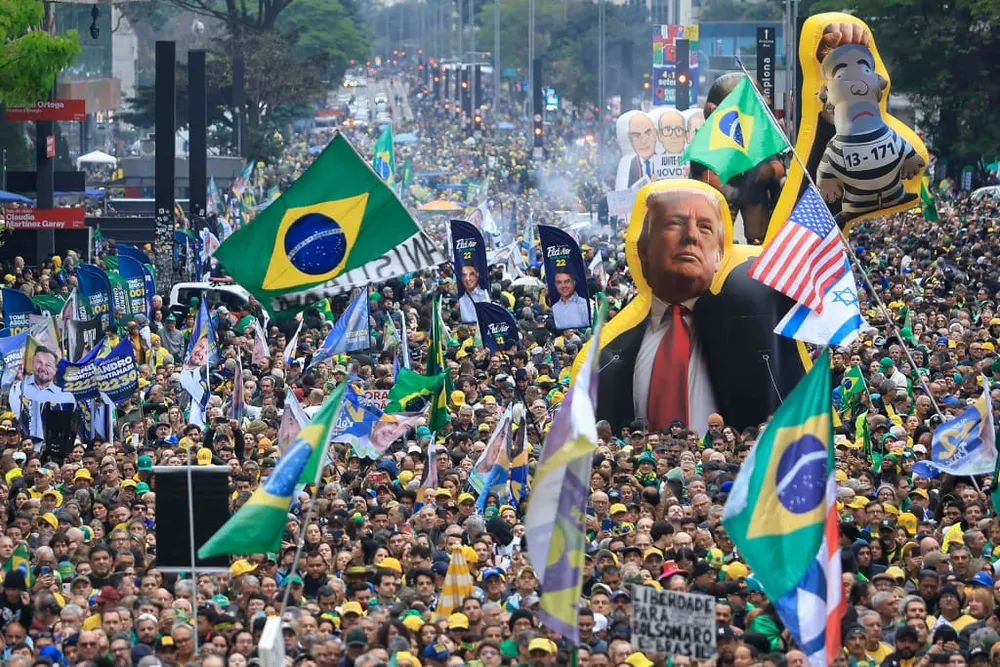
RIO DE JANEIRO — Brazilians head to the polls Sunday, October 4, to choose their next president in one of the most closely watched elections in the Western Hemisphere this year.
The race pits incumbent Luiz Inácio Lula da Silva against Flávio Bolsonaro, the eldest son of imprisoned former President Jair Bolsonaro, in a contest that has drawn direct attention — and direct pressure — from Washington.
The Candidates
Thirteen tickets are registered for Brazil’s presidency, but the contest has effectively narrowed to two frontrunners. Lula, 80, of the left-wing Workers’ Party, is seeking a fourth non-consecutive term after returning to office in 2023. His chief rival, Flávio Bolsonaro, 45, of the conservative Liberal Party, stepped in as the standard-bearer for Brazil’s right-wing movement.
Other candidates in the race include Ronaldo Caiado of the Social Democratic Party, Romeu Zema of the libertarian-leaning NOVO party, anti-establishment activist Renan Santos, and self-help author and physician Augusto Cury, though none are seen as serious threats to the top two.
Polling heading into election day showed an unusually tight race. Brazil’s final major pre-election survey, released by Datafolha on October 1, had Lula at 45% of valid votes to Flávio’s 40% — short of the outright majority either man would need to win in the first round.
Other late polls varied: Quaest had Lula leading 37% to 33%, while AtlasIntel showed the two men nearly deadlocked, 46% to 43%. Taken together, pollsters describe the race as a virtual tie, with Lula holding a narrow but consistent edge.
Voters list public safety and violence and crime (31%), corruption (20%), the economy (19%), and healthcare (12%) as their top concerns — a mix that reflects both Lula’s record of steady economic growth and low unemployment and the lingering frustration many Brazilian households feel over high debt-servicing costs.
How Brazil’s Election Process Works
Brazil uses a two-round presidential election system, and this year’s race is a textbook example of why. To win outright on the first attempt, a candidate must secure more than 50% of valid votes cast. With a crowded 13-candidate field and the top two locked in a near-even battle, virtually every credible pre-election poll shows neither Lula nor Flávio clearing that threshold — making a runoff the “near-universal expectation” among analysts.
If no one wins a majority Sunday, the top two finishers will face off again on October 25.
That pattern isn’t new: every Brazilian presidential election since 2014 has gone to a second round, reflecting both the fractured political landscape and the high bar required to win outright in a country of continental scale and deep regional variation.
Voting itself is compulsory for citizens between the ages of 18 and 70, with limited exemptions for those 16-17, those over 70, and non-readers, for whom participation remains optional.
Brazilians who skip voting without a valid excuse face symbolic fines and can be blocked from accessing certain public services — a structure that consistently produces turnout above 75%, among the highest of any major democracy.
Brazil has also voted entirely on electronic voting machines, known as urnas eletrônicas, since 2000. The machines generate auditable digital logs, though they do not print physical paper ballots.
Final Straws
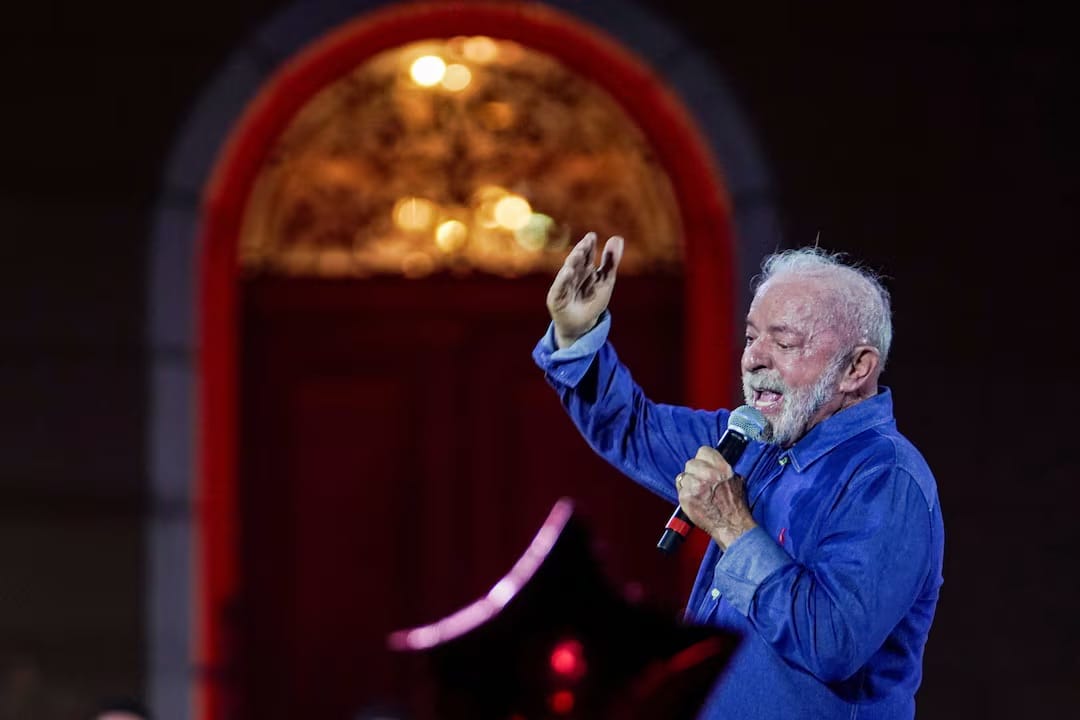
In his October 1 interview on the Flow Podcast, President Lula said his government was considering prohibiting banks from issuing more than one credit card per person, calling Brazil’s current system “indecent” and declaring: “Cartão de crédito é um crime” — “The credit card is a crime.”
Lula argued that banks distribute cards to people without their consent and that easy access encourages reckless spending, saying Brazilians “only see the hole in their finances at the end.” He added that the proposal was already under discussion with Brazil’s Central Bank as part of a broader push against predatory lending and high rotating credit interest rates.
The comment drew swift backlash. Federal Deputy Nikolas Ferreira (PL-MG) accused Lula of hypocrisy, pointing out that while the president wanted to restrict ordinary citizens to a single card, government officials continue using corporate credit cards with combined spending reaching 1.4 billion reais with no such limits — and took the opportunity to criticize First Lady Janja’s international travel expenses as well.
Critics online also questioned the proposal’s practicality, with some noting that even China, often cited for heavy state intervention in markets, doesn’t impose a cap on personal credit card ownership.
Facing the backlash, Lula reversed course the very next day, two days before the election, clarifying on social media that “each citizen has the right to have as many credit cards as they want,” and refocusing his position instead on banning unsolicited card mailings and capping abusive interest rates rather than limiting how many cards a person could hold.
Washington’s Role & Recent Tensions
Few foreign elections this year have drawn as much direct American attention as Brazil’s. The Trump administration has taken an unusually active posture toward the race, a dynamic that has complicated rather than clarified Washington’s position.
President Trump was an early and vocal supporter of Jair Bolsonaro, even recording a video endorsement in 2018. But the relationship between Washington and Brasília has grown far more adversarial since: the administration imposed tariffs as high as 50% on Brazilian goods, explicitly tied in part to the legal case against the elder Bolsonaro over the coup-plotting conviction, before adding a further 25% tariff this year over separate trade disputes involving Brazil’s Pix payment system and ethanol import duties.
Those tariffs created an awkward dynamic for Flávio Bolsonaro, who reportedly asked the White House to delay the new round until after the election, worried the move would politically benefit Lula.
Tensions escalated further this year when Brazil denied visas to a U.S. delegation that sought to travel to the country to question its electoral system — a move Brazilian officials characterized as an attempt at election interference.
Congressional Democrats in Washington have separately raised concerns about the administration’s posture, with a group of lawmakers sending a letter condemning what they called “an apparent effort to interfere with” Brazil’s elections.
Brazilian intelligence officials have reportedly briefed European allies on a range of what they describe as American interference efforts, from legal pressure tactics to more openly acknowledged involvement.
Despite the friction, U.S. officials have continued to describe the election as a matter of close interest for Washington, given Brazil’s size, economic weight in Latin America, and its importance as a geopolitical counterweight in the region.
Whatever the outcome Sunday — and especially if the race proceeds, as expected, to an October 25 runoff — the result will shape not only Brazil’s domestic direction but the already strained relationship between Brasília and Washington heading into the final months of the year.