
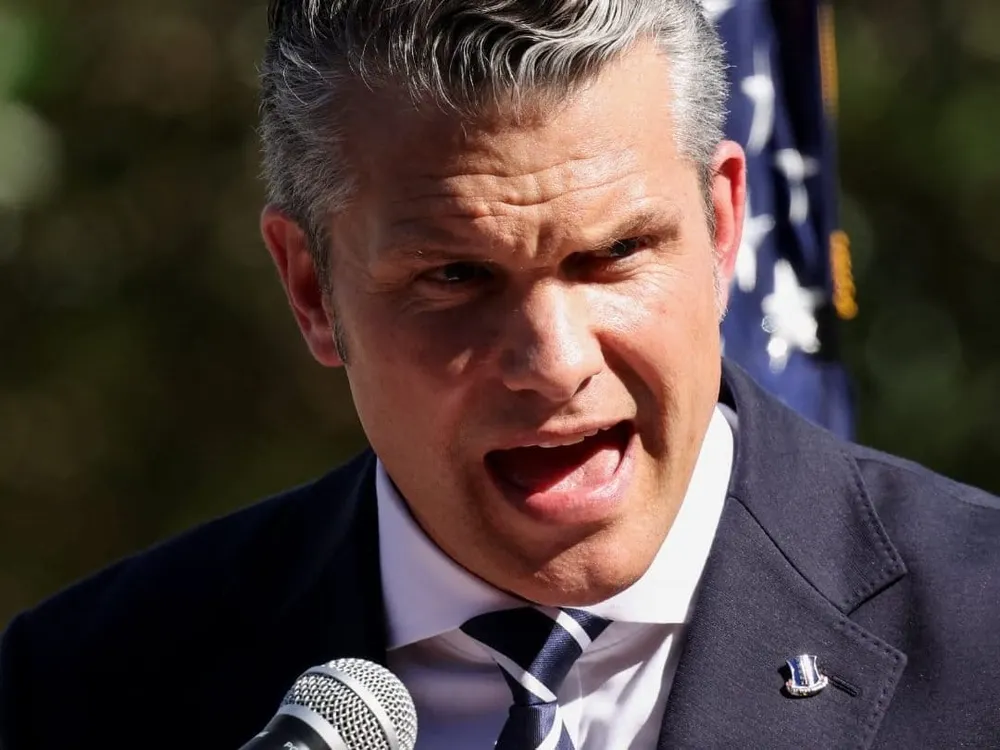
CARACAS — U.S. Defense Secretary Pete Hegseth signed an agreement to restore military cooperation with Venezuela in Carcacas on Wednesday, covering training and intelligence sharing. The deal comes less than a year after U.S. forces captured former President Nicolás Maduro, and it marks a new phase in a relationship that was openly hostile for years.
Hegseth was received at the Miraflores Palace by Foreign Minister Oliver Blanco. Also present were Defense Minister Gustavo González López, the attorney general, and businessman Alejandro Betancourt, director of North America Blue Energy Partners. Hegseth and González López signed the agreement in the Simón Bolívar Hall, in front of acting President Delcy Rodríguez, and Venezuelan state television broadcast it live.
Hegseth called it “a revitalization of our defense partnership and an opportunity for cooperation between our two great armed forces.” He said that since Maduro’s capture, Venezuela “has gone from our most aggressive regional threat to a compliant security partner,” and credited “close cooperation” with Rodríguez for helping “stabilize Venezuela and rid it of narco-terrorists once and for all.”
Rodríguez said she hopes the technical-military cooperation can be brought “to its highest possible level, so that we may address common threats.” She said the training would help the country’s armed forces, the FANB, improve their operational equipment and access to new technologies.
Public broadcasting. Source: Television in Venezuela
Accounts differ on how much has been disclosed. The scope of the agreement has not been disclosed in detail and it is unclear whether the deal covers intelligence sharing, joint exercises, training or technical assistance. The “training to intelligence sharing” description comes from Hegseth himself.
Troop numbers, funding, duration and any role for U.S. personnel on Venezuelan soil have not been made public.
There is a reported precedent. The New York Times reported weeks earlier that the administration was negotiating a Status of Forces Agreement (SOFA) that could lay the groundwork for a long-term U.S. military presence, covering ship visits, training, exercises and humanitarian aid.
A State Department official said talks on military bases were far off and that no such negotiations existed. It is not known whether Wednesday’s agreement is connected to that effort.
U.S. forces ousted Maduro in January, bringing him to the United States to face conspiracy and drug trafficking charges, and Rodríguez, a Maduro ally, took over in the aftermath.
Hegseth is the latest Trump Cabinet member to visit, after the Interior and Energy secretaries traveled earlier this year to focus on oil reserves and critical minerals.
President Trump said in August that Hegseth helped broker a broad deal giving the U.S. control of some Venezuelan oil reserves, and General Francis Donovan, head of U.S. Southern Command (SOUTHCOM), has met interim authorities at least twice this year.
The U.S. says it has returned over $12 billion in Venezuelan oil sale revenue, nearly 99%, under its energy deal with Rodríguez’s government, according to a report released this month.
The military deal arrives while Venezuela’s political transition is unfinished. No date has been set for the next presidential election, and Rodríguez’s court-approved term expired in July, though she remains head of state.
Secretary of State Marco Rubio has called this the best opportunity in three decades for free and fair elections, and opposition leader María Corina Machado has returned from exile.
Many Venezuelans are relieved that Maduro is gone but believe Washington has put reviving the oil industry ahead of pro-democracy steps, according to AP.
Supporters of the approach argue stability and security cooperation come first. Critics say it gives an unelected government greater legitimacy.
The Caracas stop is part of a regional tour that took Hegseth to Colombia the same day, with Ecuador and possibly Honduras next