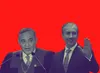


Secretary of State Marco Rubio said on Monday that Venezuela’s election infrastructure was built under Nicolás Maduro to rig outcomes and must be replaced before the country holds a credible vote.
A senior State Department official said talks between the interim government in Caracas and opposition politicians are expected to produce a new Supreme Court by the end of 2026, followed shortly by a new electoral council.
Rubio gave no election date, and he said Washington had told Venezuelan authorities that opposition leader María Corina Machado “belongs in her country.”
“Real Progress”
Rubio spoke to reporters by phone, according to Reuters. He said the machinery inherited from Maduro cannot be trusted to run the next election and must be replaced quickly. “I think we’re making real progress in that regard,” he said. He warned that “if anybody tries to derail that process, they’re doing a great harm to Venezuela.”
The U.S. wants a new Supreme Court (TSJ) and a new National Electoral Council (CNE) in place before elections.
The Supreme Court matters because it could otherwise annul results, according to EFE’s account. The State Department official said the goal is elections “where, once held, the losing party acknowledges that the process was fair.”
The State Department also hopes for a new council by early 2027.
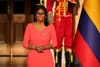
The U.S. expects acting President Delcy Rodríguez to declare the presidency vacant once both bodies are renewed. That would trigger a legal mechanism requiring elections within six months.
The most optimistic timeline points to next June, and officials see an election in 2027 or 2028. Neither Venezuela nor Rodríguez has announced a decision.
Rubio said Venezuela must change quickly, “not in 10 years, not in five years, not in two years,” and said he won’t let Rodríguez “wait us out for two years,” according to Axios.
Rubio said the transition has no easy alternative. “If this process doesn’t work, then the alternative is going to be worse,” he said, describing “violence and armed conflict.” He said the U.S. uses sanctions relief and oil licenses as leverage and could reconsider them if commitments are broken, and that interim authorities have met every agreed timeline so far.
Rubio denied any offer of immunity: “There’s definitely no talk about prosecutions.” Without naming Machado, he said: “You’re not going to street-protest your way into a democracy.”
Machado’s Return
Rubio said the U.S. told Rodríguez’s government weeks earlier that Machado should be allowed to return, and the government agreed. “She’s a Venezuelan, she belongs in her country.” He said she entered without problems and has moved around Venezuela without incident, according to EFE.
Rubio said he discouraged her from returning only right after the summer earthquakes. He said the U.S. was not behind earlier obstacles and blamed third countries.
Rubio credited the U.S.-backed talks for her safe return. Her party, Vente Venezuela, is not at the negotiating table, and Machado wants elections by mid-2027, and President Donald Trump has said Venezuela is not likely to meet that timeframe.
Rodríguez has called Machado’s return a “show.” Rubio said Washington judges the interim government “not by rhetoric but by action,” citing the removal of Iranian and Cuban influence and the extradition of former Maduro ally Alex Saab.
He said Machado has a right to criticize the U.S.-backed oil arrangement, which he called good for both countries. Some critics accuse the administration of putting oil interests ahead of democratization.
Key questions are whether the new Supreme Court is named by year-end, who sits on it and the electoral council, whether Rodríguez declares the presidency vacant, and whether Machado’s party is brought into the talks.