


MIAMI — It’s security... It was always about security.
A decade ago, Latin America was still talking about the “pink tide.” Today the map looks rather different. Chile, Colombia, Peru, Bolivia, Honduras, Costa Rica, Ecuador, Argentina, Paraguay and El Salvador are all now governed by conservative right-wing leaders and governments, and Brazil’s political right is now competing hard for a return to power in an October 25 runoff vote.
The causes for the political transformation may differ from country to country across Latin America. In most of them, though, voters have said the same thing: they are looking for security.
Bread & Paper
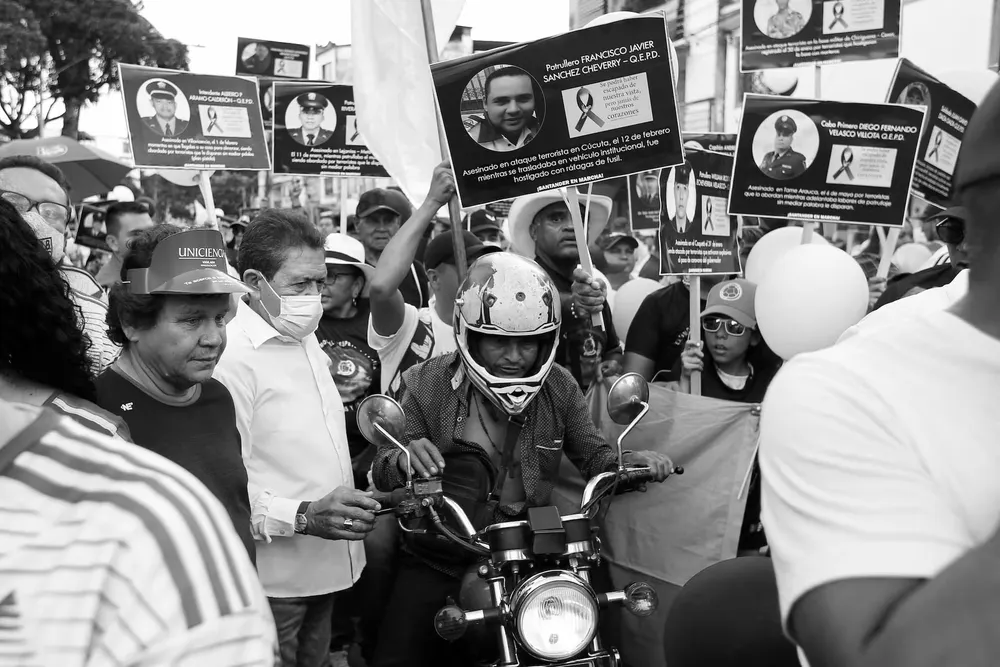
The region is home to only a portion of the share of the world’s population, but for many years, a far larger share of its homicides. Extortion, kidnapping, drug-trafficking violence and street crime have changed how people live.
Unfortunately, for several nations, the violence has been accepted as an unavoidable part of life. Residents learn to stay clear from certain neighborhoods, they take the long way to work, business owners are early to satisfy their extortion fees, or vacunas, paid to local gangs. Tourists are even warned of what to look out for during their stay.
But for decades, distrust of police and justice systems, local governments and institutions have inculcated residents the uselessness of civic responsibility, and voters who experience that daily brutality of violence and terror eventually reward leaders who promise order and security — whatever the ideology that may come with it.
Security is always a prerequisite to prosperity. Societies and nations cannot prosper if their populations are not safe. If their stake-hold in the society in which they live cannot be ensured by the government that taxes its residents and claims a mandate to govern that society, why would citizens risk their efforts or possessions striving for that which can be stripped from them?
Violence is often tolerated by those who have grown accustomed to it, but eventually, any society will grow tired, and their grievances and anger will boil over, and elect a change that may very likely transfigure the traditional political and socioeconomic dynamics of that society.
People do not like bullies, and they especially hate bullies who steal their hard-earned wages. The polling bears this out. In Peru, 39% of respondents to a March survey by the Instituto de Estudios Peruanos named insecurity as the country’s main problem, ahead of corruption (26%) and the economy (15%). Among voters for Keiko Fujimori, who won this year, 44.6% named insecurity first.
In Colombia, pollsters found security was voters’ top concern before the June runoff, and 62.1% of those polled in May said President Gustavo Petro’s “total peace” policy was going badly.
In Costa Rica further north, long among the region’s calmest countries and most stable democracy (abolishing its army in 1948), crime was the leading worry as the conservative Laura Fernández won the presidency.
The Bukele Effect
No leader has done more to shape Latin America’s turn to the right than El Salvador’s Nayib Bukele. Since March 2022, his state of exception has put tens of thousands of suspected gang members behind bars, with authorities reporting 84,260 captures through the end of 2024.
Officials report a 2025 homicide rate of 1.3 per 100,000, the lowest in the region, and a regional survey puts his approval at 83%. For voters elsewhere who live with extortion and gang violence, El Salvador’s turnaround is proof that a country can take back its streets.
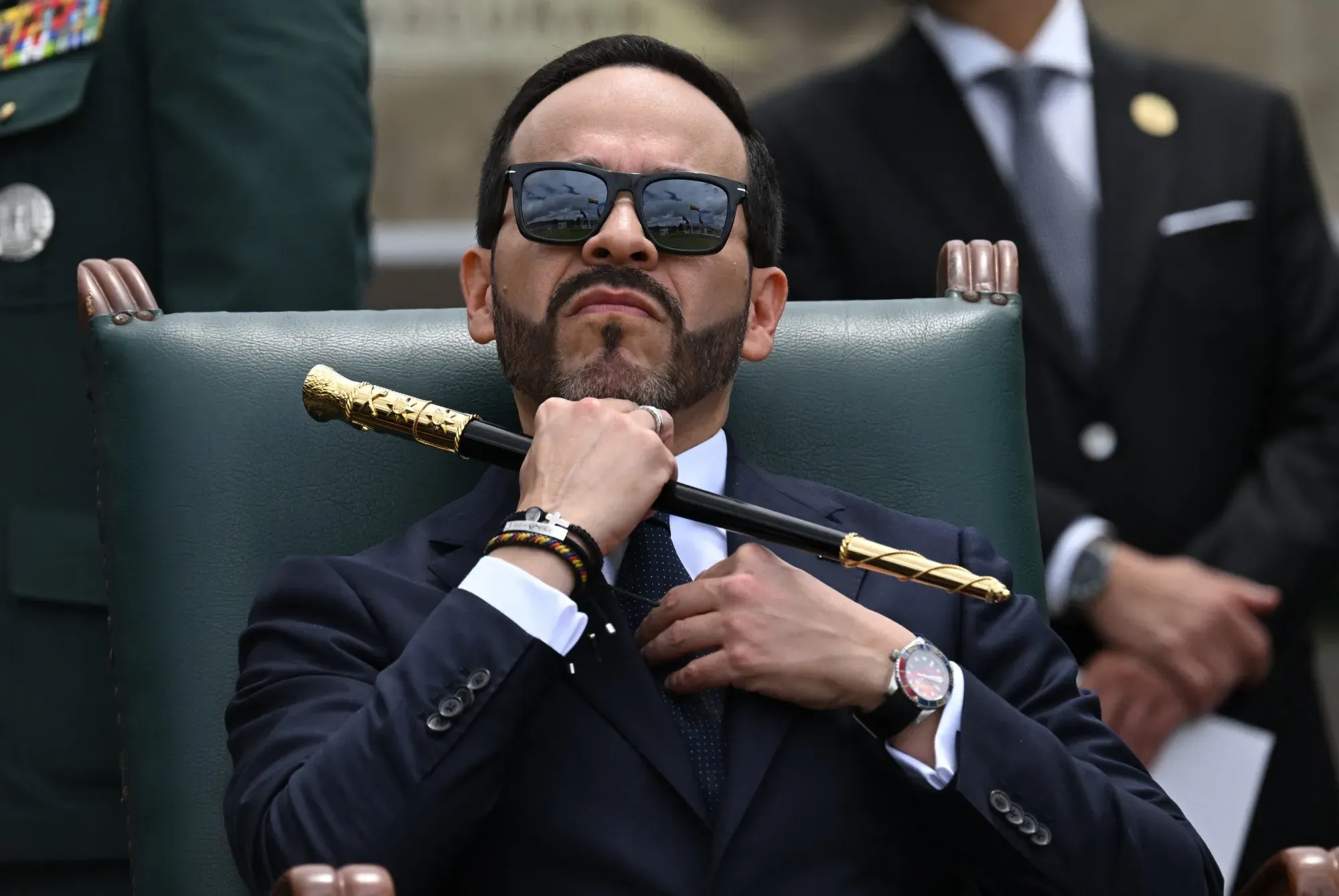
That proof has made Bukele’s approach a political template for neighbors across the region. Costa Rica opened a mega-prison, called CACCO, built with Salvadoran help this month, Peru’s president now plans to tour El Salvador’s CECOT, and Colombia’s new president campaigned on building ten mega-prisons.
Brazil’s right-wing candidate has proposed several of his own. Candidates across the region now run on the same promise: tough, visible action against organized crime, law and order, and increased security that will provide their nations with opportunities for foreign investments.
Nations Analyzed
Chile. José Antonio Kast won the December runoff with more than 58% of the vote on a platform of hardline public security and curbing illegal immigration, and took office in March as the country’s most conservative leader since Pinochet.
Kast calls his term an “emergency” government. Chile remains one of Latin America’s safest and wealthiest countries, but organized crime and irregular migration changed its political debate in recent years as drug trafficking organizations competed for power in Chilean streets.
Peru. President Keiko Fujimori, after three failed runoff bids, won a presidency in June defined by an extortion epidemic that has reached small shops, buses and neighborhoods. Her family’s brand of Fujimorismo combines market economics with a security-first, strongman streak.
In response, Fujimori announced on Wednesday, October 7, a joint command structure integrating the nation’s armed forces and the national police to challenge violent crime and drug gangs.
Colombia. Abelardo de la Espriella, a businessman and criminal defense lawyer, narrowly beat Petro’s ally Iván Cepeda, about 49.7% to 48.7% in the preliminary count.
Armed groups have expanded their control over trafficking routes and illegal mining, with membership reportedly doubling over five years. De la Espriella promised a sweeping military offensive against guerrilla groups, more attacks on smuggling aircraft and boats, and ten mega-prisons.
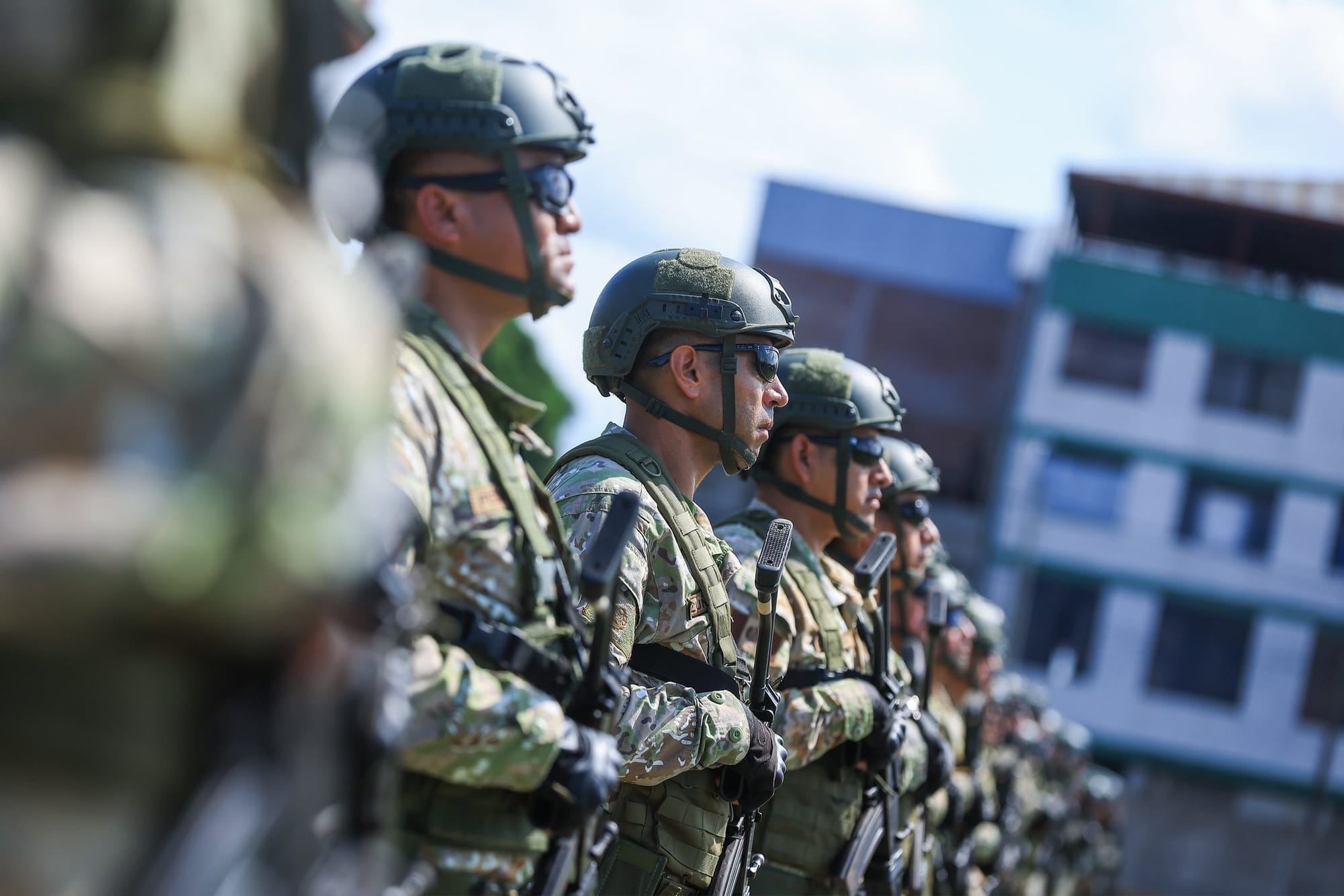
Ecuador. Daniel Noboa’s government has answered gang violence with a militarized security push and closer ties with Washington, and Ecuador has become a testing ground for joint operations with U.S. forces.
Costa Rica. Fernández took office in May promising “order through force.” The country recorded 905 homicides in 2023, its highest on record, and 873 in 2025. She has opened a high-security prison for organized crime and floated U.S. help, within the limits of a country that abolished its army in 1948.
Honduras. Nasry Asfura, a construction magnate, won by fewer than 30,000 votes out of more than 3.7 million cast, after a month of counting and a late endorsement from President Trump. This was less a pure security election. Analysts said the economy overtook insecurity as the top concern, but the Central American nation remains one of the most deadly countries in the whole region over the last decade.
Bolivia & Argentina. These are economic stories, largely. In Bolivia, Rodrigo Paz, a centrist, won with 54.6% in the October 2025 runoff, ending 20 years of rule by the Movement for Socialism amid fuel shortages and inflation of about 23%. Paz also pledged a renewed willingness to tackle drug trafficking and the criminal element after two decades of socialist administration under the controversial leftist figure of Evo Morales.
In Argentina, President Javier Milei’s party won the 2025 midterms after inflation fell and the government posted a fiscal surplus.
Paraguay. The long-dominant Colorado Party and President Santiago Peña represent continuity, not change, while Washington and Asunción have deepened security ties, including air interception and border security agreements this month.
It’s Not Only About Ideology
Security explains much of the shift, but not all of it. Political scientist Andrés Malamud argues that the favored candidate is “whoever is not in power.” Voters across the region have been punishing incumbents of every stripe, and the right has been the main beneficiary of recent anger at left-wing governments over crime, inflation and corruption.
Analysts also dispute how much outside influence matters. John Price of Americas Market Intelligence argues that the shift was “made at home, not in Washington” and that a foreign endorsement “can amplify an opposition mood; it rarely manufactures one from nothing.”
But close races, such as Honduras, show that Trump’s endorsements and aid threats may have moved the margins. And most of these governments now align closely with Washington on counternarcotics and migration.
The Limits of the Mandate
Voters who elect leaders for quick fixes can turn quickly. Michael Shifter of the Inter-American Dialogue says many of the new governments “raised expectations probably unrealistically,” and ideology isn’t the main driver. Recent polling reflects it. Fujimori’s approval has fallen to 40% from 57% at her start, according to Ipsos, and a left-wing think tank says a quarter of Kast’s supporters regret their vote.
Milei’s ratings have reached record lows, and Bolivia has seen protests over fuel shortages.
Bukele’s own record is unlikely to be replicated everywhere. Many of these countries have weaker institutions, larger territories and organized crime that crosses borders.
Latin America’s right turn is best read as a demand for order, which governments of any ideology could answer. Whether the new leaders deliver it will decide whether this is a lasting realignment or a pendulum swing. The test is the same one voters have been applying for years: do people feel safer?