

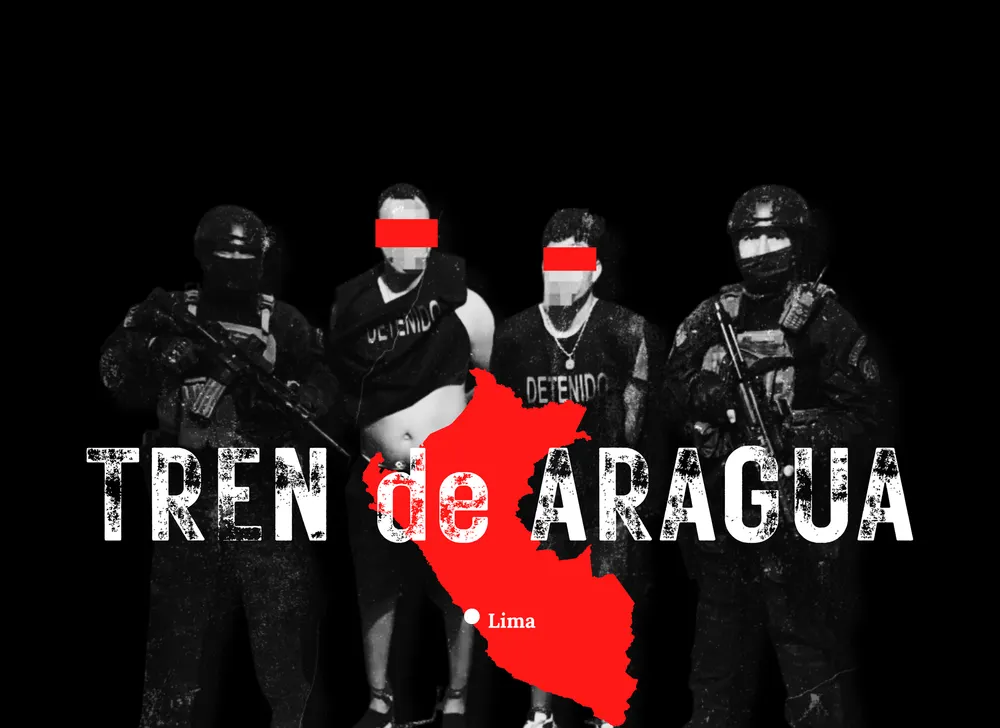
LIMA, PERU — Peruvian police have dismantled a Tren de Aragua cell accused of extorting bus companies and construction workers on the northern edge of Lima. The Interior Ministry announced the arrests on October 13, in one of the first operations under the new crime-fighting command launched by President Keiko Fujimori.
The Raid
Officers raided a house in the Villa Los Olivos housing association in Puente Piedra, which police describe as the gang’s base of operations. They arrested six Venezuelans, aged 23 to 32, suspected of extortion, gang membership and crimes against public safety.
Police identified the alleged leader as Iam Gael León Díaz, 28. The group calls itself “Los Remanentes del Tren de Aragua,” or the Tren de Aragua remnants.
The operation was carried out by the national police’s criminal investigation directorate, through its extortion and organized crime division.
Police seized a mini Uzi submachine gun, a rifle, a hand grenade, three magazines and 85 unfired 9 mm rounds, along with six cell phones, a car, four motorcycles, license plates, and construction-worker uniforms and clothing with company logos.
Bomb-squad officers destroyed the grenade in a controlled blast.
A notebook seized in the raid lists four bus companies that serve the Puente Piedra route and a weekly fee of 80 soles, about $23, per vehicle. Suspects reportedly told police they extorted public transport and construction workers.
“According to their own words, they say they have to go and put pressure,” said Gen. José Antonio Zavala, who heads the national police’s criminal investigation directorate.
Investigators still need to identify remaining victims and establish how much money the cell collected. All six suspects are presumed innocent, and prosecutors have not said whether they will seek pretrial detention.
Extortion as Peru’s Defining Crime
Extortion has become the crime that most affects ordinary Peruvians, reaching bus drivers, shopkeepers, builders, neighborhood vendors and local businesses. It helped define the election that brought Fujimori to power, and it is at the center of her government’s security agenda.
On October 7 she launched the Unified Command for the Fight Against Crime, which coordinates police and other agencies against organized crime.
The Puente Piedra raid is part of that effort.
Other recent actions include a Lima gang raid on October 12 and seven arrests in Piura on October 10, and a blockade of motorcycle taxis in Puente Piedra on October 11 shows how tense the area has been. The government is also setting up a committee with banks and the telecom regulator to fight extortion.
The TdA Question
Tren de Aragua started in a Venezuelan prison and has spread across Latin America. The United States designated it a foreign terrorist organization in February 2025. The name’s use in this case raises a question that police haven’t answered: whether the Puente Piedra cell takes orders from the wider organization or only uses its brand.
Police call it a remnant, and the Interior Ministry has not said who the cell reports to.
Peru has arrested Tren de Aragua members before. Past operations targeted larger networks, including a 2023 raid that arrested 61 people in Lima and a February 2025 trafficking operation in which U.S. Homeland Security Investigations assisted Peruvian police.
This latest case is smaller, and no U.S. involvement has been reported.
The raid is a small test for a government that promised quick results on security. Six arrests won’t end extortion in Lima, and the notebook points to a market that other groups are ready to fill.
The question is whether the new command can turn raids like this one into convictions and a drop in the payments that bus drivers and builders say they are forced to make.
¡Duro golpe a las mafias de la extorsión! La @Policia_Peruana desarticuló a Los Remanentes del Tren de Aragua en Puente Piedra y detuvo a seis presuntos integrantes.
— Presidencia del Consejo de Ministros (@pcmperu) October 19, 2026
▶️En el operativo se incautaron armas de guerra, 85 municiones y un cuaderno con anotaciones de presuntos cobros… pic.twitter.com/mty3rHfY99