


CARTAGENA — Colombian police seized more than 7.6 tons of cocaine hidden in a cargo of powdered panela at the port of Cartagena, the largest seizure at that terminal in a decade. The U.S. Embassy said the operation followed weeks of intelligence sharing between the DEA and Colombian police.
The National Police’s anti-narcotics directorate announced the seizure on Monday, saying it recovered 7,646 kilos of cocaine hydrochloride.
Officers flagged the shipment through intelligence analysis, cargo profiling and inspection at the port. A closer look at the cargo, packed in panela boxes, revealed the drug mixed with pulverized panela, an unrefined cane sugar, meant to slip past export controls.
Lab tests confirmed the presence of cocaine, and police say detection dogs helped.
“It is the largest seizure recorded in this port in the last ten years,” said Brig. Gen. William Castaño Ramos, director of anti-narcotics. He credited the effectiveness of the port’s control, analysis and cargo-profiling strategies and said the police will reinforce checks at export points.
¡Golpe contundente al narcotráfico!
— Abelardo De La Espriella (@ABDELAESPRIELLA) October 20, 2026
La Policía Nacional acaba de lograr la mayor incautación de cocaína en el puerto de Cartagena de los últimos 10 años: 7,6 toneladas que tenían como destino los Países Bajos, en Europa.
En tan solo 75 días de Gobierno, nuestra Fuerza Pública… pic.twitter.com/xq5drvSJTZ
Evidence was sent to the police’s criminal investigation directorate and Interpol to determine who produced, packed and shipped the drugs.
Price Tag
Police estimate the seizure caused more than 42 billion pesos (USD $13.3 million) in losses to criminal organizations and kept about 19 million doses off the market.
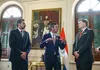
President Abelardo de la Espriella, who announced the bust in a video and on social media, put the value at more than $200 million in the Netherlands, its reported destination.
“Historic blow to drug trafficking in Cartagena,” he wrote. He credited “national and international cooperation” and said the operation was coordinated with the police and the DEA. He called drug trafficking “the worst cancer Colombia has” and said it is “absolutely necessary to begin fumigating” coca crops, arguing that seizures alone don’t address the root of the problem.
U.S. Role
The U.S. Embassy in Bogotá acknowledged the cooperation on X:
“Together, we are stronger against drug trafficking,” it wrote, citing “weeks of shared intelligence between the DEA and the Colombian Police.”
The embassy did not say U.S. personnel took part in the operation at the port, and police statements credit Colombian units.
The bust gives De la Espriella another early win on the issue that helped elect him. He campaigned on a hardline offensive against traffickers and armed groups and has moved to repair relations with Washington.
The president says security forces seized 132 tons of cocaine in his first 75 days in office. Colombia’s ports remain a key exit route for cocaine bound for Europe, and traffickers have long used legitimate cargo such as sugar products to conceal it.
No arrests have been reported, and authorities haven’t identified the exporting company or the criminal organization behind the shipment.