

SAN JOSÉ — For 78 years Costa Rica has defined itself by what it doesn’t have. After abolishing its army in 1948 the country built its identity around social welfare and public education, creating the most stable republic in the region for the better part of the last century. Now, facing its worst crime wave on record, it is turning to prisons, tougher laws and possibly foreign troops to rein in drug trafficking and a string violent turf wars between rival gangs.
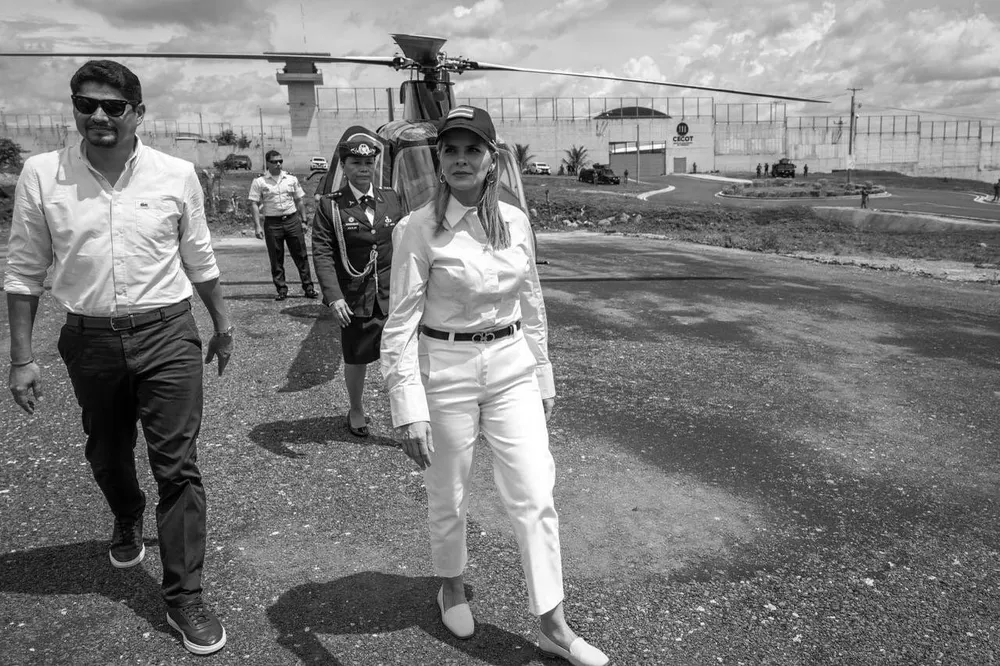
This week its president toured the Salvadoran prison, CECOT, that inspired the new administration’s campaign against crime.
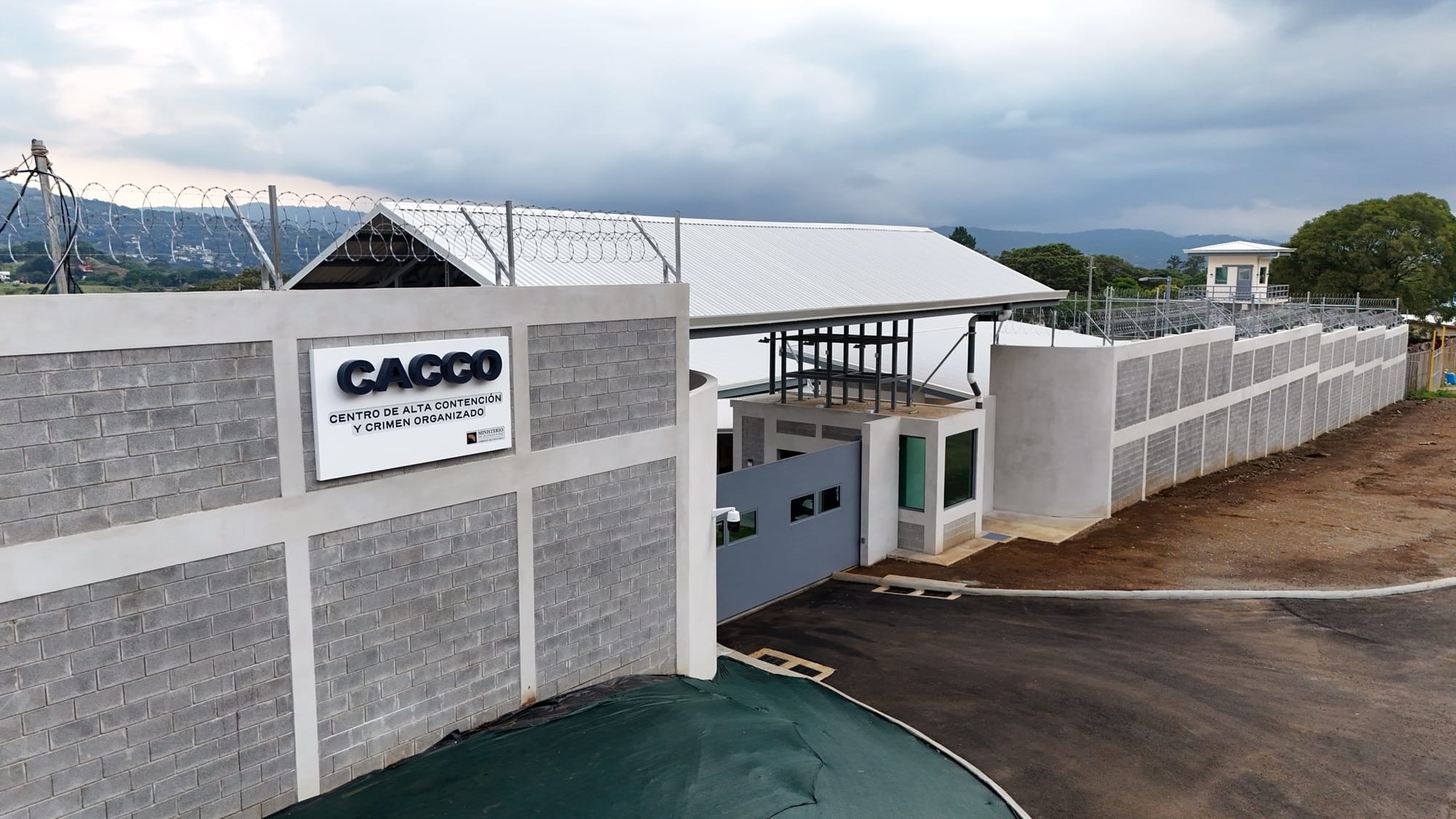
On Wednesday, President Laura Fernández opened the High-Containment Centre Against Organised Crime, known as CACCO, in Alajuela. It was built with help from El Salvador’s government.
The facility holds 5,100 inmates, roughly a fifth of Costa Rica’s current prison population, in five modules of 17 cells each. Authorities say each cell can hold up to 60 people.
The cost is about ₡16.8 billion (roughly US$35 million), according to the Presidential House. Inmates will get one hour of sunlight a day, keep no personal belongings, wear uniforms and face tightly restricted visits.
Transfers begin at the end of October.
“We are going to take a hard line,” Fernández said at the opening, “because those who do wrong will pay.” She called it part of a tough-on-crime model and said Costa Rica would become a regional benchmark for prison security.
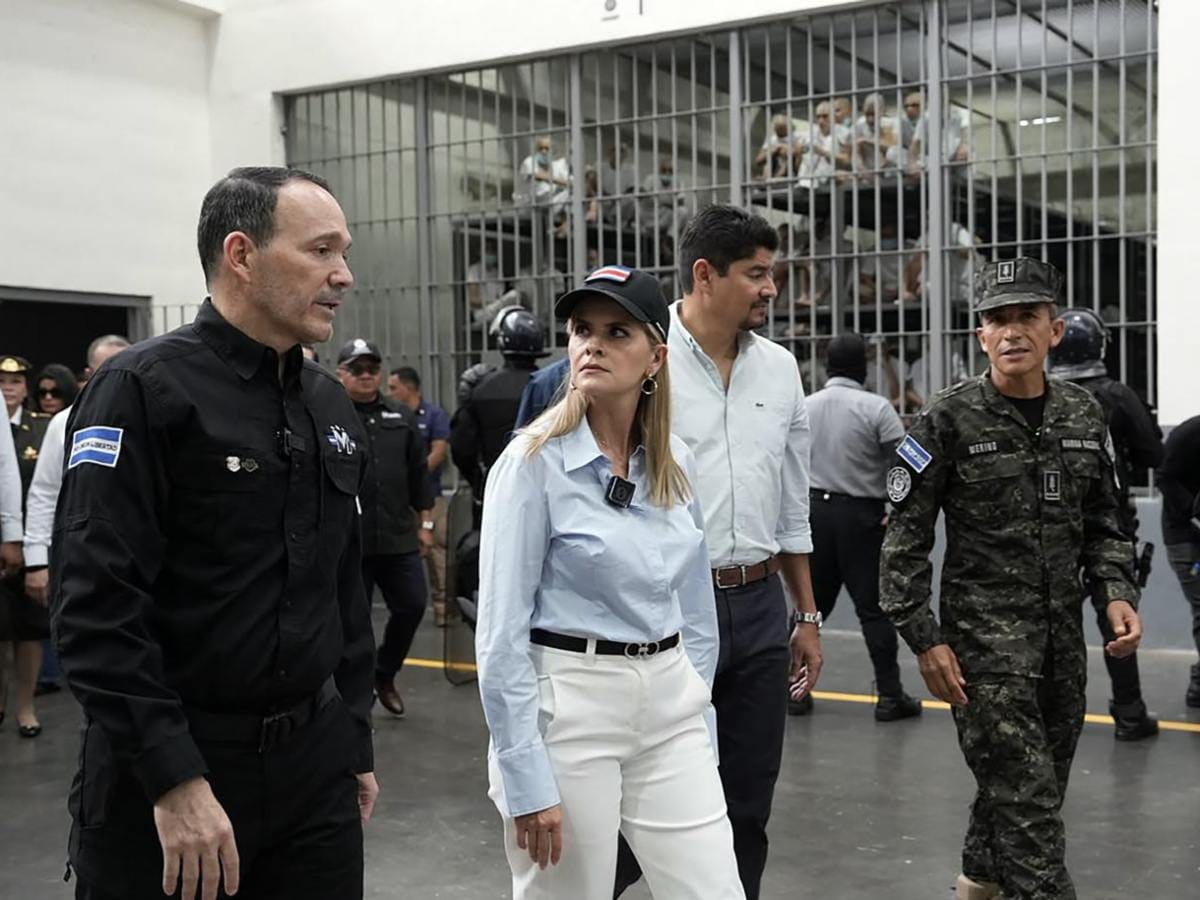
On Friday, two days after the opening, Fernández toured El Salvador’s Terrorism Confinement Center (CECOT) on the first day of an official visit that reports describe as lasting three days.
El Salvador’s Defense Minister René Merino and Security Minister Gustavo Villatoro received her. Fernández visited the prison’s armory and Pavilion 3, where she watched inmates undergo medical checks, exercise and sit in their cells.
Casa Presidencial said she went “to learn firsthand El Salvador’s prison model.” Fernández was also scheduled to meet President Nayib Bukele to discuss regional security, technical cooperation and information sharing.
No agreements have been reported, and she made no public statements to the press during the tour.
Costa Rica has long been calmer than its neighbors, but that has changed in recent years. The Central American nation — with a population of a little more than five million — recorded 905 homicides in 2023, its highest on record, then 876 in 2024 and 873 in 2025.
Investigators attribute about 70% of killings to disputes over drug trafficking, and Security Minister Gerald Campos says only 38% of homicides end in a conviction.
The prison population has also grown 36% since 2020, and insecurity has topped national surveys as the main concern since 2023.
There are early signs of relief, however. Judicial Investigation Agency data show 381 homicides in the first half of 2026, down 14% from the same period in 2025.
Drug-related violence remains at historically high levels.
The Bukele Template
Fernández took office in May after a campaign built on order, and the model is spreading. Peru’s new president, Keiko Fujimori, plans to tour CECOT with a view to building a similar prison. Colombia’s Abelardo de la Espriella campaigned on 10 mega-prisons, and Brazil’s presidential runoff candidate, Flávio Bolsonaro, has proposed five.
The analogy has limits that Costa Rica’s critics are quick to point out. El Salvador’s results came with a state of exception since 2022, the suspension of civil liberties and mass arrests. Analysts also question whether imprisoning foot soldiers reaches the financiers and brokers behind trafficking, and whether a facility for 5,100 changes much when the courts convict so few.
The Army Question
The harder test is what role, if any, foreign forces could play. In a Reuters interview published September 5, Fernández said U.S. ground operations on Costa Rican soil “would benefit national security” if they pursued a common objective against transnational crime, drug trafficking or terrorism.
Fernández stressed that nothing is in motion and that any deployment would need approval from the Legislative Assembly.
Article 12 of the constitution abolished the army as a permanent institution, and Article 121 gives the Assembly sole power to allow foreign troops into the country. Legislative analysts say approval would take 38 of 57 deputies.
Fernández’s Pueblo Soberano party holds 31, seven short.
The comment followed U.S. Defense Secretary Pete Hegseth’s August statement that Washington plans to extend its campaign against alleged drug traffickers from international waters onto land with partner countries.
Fernández intends to incorporate a thorough review of the judiciary. She says slow processing, releases of convicted offenders and administrative failures undermine her agenda, and she backs deep budget cuts and moving the attorney general’s appointment from the Supreme Court to Congress.
Judicial authorities, however, reject the corruption claims and say the planned cuts would weaken prosecutors, investigators and forensic services.
The test is whether a country without an army can fight organized crime with the tools it has. Fernández has seen the Salvadoran model up close. The open questions are whether Costa Rica’s courts can convict enough of the people it jails, whether the homicide decline continues, and whether its democratic checks hold while it adopts a model built for a different country.