

HAVANA — A new dossier by Cuban economy analyst Emilio Morales alleges that GAESA, the military-run conglomerate that dominates much of Cuba’s economy, is using private small businesses as a front to reach the U.S. fuel market, as Washington tightens sanctions on the island.
The claims, reported on Tuesday by Infobae, come from Morales’s analysis and have not been independently verified.
Morales, vice president of Cuba Siglo 21 and president of the Havana Consulting Group, argues that private firms known as MIPYMES appear as formal importers or sellers of fuel while the gas stations belong to CIMEX, payments run through FINCIMEX’s cards, and revenue flows to Banco Financiero Internacional. All three, he says, are linked to GAESA.
The dossier estimates GAESA resold 40% to 50% of subsidized Venezuelan crude in Asian markets, generating about US$30 billion from 2010 to 2025, after Maduro’s capture in January cut off that supply. It also estimates that starting to import ten isotanks of fuel could take US$500,000 to US$1.4 million in cash, a barrier few ordinary private firms could meet.
U.S. Measures
The report cites several U.S. measures. A license exception, “Support for the Cuban People,” lets eligible private entities and individuals export fuel to Cuba. The Trump administration sanctioned the state firms CUPET, ENETEC and COREYDAN, and U.S. authorities reportedly intercepted 90 shipments bound for ENETEC, about 600,000 gallons worth roughly US$2.8 million.
U.S. fuel and derivative exports to Cuba totaled about US$232 million from January to August 2026, with a monthly record of US$74.9 million in August, according to the dossier.
Sanctions
The allegations land after months of escalating pressure. A May 1 executive order expanded sanctions on commerce with Cuba to cover “any foreign person” operating in any sector of its economy, according to Reuters.
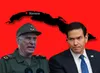
On May 7, the State Department sanctioned GAESA, its executive president Ania Guillermina Lastres Morera, and the nickel venture MNSA, a company formed by Cuba’s La Compañía General de Níquel and Canada’s Sherritt International.
Secretary of State Marco Rubio said further designations could follow “in the coming days and weeks.”
The U.S. accuses GAESA of hoarding profits from Cuba’s most valuable industries for the military and the elite. No public data exists on its share of the economy.
Outside estimates range from 40% to 70%, according to Reuters. In June, Cuba said GAESA is “not an opaque structure, nor parallel to the Cuban State” and has contributed to the country’s economic and social development.
Foreign Minister Bruno Rodríguez has rejected the U.S. sanctions as built on false pretexts.
Several hotel operators have since scaled back or exited, including Blue Diamond Resorts and Iberostar’s GAESA-linked properties.