

Three weeks before Colombians return to the polls for the June 21 presidential runoff, a car bomb detonated near a police station in the southwestern department of Cauca — and the security architecture surrounding the country’s most consequential election in years is being tested from every direction simultaneously.
In Patía, Cauca department, the General Central Staff dissident faction of the Revolutionary Armed Forces of Colombia detonated a car bomb near the local police station in early June, causing extensive damage to the administrative area surrounding it. No casualties were immediately reported, but the attack — in a region where Petro’s now-discredited “total peace” strategy was most aggressively pursued — sent an unmistakable message about what the armed groups that benefited from that strategy are prepared to do as the political landscape shifts beneath them.
The bombing was not an isolated incident. It was the latest data point in a security environment that has been deteriorating since before the May 31 first round — and that threatens to cast a shadow over the legitimacy of whatever result emerges on June 21.
Armed Groups & the Election
The relationship between Colombia’s illegal armed organizations and its electoral process has never been clean. But the 2026 cycle has made the entanglement more visible than it has been in years.
Last year, Colombia’s most powerful drug lord directly threatened violence ahead of the election, warning against what he called “advancing warmongering sectors” — a phrase widely interpreted as a threat directed at right-wing candidates, and at de la Espriella specifically.
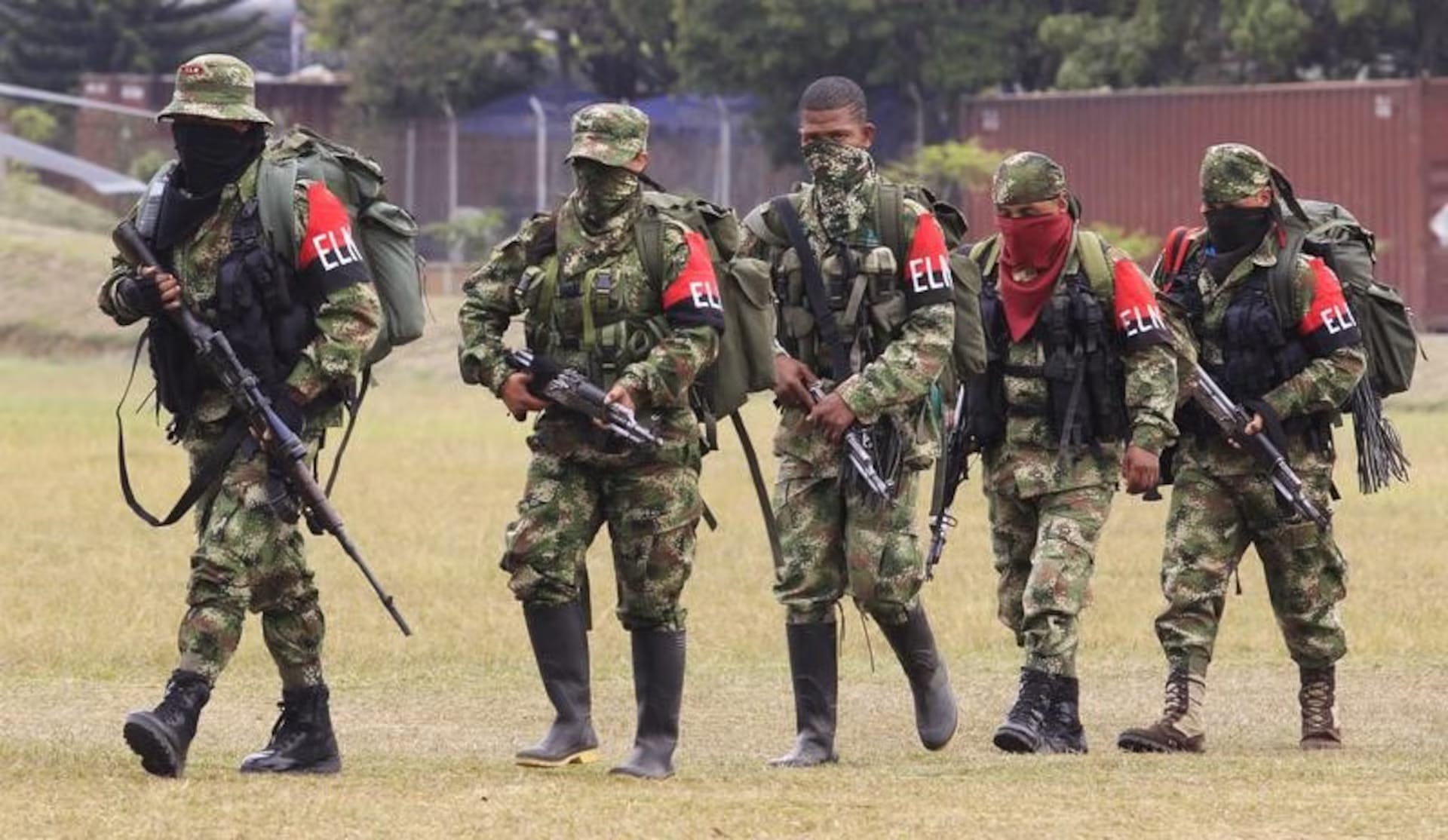
The ELN’s posture throughout the campaign has been equally pointed. The National Liberation Army (ELN) announced a unilateral ceasefire running from midnight on May 30 to midnight on June 2, covering the first-round voting period — stating the move was intended to respect citizens’ right to vote. The gesture was framed as civic responsibility. Critics read it differently.
Former President Álvaro Uribe Vélez publicly alleged that ELN and FARC dissident factions were using the pre-electoral period to pressure communities in Cauca to favor left-wing candidate Iván Cepeda — allegations the groups denied.
The pattern was consistent with what election observers had documented on the ground: instances of voter intimidation by armed groups in rural areas, where illegal organizations exercise territorial control and where the guarantees of free democratic participation become most difficult to uphold.
Cepeda has participated in negotiations surrounding the 2016 peace agreement and has been involved in talks with the ELN. He has defended continuing negotiations and deepening implementation of the accords, arguing that Colombia’s armed conflict is closely tied to rural inequality, state abandonment, and illicit economies — requiring both security measures and social investment.
In a press conference ahead of the first round, Cepeda rejected “any attempt by armed groups to pressure the electorate in one way or another, whether actions that go against, or supposedly in favor of our campaign.”
The disavowal did not resolve the underlying question. When armed groups announce ceasefires timed to elections, endorse one candidate’s approach to negotiation over another’s, and simultaneously engage in voter intimidation in regions under their territorial control, the line between tactical restraint and active interference becomes difficult to draw.
The Security Architecture Around June 21
The Colombian government has deployed a comprehensive security framework for the runoff. The National Electoral Council accredited 86 U.S. Embassy observers under Resolution 2090 — the first time the United States has directly observed a Colombian presidential election — while the European Union’s Electoral Observation Mission, led by MEP Esteban González Pons, completed a five-day assessment visit ahead of the first round.
The OAS observation mission, headed by former Dominican president Leonel Fernández, has also deployed across the territory.
González Pons acknowledged the stakes plainly: “The mission is fully aware that in some parts of the country the electoral process will take place in a context of violence, threats, and population displacement.”
National Registrar Hernán Peñagos has insisted that the constitutional calendar is immovable — the June 21 date will not shift regardless of security conditions. The government’s position is that the state’s capacity to hold elections under pressure is itself the message that must be sent.
What De la Espriella Has Promised
The security dimension of the runoff is not merely a backdrop — it is a central argument in de la Espriella’s campaign.
Abelardo de la Espriella has pledged to abandon Petro’s negotiation approach entirely, pointing to the breakdown of negotiations with key armed groups such as the ELN and the continued eruptions of deadly violence in conflict zones as evidence that ceasefires and stalled negotiations weakened state authority and allowed armed groups to strengthen their territorial presence.
De la Espriella promises to resume the halted aerial fumigation of coca fields with glyphosate, take down small aircraft, and sink boats carrying drugs. Like El Salvador’s Bukele, he pushes back against human rights concerns, saying the left cares more about the rights of criminals than their victims. His campaign has pledged the construction of a megaprison as a centerpiece of his security agenda.
The car bomb in Patía, the ELN’s voter pressure allegations in Cauca, and the drug lord’s pre-election threats all feed directly into that argument — and into the central question that will be decided on June 21: whether Colombia’s electorate concludes that the armed groups destabilizing the country’s democracy are a reason to elect the candidate who has promised to confront them, or the candidate who has promised to negotiate with them.
Have a tip or story lead? Contact us at info@sociedadmedia.com
Sociedad Media is a Miami-based independent digital news publication covering the latest developments across Latin America, and their impact on Miami’s Latino community.
Our reporting follows strict impartiality standards.


