

BOGOTÁ — Right-wing outsider Abelardo de la Espriella won Colombia’s presidential first round on Sunday with a commanding 43.7% of the vote, defying pre-election polling and setting up a high-stakes runoff against leftist Senator Iván Cepeda, heir apparent to sitting President Gustavo Petro, on June 21.
With 99% of ballots counted, de la Espriella secured more than 10.3 million votes — well ahead of Cepeda’s roughly 9.7 million, or 40.9%. No candidate reached the absolute majority required to win outright. But result stunned political analysts, most of whom had placed Cepeda in the lead heading into election day.
Electoral authorities stated that voting had proceeded “normally and safely” across the country, with more than 23 million Colombians casting ballots — a turnout of approximately 56% of registered voters.
An Upset That Reshapes the Race
The scale of the victory surprised even analysts and political observers. Although some recent surveys had detected de la Espriella’s steady growth during the final weeks of the campaign, most polls still placed Cepeda in first place in voting intentions.
De la Espriella, 47, is a lawyer and political outsider who has spoken favorably of U.S. President Donald Trump and drawn comparisons to leaders such as El Salvador’s Nayib Bukele because of his tough-on-crime rhetoric.
Running on a platform centered on security, law and order, and economic liberalization, the self-described conservative nationalist has promised a more confrontational approach toward criminal organizations and guerrilla factions, including stronger security ties with the United States and Israel, lower taxes, and expanded oil exploration.
The collapse of center-right candidate Paloma Valencia was equally striking. Valencia, the candidate of former President Álvaro Uribe’s Democratic Center party, received less than 7% of the vote — far below what polls had projected.
Following the result, Valencia announced her support for de la Espriella, urging people not to let the “new communism” in the country continue. Uribe himself also announced his backing for the runoff frontrunner, consolidating the Colombian right behind de la Espriella ahead of June 21.
Washington Responds
Through an official statement, the U.S. State Department congratulated Colombia’s electoral authorities on the conduct of the election and highlighted citizen participation in one of the most closely watched electoral processes in recent years. The statement was interpreted as a show of support for the country’s democratic institutions and for the transition process toward the June 21 runoff.
U.S. Senator Bernie Moreno, who was born in Bogotá and traveled to Colombia to observe the voting process, congratulated de la Espriella directly.
“Congratulations to Abelardo de la Espriella for receiving the most votes,” Moreno wrote. “The beauty of democracy was on full display as the people of Colombia exercised their power to chart their future, in their own hands, with their own voices.”
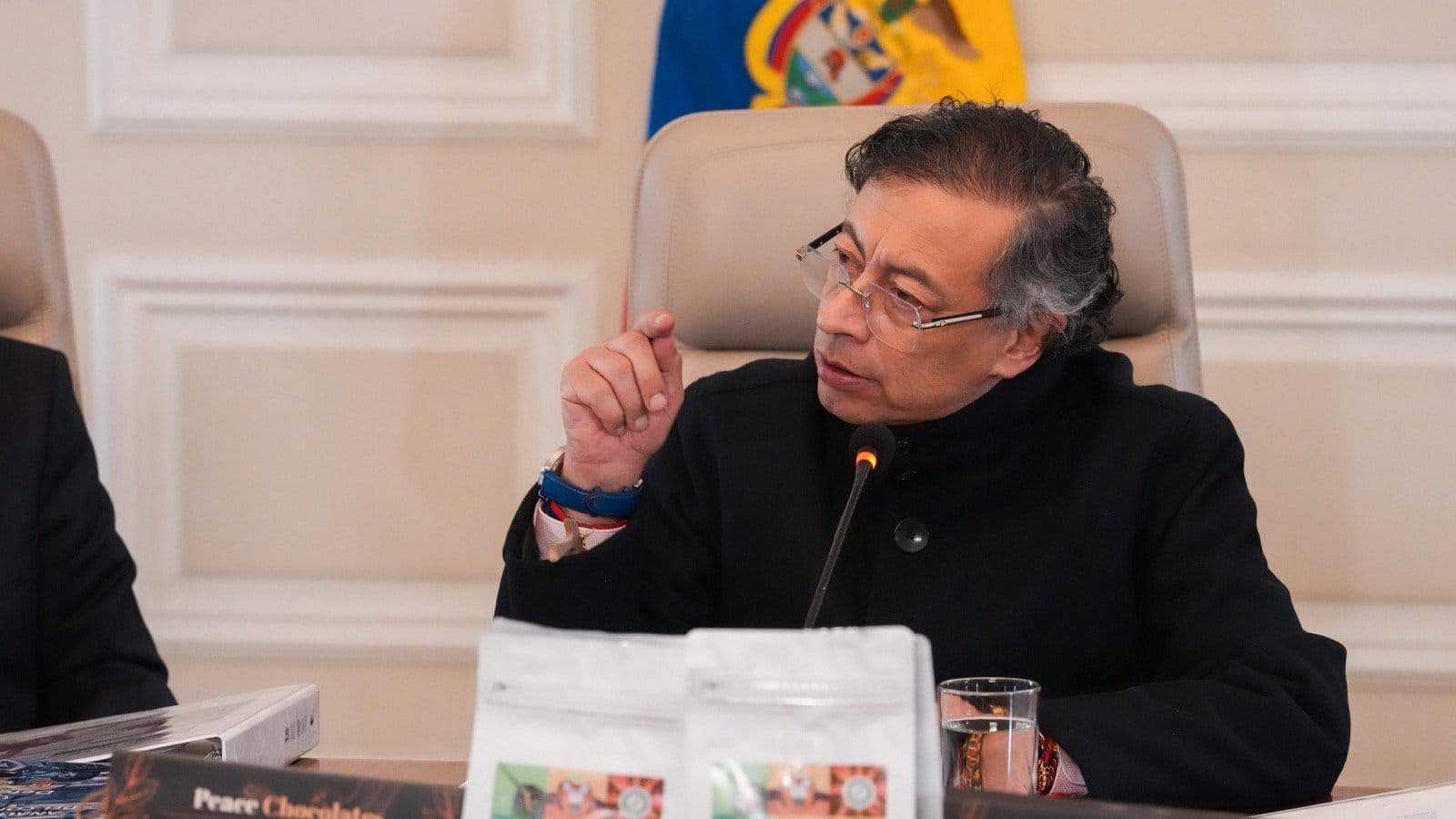
The result carries significant implications for U.S.-Colombia relations. Under the Petro government, U.S.-Colombian relations have been strained by differences over drug policy, U.S. foreign assistance cuts and tariffs, and Colombia’s decision to sign a cooperation agreement with China under the Belt and Road Initiative.
In September 2025, President Trump determined that Colombia had failed to meet its counternarcotics commitments, the State Department revoked Petro’s visa, and the Treasury Department imposed sanctions.
De la Espriella has proposed including Colombia in the Shield of the Americas, a security framework created by the Trump administration, and has engaged directly with administration officials and Republican members of Congress.
Petro & Cepeda Reject the Results
The election night was marked by an immediate challenge to the results from the outgoing president and his desired successor candidate. Cepeda and Petro claimed without evidence that hundreds of thousands of votes were manipulated and that foreign actors had interfered in the results of the election.
Petro refused to accept the results on Sunday night in a post on X, claiming without evidence that the results were manipulated by outside actors and declaring them “not binding.” He alleged that “hundreds of thousands of votes were added” and repeated earlier accusations about flaws in the counting and scrutiny software — without providing any evidence.
Cepeda backed Petro’s allegations, arguing that there are inconsistencies that must be clarified by the electoral authorities. According to the candidate, the country cannot consider the preliminary results definitive while doubts remain regarding the number of registered voters and a discrepancy detected in the electoral roll.
Although he did not present additional evidence, he reiterated that his campaign would remain vigilant throughout the official counting process.
Independent analysts have found no evidence of software manipulation determining presidential election results in Colombia. Colombia’s National Civil Registry and the country’s neutral electoral observation mission, MOE, have defended the integrity of the process. International observers were also present throughout the country on election day.
Petro’s fraud claims are not new. The Accusations Commission of the House of Representatives had opened investigations against Petro over alleged political interference ahead of the election, and he was separately accused of carrying out a discrediting campaign against the National Civil Registry in the weeks before the vote.
The Road to June 21
The second round is expected to be an uphill battle for Cepeda. Colombia’s right wing is expected to consolidate behind de la Espriella, continuing a regional trend in Latin America in which left-wing governments in Chile, Honduras, and Bolivia were all replaced by right-wing presidential contenders in the past year.
De la Espriella addressed supporters from Barranquilla on Sunday night: “We are going to defeat tyranny and absolutism,” he said. “We have advanced to the runoff thanks to the more than 10 million Colombians who answered the roar.”
The official scrutiny of the first-round results — the escrutinio — is expected to take several days.
The runoff is scheduled for June 21, 2026.
Have a tip or story lead? Contact us at info@sociedadmedia.com
Sociedad Media is an independent digital publication covering Latin American politics, business, and security. Our reporting follows strict impartiality standards.


