
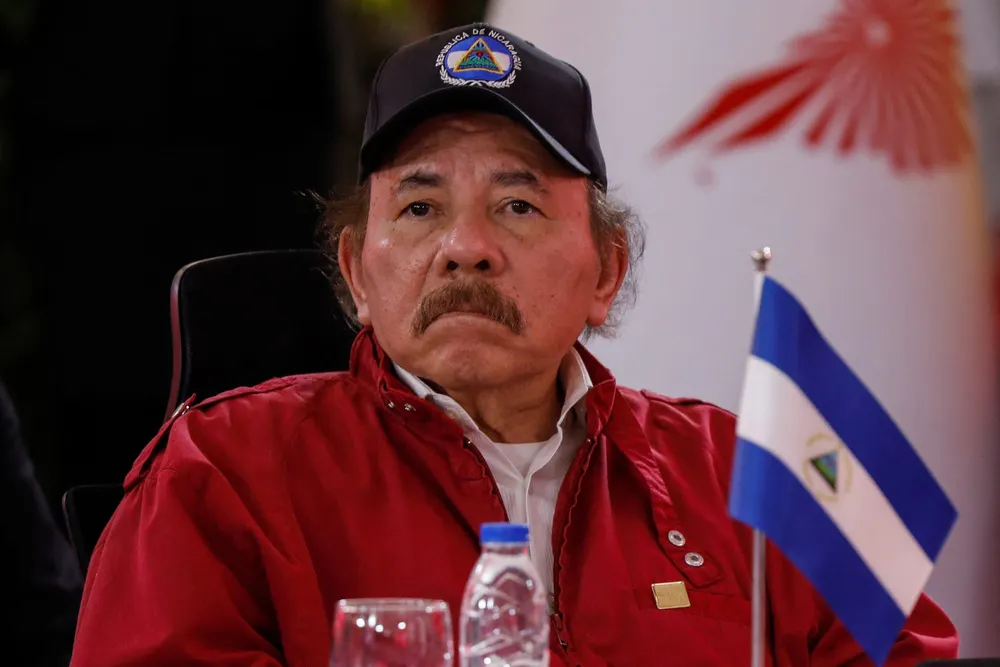
MANAGUA — Nicaragua’s Daniel Ortega used the 47th anniversary of the Sandinista Revolution to make explicit what years of repression had already made functionally true: there will be no more elections in Nicaragua, and no legal path back to power for anyone he considers an enemy of his government.
The Promise
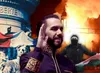
Speaking on July 19 at a ceremony in Managua’s Plaza de la Fe commemorating the 1979 communist overthrow of the Somoza dictatorship, the 80-year-old Ortega — making his first public appearance in 61 days — told supporters, “There won’t be any more elections here for them to try to seize the government and seize power.” Ortega added: “The days when parties backed by the Yanquis (Yankees — North Americans) and the Somocistas would return to power are over — never again.”
Ortega framed the announcement as protection against renewed U.S.-backed opposition, saying he would work with the National Assembly, which his party fully controls, to build what he described as a legal “wall” ensuring that “coup plotters and traitors can never return to power.” Ortega, however, did not provide specifics on how elections would be formally ended or replaced, though he indicated new legal restrictions on political parties were coming.
The 80-year-old strongman, who co-governs in name along with his wife Rosario Murillo, also used the speech to revisit the events of April 2018, when nationwide protests against social security reforms grew into a broader anti-government uprising.
Ortega again characterized those protests as an attempted coup, claiming demonstrators had been recruited, trained, and armed using U.S. funding to overthrow what he called “the legitimate Sandinista government.” Human rights groups have documented that Ortega’s government responded to the 2018 protests with a police and paramilitary crackdown, known as Operation Cleanup, that killed several hundred people — a toll Ortega has consistently framed instead as the justified response to an attempted foreign-backed insurrection.
Why Timing Matters
The timing lands roughly a year before Nicaragua’s next scheduled national election in 2027, in which Ortega and his wife and vice president, would have been eligible to seek a fifth and second term respectively, since Nicaragua has no presidential term limits. Ortega’s declaration effectively forecloses that vote from ever functioning as a genuine contest, following a pattern set by the country’s 2021 election, which international observers, including the U.S. State Department, condemned as illegitimate after Ortega’s government jailed seven potential opposition presidential candidates ahead of the vote.
The declaration also builds on constitutional reforms Ortega pushed through last year, which named Murillo as formal “co-president” alongside him and extended presidential terms from five to six years. Together, Ortega and Murillo control the presidency, the National Assembly, the armed forces, and the judiciary.
A clip of Ortega’s speech on July 19 in Managua, Nicaragua:
President Daniel Ortega on the evening of July 19 in Managua vowing to never hold elections again in front of supporters in Managua in commemoration of the 47th anniversary of the Sandinista Revolution. Source: X
Washington’s Response
The Trump administration has designated the Ortega-Murillo government a dictatorship and imposed sanctions on more than 2,350 Nicaraguan officials and their family members, alongside visa restrictions targeting the same group.
Secretary of State Marco Rubio said last month that the United States stands with Nicaraguans who aspire to see a free Nicaragua, referencing imprisoned opposition figures. But the State Department had not issued a formal response to Ortega’s specific July 19 remarks as of this writing.
“Yanquis & Somocistas”
Ortega’s rhetorical pairing of “Yanquis” and “Somocistas” is a deliberate callback to the Sandinistas’ founding narrative: the 1979 revolution that Ortega and his movement led to overthrow the Somoza family dynasty, which had ruled Nicaragua for over four decades with sustained U.S. backing. By invoking that history, Ortega frames any current domestic opposition — regardless of its actual composition or demands — as a continuation of the same foreign-aligned elite his revolution was originally fought against, collapsing more than four decades of Nicaraguan political history into a single, recurring threat that, in his telling, justifies permanently closing off electoral competition.
Analysts inside Nicaragua have offered a more skeptical reading. Some have compared the move to a Chinese-style model of one-party “democratic centralism,” while cautioning that regardless of what legal framework Ortega’s government ultimately enacts, real decision-making authority will remain concentrated entirely with Ortega and Murillo.
One Nicaraguan analyst suggested Ortega is making this move now precisely because he believes his government maintains sufficient internal control through economic stability and repression, at a moment when he judges Washington’s attention to be focused elsewhere in the hemisphere.
In The Weeks Ahead
With Ortega ruling out elections outright rather than merely stage-managing them, as his government has done since at least 2021, Nicaragua’s political opposition — much of it already imprisoned, exiled, or operating underground — is left with no formal, legal avenue back into the political system.
Whether Ortega’s announced legislative “wall” takes the form of banning specific parties, redefining eligibility rules, or eliminating national elections altogether remains to be detailed by the National Assembly in the weeks ahead.
Sociedad Media is a Miami-based digital news publication covering developing events across Latin America.
For questions, corrections, or tips, contact info@sociedadmedia.com
🚨🇳🇮 | ALERTA/CENTRAL AMERICA: Nicaragua’s dictator Daniel Ortega promises that “There won’t be any more elections here for them to try to seize the government and seize power.”
— Sociedad Media (@sociedadmedia) July 21, 2026
Ortega vowed to supporters in a speech on Monday, July 20, in Managua:
“The days when parties backed… pic.twitter.com/AGbbV895aD