

MEXICO CITY — A new U.S. State Department report has revived a years-old and diplomatically delicate question for Mexico: how many Russian intelligence officers are operating inside the country under diplomatic cover, and why hasn’t Mexico expelled them.
President Claudia Sheinbaum addressed the matter directly at her July 20 mañanera, daily press briefing, offering a response calibrated to avoid confrontation with Washington while defending Mexico’s sovereign right to manage foreign intelligence activity on its own terms.
The Report That Reopened the Question
The claims surfaced inside “Cuba: The Capital of 21st Century Communism,” the 100-page State Department report released this month that argues Havana has spent decades building far-left influence networks inside the United States.
Within its section on Cuba’s alliance with Moscow, the report singles out Mexico as a key operating base for Russian intelligence in the Western Hemisphere, citing 2022 Senate testimony from then-U.S. Northern Command chief Gen. Glen VanHerck that Russia’s military intelligence agency, the GRU, maintains its largest worldwide operations base in Mexico. According to the report, senior Russian intelligence officers pose as diplomatic personnel to gather information on the United States, giving Moscow what the document calls “backdoor” access to American security-related data.
The report also revives a December 2025 New York Times investigation, according to which the CIA handed Mexico’s Foreign Ministry a list of more than 24 alleged Russian intelligence officers accredited as diplomats, back in 2022. Neither the administration of then-President Andrés Manuel López Obrador nor Sheinbaum’s government, which took office in October 2024, expelled any of them.
The Times reporting includes a pointed exchange from that period: then-Foreign Secretary Marcelo Ebrard reportedly told U.S. officials the flagged agents weren’t “a problem,” prompting a direct rebuttal from then-Deputy Secretary of State Wendy Sherman, who said:
“They are a problem. We know it. We expelled them from Washington, and now they’re here.”
In 2023, López Obrador’s government did agree to let Washington weigh in on new Russian diplomatic accreditation requests going forward — some of which were later denied — but the agents already inside Mexico were allowed to stay.
Sheinbaum’s Response
At her July 20 “Mañanera del Pueblo” press conference in the National Palace, Sheinbaum addressed the matter without confirming or denying the specific Russian allegations. Instead, she offered a broader accounting of Mexico’s foreign-agent framework: approximately 250 foreign intelligence and security agents from various countries currently operate inside Mexico, she said, all vetted and approved by a committee within Mexico’s Security Cabinet and legally bound to comply with the Mexican Constitution and the National Security Law.
“They all have to comply with the Constitution and the National Security Law,” Sheinbaum said. “They have to be approved by a Security Cabinet committee, and every month they have to report on their activities in Mexico.”
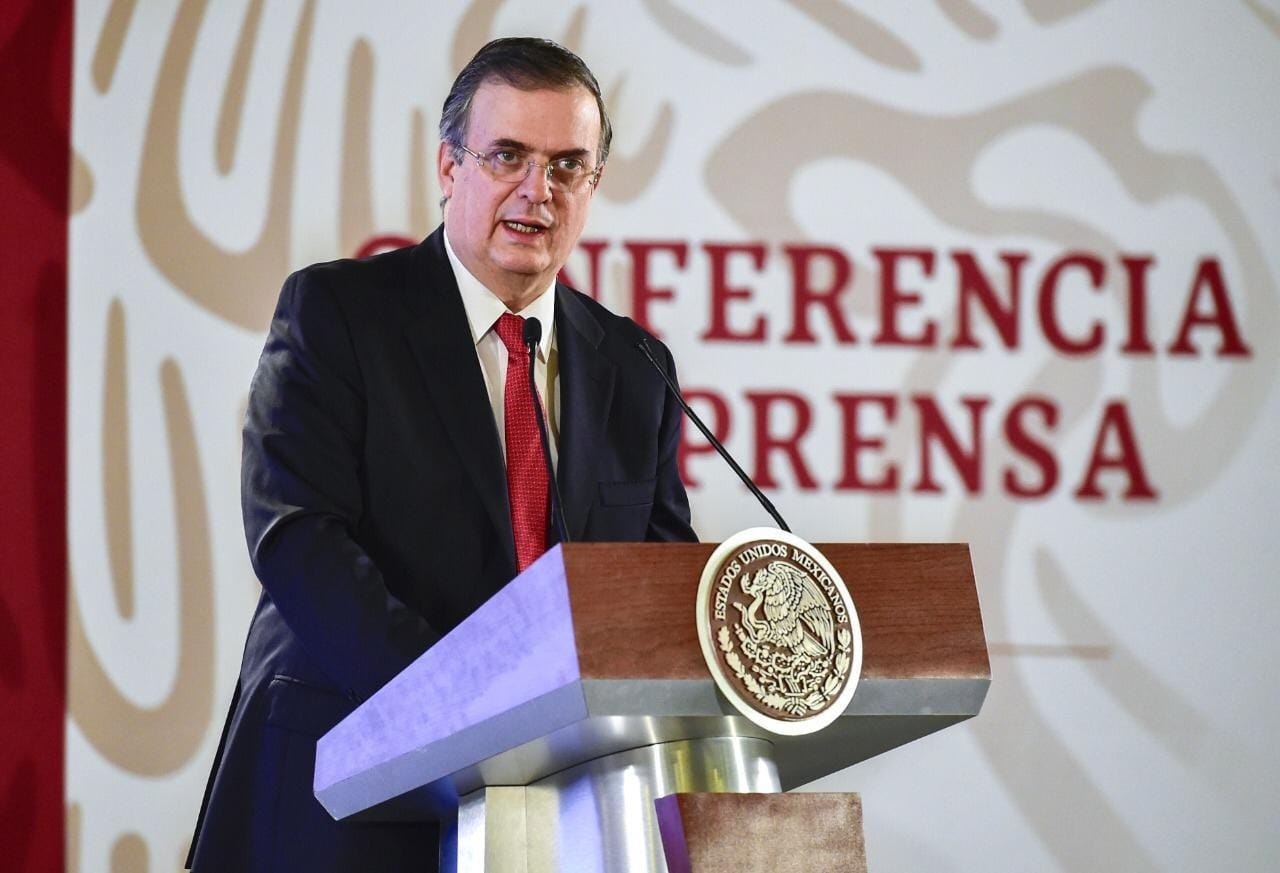
According to REFORMA’s reporting on the same press conference, Sheinbaum went further, directing the Foreign Ministry (SRE) to evaluate disclosing the nationalities of at least some of the foreign agents involved — a potential shift toward more public transparency on a subject Mexican governments have traditionally kept opaque, though the SRE has not yet indicated what such a disclosure would look like or when it might occur.
Sheinbaum drew an explicit distinction between authorized cooperation and undisclosed operations, referencing April’s incident in Chihuahua, in which U.S. agents believed to be CIA-linked were found operating without notifying Mexico’s federal government — a case that contributed to the resignation of a state prosecutor and prompted Mexico to request their withdrawal through the U.S. embassy.
“The problem is if some other member of the U.S. government comes to carry out an operation in Mexico without informing the Mexican government,” Sheinbaum said, adding that diplomatic channels remain her government’s preferred mechanism for resolving disagreements. “We are not seeking a confrontation with the U.S. government,” she said. “That doesn’t mean we’ll allow our sovereignty to be violated.”
The Cuba-Russia Regional Picture
The State Department report frames Mexico’s Russian intelligence presence as part of a larger architecture linking Havana and Moscow. It states that Cuba hosts 18 known signals-intelligence facilities — three operated by China and two directly by Russia, whose personnel on the island have reportedly tripled since 2023 — including what the report describes as Russia’s largest signals-intelligence installation outside its own borders, originally built during the Cold War and reactivated by Moscow in 2014.
The report argues this network reinforces Kremlin military and intelligence ties not just with Cuba, but with Nicaragua and Venezuela as well, and that Russia is using its deepening dependence relationship with Cuba to help rebuild older intelligence networks across the hemisphere.
What This Could Mean for U.S.-Mexico Relations
The timing is delicate. Sheinbaum has spent much of her first year in office carefully managing the bilateral relationship with the Trump administration — navigating tariff pressure, an active USMCA renegotiation process, cartel-related extradition disputes involving Sinaloa officials, and recurring friction over unauthorized U.S. law enforcement activity inside Mexican territory, as in the Chihuahua case.
A State Department report publicly reviving the Russian-espionage question, embedded inside a document primarily about Cuba, adds another point of friction to that relationship at a moment when Washington has already shown a willingness to act unilaterally inside Mexico when it judges its security interests to be at stake.
For Sheinbaum, the response strategy so far mirrors her approach to other flashpoints this year: acknowledge the underlying issue in general terms, defend Mexico’s sovereign authority to regulate foreign intelligence activity within its own legal framework, and avoid direct confrontation with Washington over specifics.
Whether that approach holds if the U.S. escalates public pressure over the Russian question specifically — rather than folding it into a broader Cuba-focused report — may become one of the more consequential tests of the relationship in the months ahead, particularly as USMCA talks continue and Washington’s patience with unresolved security friction points appears to be thinning.
🚨🇲🇽 | AHORA/MEXICO: ¿AGENTES RUSOS DENTRO DE MÉXICO? La presidenta Sheinbaum retoma el tema de los agentes rusos tras la publicación del INFORME SOBRE CUBA DEL DEPARTAMENTO DE ESTADO DE EE.UU., que señala que "la agencia de inteligencia militar de Rusia, el GRU, mantiene en… https://t.co/tw3XWKHTXc
— Sociedad Media (@sociedadmedia) July 21, 2026


