


WASHINGTON, D.C. — On July 1 — the sixth anniversary of USMCA’s entry into force, and the day the World Cup was entering its round of 16 across all three host countries — the United States declined to renew the most important trade agreement in North America.
The USMCA Free Trade Commission held its mandatory six-year joint review on July 1. The United States declined to confirm its intention to extend the Agreement for an additional 16-year period, stating that it “did not agree to renew the USMCA in its current form.”
Mexico and Canada both confirmed their support for extending the agreement.
The United States stood alone.
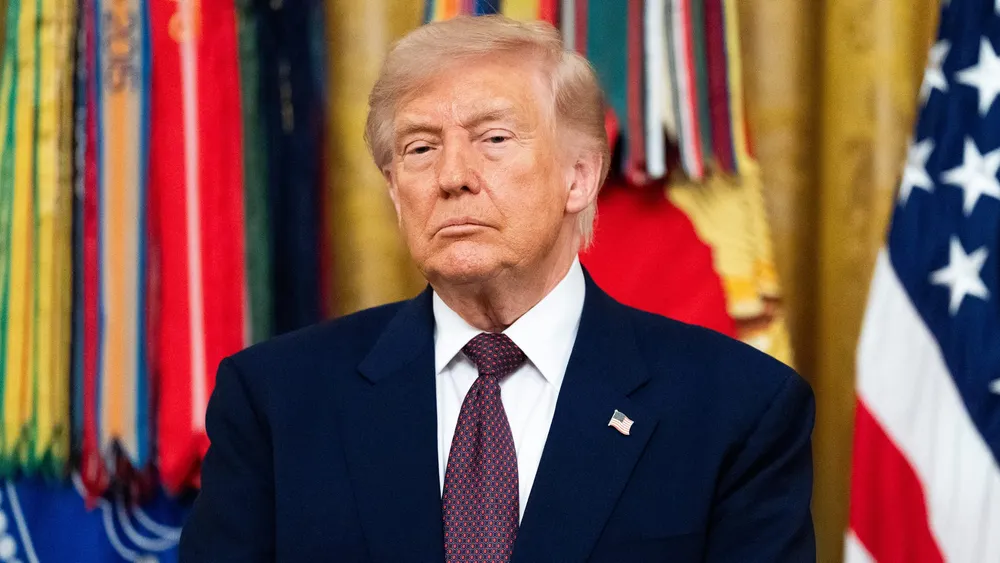
U.S. President Donald Trump “chose not to rubber stamp a USMCA renewal without addressing existing issues,” a senior administration official told reporters.
“In other words, the United States did not agree to renew the USMCA in its current form. So, as a result, the USMCA is not renewed.”
What that means in practice requires careful reading — because the headline is more dramatic than the immediate reality, and the medium-term implications are more serious than the headline suggests.
What Actually Changed on July 1
The Agreement has neither lapsed nor expired. Under Article 34.7.1, the Agreement has a 16-year term running through July 1, 2036. What did not occur on July 1 was the optional decision to extend the Agreement beyond that date.
The decision triggers the annual joint review process under Article 34.7.4, which will proceed each year until the Parties either agree to an extension or the Agreement expires on July 1, 2036. Critically, current tariff preferences, rules of origin, and investment protections are unaffected.
The 16-year extension is deferred, not lost, according to analysts.
In plain terms: the lights did not go off. USMCA remains the law of the land governing trade across a $1.3 trillion annual relationship. But the United States has converted what was supposed to be a routine renewal into a permanent renegotiation — and the negotiations are already underway with very different urgency on each side of the border.
The Mexico Track — Moving Fast
The United States and Mexico have announced a series of bilateral negotiating rounds. A first round in Mexico City on May 28-29 focused on economic security and rules of origin for key industrial goods. A second round in Washington on June 16-17 included discussions on agriculture and a level playing field. A third round is scheduled for the week of July 20 in Mexico City.
The pace of U.S.-Mexico talks reflects both the depth of the bilateral commercial relationship and the specific pressure points Washington wants to address.
Electronics faces growing scrutiny as nearshoring has expanded Mexico-based manufacturing. Products with components of Chinese origin will attract heightened attention — a direct byproduct of U.S.-China trade policy intersecting with USMCA enforcement. Energy risk is driven more by political tension than rule changes, with the United States and Canada seeking assurances that energy prices and market access are nondiscriminatory.
The Chinese goods routing issue is the sharpest friction point. As U.S.-China tariffs have made direct Chinese exports to the U.S. uncompetitive, manufacturing has shifted to Mexico — with Chinese components assembled into finished goods that then enter the U.S. under USMCA’s tariff-free provisions. Washington wants rules of origin tightened specifically to close that channel. Mexico, whose export economy depends on those supply chains, has every incentive to resist.
The Canada Track — Barely Started
Canada participated in the July 1 trilateral joint review meeting but has not yet begun substantive text-based negotiations with the United States. The U.S.-Canada dynamic is the most fraught of the three bilateral relationships — strained by ongoing tariffs on steel, aluminum, autos, and lumber that Canada has repeatedly contested, and by a political relationship that deteriorated sharply under Trump’s second term.
Canadian Trade Minister Dominic LeBlanc stated that the parties “agreed on the importance of continuing our discussions,” confirming Canada’s priority of addressing U.S. sectoral tariffs. The diplomatic language obscures a simple reality: Canada wants tariff relief, and Washington is not offering it until the broader renegotiation produces concessions on the issues the Trump administration actually cares about.
What Washington Actually Wants
The Trump administration is poised to seek additional concessions from Mexico and Canada on long-standing trade disputes, while also leveraging the review to address non-trade issues such as migration, drug trafficking, and continental defense.
The linkage of non-trade issues to USMCA is the most significant structural shift in the review. Trump has consistently treated trade relationships as leverage for non-trade policy objectives — and USMCA’s annual review mechanism, triggered by the July 1 non-renewal, gives Washington a recurring pressure point to deploy that leverage every twelve months until 2036.
For Mexico, this means USMCA negotiations will operate simultaneously with fentanyl and cartel designation pressures, migration enforcement demands, and disputes over Chinese goods routing. Sheinbaum has managed the bilateral relationship with Washington more deftly than almost any analyst predicted — but the non-renewal decision converts that management challenge from a one-time event into a permanent condition.
What It Means for Latin America
The USMCA renegotiation is not solely a North American story. How the three nations navigate this moment will shape the region’s economic future for decades.
North American supply chains extend deep into Latin America — Colombian coal, Brazilian iron ore, Central American agricultural products, and Caribbean manufacturing all feed into the integrated North American production system that USMCA governs.
Uncertainty in that system produces downstream effects throughout the region.
Companies reconsidering nearshoring strategies because of USMCA uncertainty are also reconsidering investment in the Latin American suppliers those strategies depend on.
A renegotiated USMCA with tighter rules of origin for Chinese components would accelerate supply chain reorientation — potentially benefiting Latin American countries positioned as alternative suppliers, or damaging those currently integrated into Chinese-Mexican production networks.
The third U.S.-Mexico negotiating round is set for the week of July 20 in Mexico City. Canada has not been announced as a participant. The most consequential trade negotiation of the decade has barely begun — and it runs until 2036 if no agreement is reached.
Subscribe to Sociedad Media newsletters for the latest news & developments across Latin America & U.S.-LATAM relations.