

Colombia’s incoming government has agreed to a renewed security partnership with Washington before its own inauguration has even taken place, reviving the branding of one of the most consequential U.S.-Colombia military programs of the last two decades: Plan Patriota.
A Pentagon Meeting
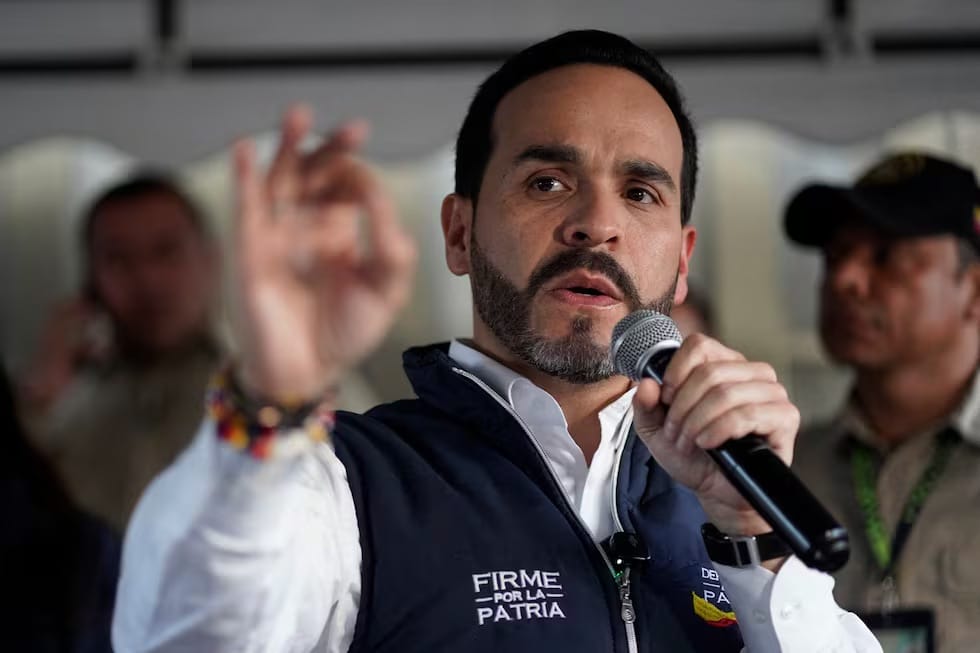
Retired Major General Jorge Eduardo Mora López, the incoming defense minister under Colombia’s president-elect, Abelardo de la Espriella, traveled to Washington last week for a high-level agenda at the Pentagon. There, he met with Joseph M. Humire, the U.S. Under Secretary of War for Western Hemisphere Security Affairs, along with officials from offices covering hemispheric security, defense cooperation, cybersecurity, economic defense, and special operations.
The visit produced an announcement that the two countries will build a Regional Training Center Against Drug Trafficking and Transnational Threats in Colombia, described as the centerpiece of what officials are calling “Plan Patriota 2.0.”
Humire wrote on social media that under de la Espriella’s leadership, the U.S. and Colombia plan to take their security partnership “to new levels” through the initiative. Mora, in his own statement, said the agenda marks the start of “a new stage of cooperation, integration, and joint action” aimed at rebuilding capabilities, defeating narco-terrorist threats, strengthening legitimate state authority, and contributing to regional stability.
The effort is explicitly tied to Colombia’s entry into what U.S. officials have branded the American Coalition Against Trafficking Networks — the same regional framework behind “Shield of the Americas,” the Trump administration’s broader hemispheric anti-cartel initiative that has also drawn interest from incoming governments in Peru and elsewhere.
Plan Patriota
The name is a deliberate callback. The original Plan Patriota launched in 2004 under President Álvaro Uribe as a U.S.-backed military offensive against the FARC and the ELN, Colombia’s two largest guerrilla insurgencies, both later designated Foreign Terrorist Organizations by the United States.
The program built directly on Plan Colombia, the multibillion-dollar U.S. aid package launched in 2000 under President Bill Clinton, and combined military operations with an effort to extend government presence, policing, and social programs into remote, guerrilla-held territory. It eventully became one of the most heavily resourced U.S. security partnerships in the Western Hemisphere, though human rights groups later documented cases linking army units involved in related operations to paramilitary forces and abuses including forced disappearances.
By invoking that history directly, Colombia’s incoming government and its U.S. counterparts are signaling an intent to return to a security-first, heavily militarized model of counter-narcotics cooperation, distinct from the approach pursued under outgoing President Gustavo Petro.
A Sharp Reversal From Petro
The timing underscores just how different this posture is from the outgoing administration. Petro’s relationship with the Trump White House has been openly adversarial at points, including a February clash in which the two traded public barbs before patching things up at a subsequent White House meeting focused on Venezuelan gas and counter-drug cooperation.
De la Espriella, a right-wing outsider who defeated leftist candidate Iván Cepeda in the June 21 runoff, campaigned explicitly on a promise of a military crackdown to restore order and boost the economy — a platform this Pentagon visit, arranged before his July inauguration, suggests he intends to make good on immediately.
Details remain limited. Neither government has specified a budget, deployment timeline, or the precise scope of activities the new regional training center will undertake, nor how “Plan Patriota 2.0” will differ operationally from the counter-narcotics and military cooperation programs already in place between the two countries.
Mora indicated the framework will be formalized further under de la Espriella’s forthcoming national defense and security policy once he takes office.
For Washington, the agreement adds Colombia — historically one of its strongest security partners in the hemisphere — to a growing list of Latin American governments actively aligning with its anti-cartel and counter-trafficking push this year, alongside Ecuador, Peru’s incoming Fujimori government, and the broader Shield of the Americas coalition.
Whether “Plan Patriota 2.0” ultimately resembles the original program’s scale, or whether it proves to be a more modest recording of existing cooperation, will likely become clearer once de la Espriella’s government is sworn in and the defense policy referenced by Mora is formally released.
Sociedad Media will continue to monitor further developments in relations between the United States & Colombia as the region awaits that nation’s newest administration into office
🚨🇨🇴 | ALERTA/SOUTH AMERICA: Colombia’s President-Elect Abelardo de la Espriella designates retired Major General Jorge Eduardo Mora López as the nation’s next defense minister as the incoming government focuses attention on national security.
— Sociedad Media (@sociedadmedia) July 21, 2026
“Plan Patriota 2.0” is the name… pic.twitter.com/QSQxmHPvzo


