


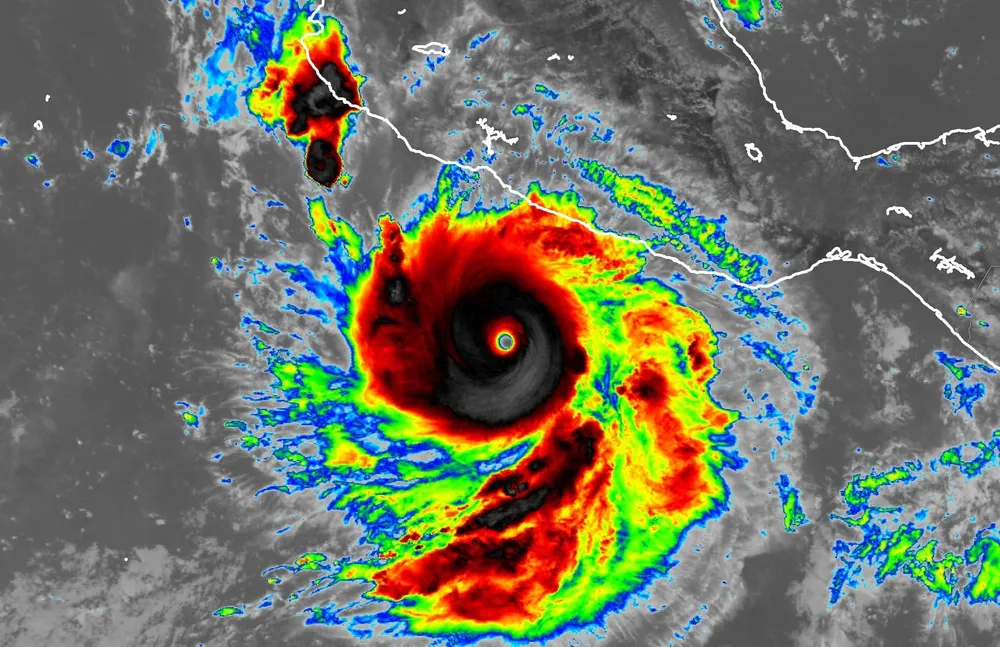
BAJA CALIFORNIA — Hurricane Polo tore into Mexico’s Pacific coast this week, making two landfalls in less than 24 hours and triggering the kind of flash-flood and mudslide threat officials had been warning about for days. Here’s what our readers should know about the storm, the damage so far, and where it’s headed next.
Polo reached maximum sustained winds of 180 mph at its peak, making it the second-strongest hurricane on record in the Eastern Pacific by central pressure, trailing only 2015’s Hurricane Patricia. By the time it made its first landfall Monday evening, September 28, near Baja California Sur, it had weakened to a still-formidable Category 3 with sustained winds of 175 kilometers per hour (roughly 109 mph).
The storm’s eye came ashore just south of Las Barrancas, a small fishing village on Mexico’s west coast, before pushing into southern Sonora state early Tuesday, September 29.
What Happened on the Ground
The impacts were immediate. Seawalls in coastal towns were breached, sending saltwater flooding into streets. Power outages knocked out electricity across several communities, including Puerto San Carlos.
Mexico’s meteorological chief warned ahead of landfall that the storm carried potential for “very severe” damage from both storm surge and heavy precipitation.
Rainfall has been the biggest concern. Forecasters predicted 6 to 12 inches of rain in Baja California Sur, with up to 8 inches possible elsewhere along the storm’s track — totals capable of producing what the National Weather Service called “life-threatening flooding and mudslides.”
Classes were suspended in Acapulco and across affected areas, and public employees were told to work remotely where possible.
How Mexico Prepared
Authorities didn’t wait to react. Roughly 169 emergency shelters were opened across Baja California Sur ahead of landfall, and nearly 7,000 military troops were deployed to the region to assist with evacuations and storm response.
As of the most recent reporting, no confirmed deaths or damage figures had been released, though officials continue assessing the storm’s full impact as floodwaters recede in some areas and rise in others.
Polo’s danger doesn’t end at the Mexican border. The National Weather Service warned the storm would send “a plume of moisture into the Southwest U.S., triggering a significant flash flood threat across the Four Corners Region eastward into the Central Plains.”
Floods hit residents in Guaymas, Sonora state, as the Secretariat of National Defense deploy personnel to support the population on Tuesday, September 29, 2026. Source: @daviddelapaz/X
Flood watches have been issued across 11 U.S. states, putting more than 14 million Americans under some level of flood risk.
Forecasters expect 3 to 6 inches of rain, with higher localized totals, stretching from Arizona to Texas and as far north as Iowa. Major cities including Phoenix, Albuquerque, Dallas, Oklahoma City, and Omaha all face elevated flash-flood risk in the days ahead.
Polo’s intensity is being linked to what meteorologists are calling a “Super El Niño” — an unusually extreme version of the recurring Pacific warming pattern — which has helped fuel an especially active Eastern Pacific hurricane season.
Flood waters roll through Sonora state on Tuesday, September 29, 2026. Credit: @raul_rodrigueza/X
Adding to the concern, Tropical Storm Rachel was developing nearby as Polo made landfall and was expected to strengthen into a hurricane by midweek, raising the possibility of back-to-back impacts on an already-strained region.
What Readers Should Know
For now, the situation remains fluid. No official death toll or damage assessment had been confirmed as of the latest reporting, though the combination of storm surge, extreme rainfall, and a historically powerful wind field means the true scope of the damage may take days to fully emerge — a pattern seen in past Mexican flood disasters, including last October’s floods that killed dozens after initial death tolls were revised upward repeatedly in the following week.
Sociedad Media will continue following developments as Mexican authorities complete damage assessments and as Polo’s remnant moisture moves into the U.S. Southwest.