

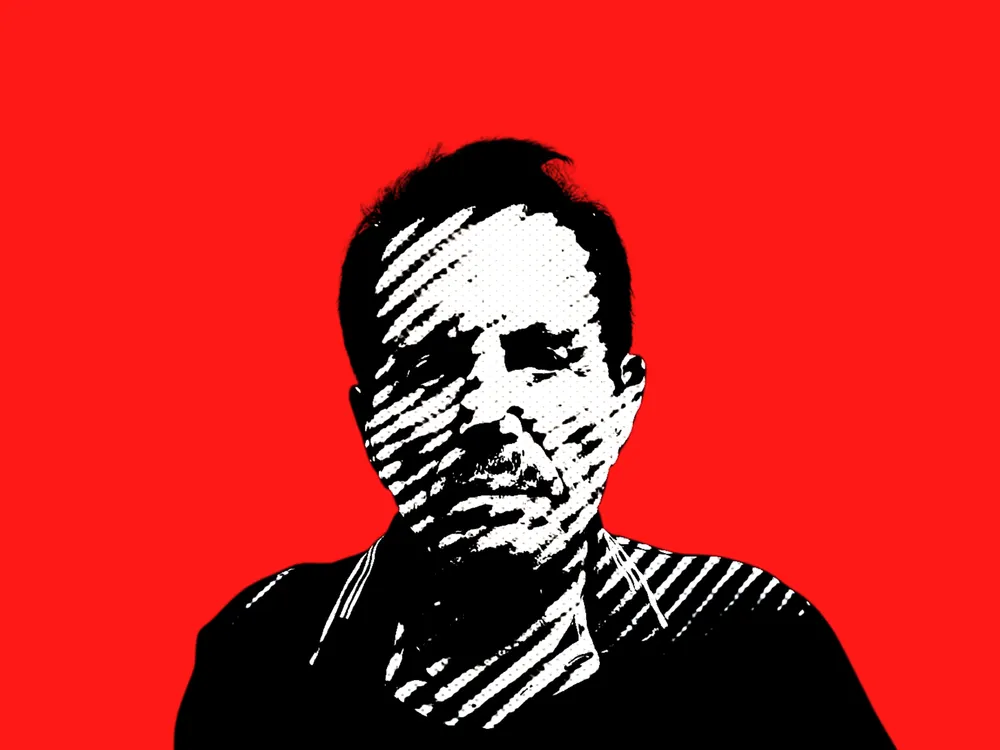
On July 7, Ismael “El Mayo” Zambada submitted a sentencing memorandum to U.S. District Judge Brian Cogan in Brooklyn accepting mandatory life imprisonment without the possibility of parole. He is not fighting the sentence and he is not cooperating with investigators. His one remaining request — his last negotiating position after 55 years in the drug trade — is that he not be placed in the same supermax facility as his former partner Joaquín “El Chapo” Guzmán.
Three thousand miles away, in the mountains and streets of Sinaloa, the war that his capture triggered has killed nearly 2,000 people and is still going.
The Betrayal That Started It All
El Mayo’s journey from Sinaloa kingpin to Brooklyn courtroom began on July 25, 2024, when he landed at a small airport outside El Paso, Texas — not because he was caught, but because he was deceived. Zambada claimed that Joaquín Guzmán López, El Chapo’s son and his own godson, had lured him to a meeting under false pretenses. A bag was placed over his head. He was sedated, and then woke up in U.S. custody.
After a period of tense calm, extreme violence broke out on September 9, 2024 in Culiacán, the capital of the state of Sinaloa. The rival factions battling each other became known as the Chapiza or Chapitos, affiliated with the sons of El Chapo, and the Mayiza, led by El Mayo’s son.
The war that followed was catastrophic. According to Mexico’s Noroeste, there have been 1,972 reported homicides in Sinaloa over the past 12 months — an average of 5.4 per day — an increase of more than 200 percent compared with the same period previously. Thousands more have been disappeared.
What the War Has Done to the Cartel
What began as a two-sided power struggle between Los Chapitos and La Mayiza has evolved into a more chaotic and multi-front war, as other criminal groups have entered the region, including the Guasave Cartel and a faction headed by El Guano, one of El Chapo’s brothers.
Mexico’s Secretary of Defense Ricardo Trevilla Trejo confirmed that federal operations have weakened the Sinaloa Cartel to the point that it has lost control of 30 out of the 42 trafficking routes and distribution hubs it once dominated. The war has also taken an economic toll — economist Cristina Ibarra of the Autonomous University of Sinaloa estimated that at least 10,000 jobs have been lost across the region.
As criminal dynamics shift, the CJNG has sought to take advantage of the redeployment of Sinaloa-aligned forces — exploiting the fracture to push into territories the cartel once dominated unchallenged. La Línea has intensified its incursion into Chihuahua. The Sonora Independent Cartel is pressing from the north. The fragmentation of the world’s most powerful drug trafficking organization is creating vacuums that rivals are racing to fill.
What It Means for Drug Flows Into the United States
The Sinaloa Cartel under El Mayo was the primary supplier of fentanyl and cocaine to the United States — responsible for transporting at least 1.5 million kilograms of cocaine since 1980, most of which went to the United States. The cartel dominated fentanyl precursor chemical procurement from China, manufactured the drug in Sinaloa, and moved it across the border through a network of plaza bosses that controlled the most lucrative crossing points.
That network is now fractured. Routes are being contested. Border crossing operations are disrupted. The short-term consequence of the Sinaloa war — as counterintuitive as it sounds — may be a reduction in fentanyl supply to U.S. markets as trafficking infrastructure is disrupted by internal combat.
The longer-term consequence is a more fragmented, more violent, and harder-to-disrupt distribution system as multiple smaller organizations absorb the routes the Sinaloa Cartel once controlled through a single hierarchy.
El Mayo’s Last Stand
In his Brooklyn sentencing memorandum, El Mayo’s defense made three arguments. First, that his guilty plea — entered in August 2025 — saved the American justice system the resources of a prolonged trial and should be considered in his placement. Second, that his advanced age and undisclosed health conditions require placement in a federal medical center rather than a supermax. Third, that sending him to the same facility as Guzmán, the filing contended, would ignore that he chose to resolve the case.
From his cell, El Mayo repeated his appeal for his home state to stay calm and avoid more bloodshed.
The plea, delivered through his attorney, has gone unheeded for almost a year. The sentencing hearing is set for July 20 in Brooklyn. Prosecutors have until July 13 to respond. The final decision on placement rests with Judge Cogan and the Federal Bureau of Prisons.
El Mayo built an organization that moved more cocaine into the United States than any criminal enterprise in history. He will spend the rest of his life in a federal prison — probably not a supermax. The organization he built is destroying itself. And the routes, the tunnels, the crossing points, and the corruption networks he spent 55 years constructing are being fought over by factions who were once his allies — in a war that has no end in sight.
Sociedad Media covers security and organized crime across Latin America as part of its core editorial mission. Our reporting on criminal organizations, state responses, and the human cost of violence follows strict journalistic standards and does not reflect the editorial positions of any government or security agency.