

QUITO, ECUADOR — The flowers arrived first. Two teenage gunmen concealed their weapons inside a bouquet and walked into the arrivals hall of José Joaquín de Olmedo International Airport in Guayaquil on June 17. They waited for Carlos Alberto Suástegui Villanueva — the 39-year-old leader of the Los Águilas gang — and shot him dead in one of Ecuador’s busiest public spaces in broad daylight.
The killing happened one day after President Daniel Noboa had declared a fresh 60-day state of emergency across 10 of Ecuador’s 24 provinces, including Guayas, the province where Guayaquil sits. The state of emergency was supposed to signal that the government was reasserting control. The airport assassination — carried out by teenagers, in an arrival hall, with flowers — demonstrated precisely the opposite.
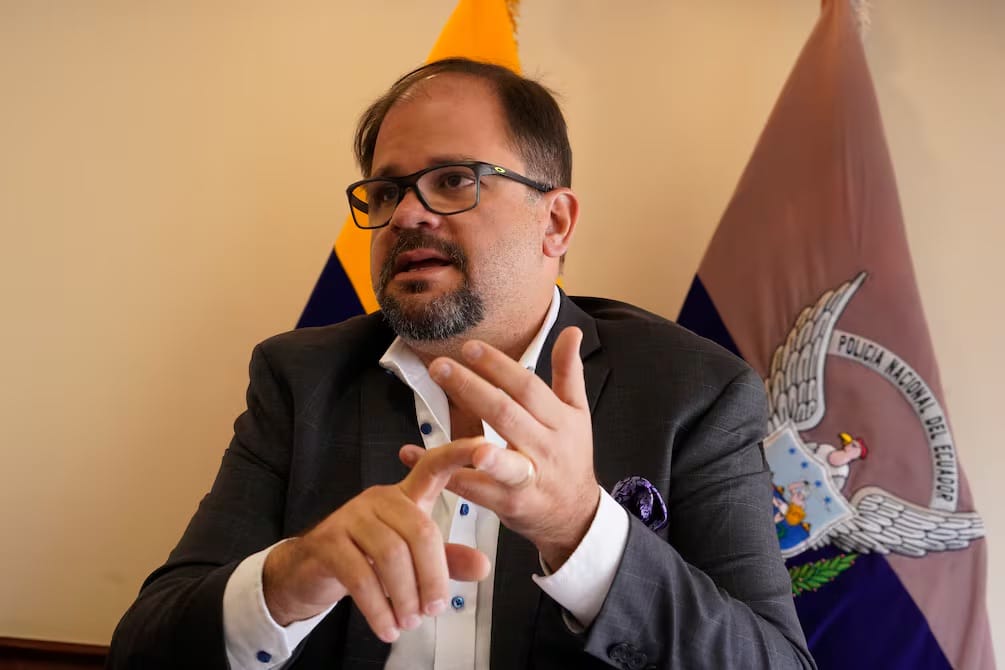
Ecuador’s interior minister, John Reimberg, identified the victim as the leader of the Los Águilas gang in El Triunfo, a region east of Guayaquil. Los Águilas, which was designated a terrorist organization by Noboa in 2024, is accused of being heavily involved in drug trafficking and extortion.
Noboa’s Response
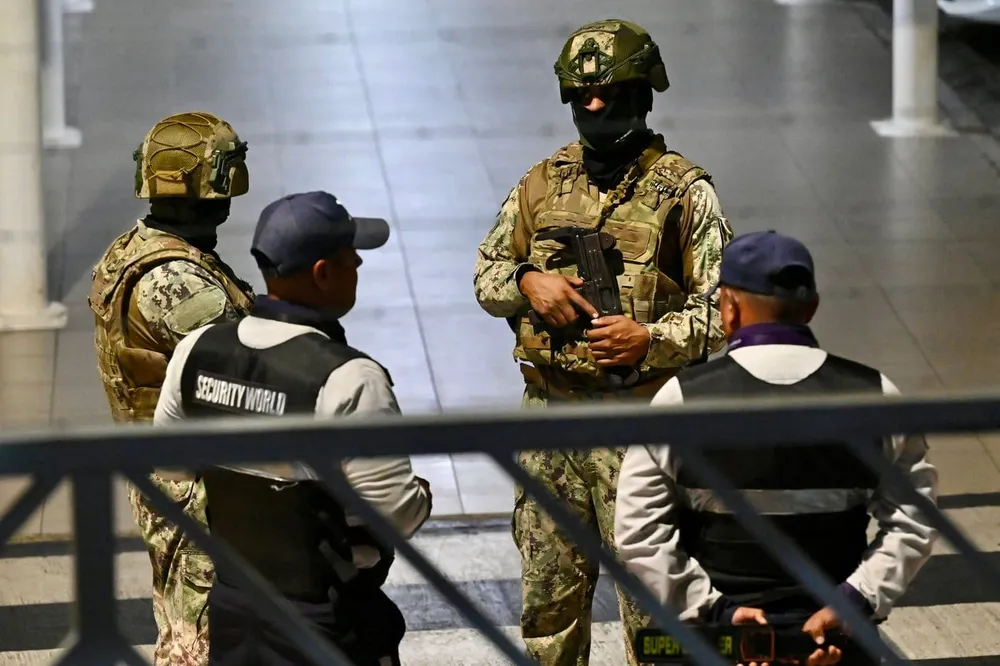
The day after the assassination, Noboa issued an executive decree that went significantly further than any previous emergency measure. The decree reiterated the existence of an internal armed conflict, allowing security personnel from partner states to participate in operations and granting them immunity for their actions.
The immunity provision has received almost no English-language coverage — and it is the most consequential element of the decree.
Under these terms, foreign security personnel — specifically U.S. personnel, given Washington’s deepening security cooperation with Quito — can participate in counter-gang operations on Ecuadorian soil and cannot be prosecuted under Ecuadorian law for their actions in those operations.
Noboa’s government also signed a border security cooperation agreement with the United States days after having destroyed — with U.S. support — a clandestine camp and equipment used to build a semi-submersible vessel to traffic drugs in the border province of Esmeraldas.
The legal architecture Noboa is building — internal armed conflict designation, foreign troop participation, immunity from prosecution — mirrors in important respects the framework de la Espriella has outlined for Colombia post-August 7.
Ecuador is the laboratory. Colombia is the next patient.
The Limits of the Model
The airport killing is not an isolated incident. It is evidence of a trend that Ecuador’s own security data confirms: despite the government’s efforts to tackle organized crime through emergency measures and foreign support, organized crime violence in the country did not subside, particularly in Manabí province, which is known to be a Los Choneros stronghold and a key coastal drug trafficking hub.
ACLED records at least 63 events of organized crime violence against civilians in Manabí province in June, making it the most violent month for civilians since ACLED started coverage of the country’s criminal violence in 2022.
Successive states of emergency imposed on the most violent provinces and cantons have failed to curb violence. On the contrary, violence has picked up steam in recent months, both in and outside prisons, reaching record-high levels in early 2025.
Noboa’s militarized approach has fragmented some criminal organizations — Los Choneros and Los Lobos have both experienced leadership disruption. But fragmentation is not the same as pacification. While Noboa’s strategy so far seems to have fragmented some of the bigger Ecuadorian crime groups, it has done nothing to reduce the violence, nor does it seem to really dent drug trafficking through the country.
Critics of the government’s military operations have also accused Ecuador’s armed forces of gross human rights violations, including excessive use of force, forced disappearances, sexual violence, and torture. In 2024, authorities claimed to have detained over 73,000 people, but the vast majority were released, mostly due to a lack of evidence.
The Sovereignty Question
By granting immunity to foreign security personnel participating in Ecuadorian operations, Noboa has created a legal framework under which U.S. soldiers, intelligence operatives, or contractors can conduct lethal operations on Ecuadorian soil without accountability to Ecuadorian courts.
Ecuador is located between Colombia and Peru, the world’s two largest producers of coca, and has become the key corridor for the drug to be smuggled to the US, Europe and beyond. That geography makes Ecuador strategically indispensable to Washington’s counter-narcotics campaign — and makes the immunity provision politically useful for a Trump administration that wants operational freedom without the legal exposure of formal military status-of-forces agreements.
Whether Ecuadorian courts will accept the internal armed conflict designation that underpins the immunity provision is itself contested. Even though the Constitutional Court ruled that the situation in the country did not meet the criteria to be considered an internal armed conflict, the government has continued to use the term to justify imposing a series of nationwide or province-specific states of emergency.
The flowers are gone, and a gang leader in Ecuador’s war on crime is now dead, and the teenagers who killed him in the arrivals hall are in state custody.
The state of emergency continues. The violence continues. And the immunity decree remains on the books — quietly rewriting the terms of what a foreign military presence in Latin America is allowed to do.
Sociedad Media is an independent digital news publication covering Latin American politics, culture, daily life, regional security, and more.
Our reporting follows strict impartiality standards.