

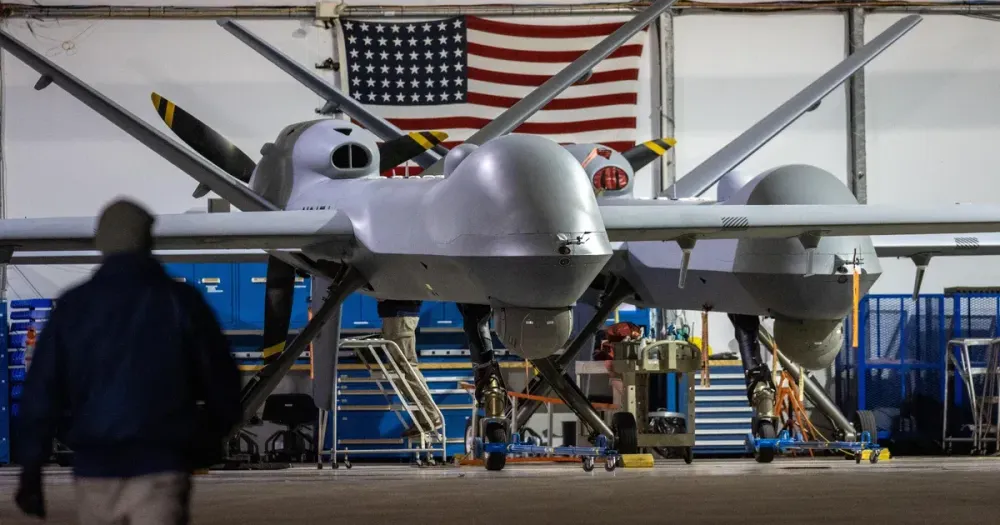
The United States has moved MQ-9 Reaper drones from Africa to Colombia and Ecuador as it expands its military campaign against drug-trafficking groups in South America, according to The New York Times.
U.S. officials described the number of aircraft as “a small number.” The exact figure has not been made public.
The drones can conduct surveillance, intercept electronic communications, detect body heat and carry missiles and bombs.
Original reporting suggested the plan on Sept. 18, citing six sources close to the Trump administration, and said Ecuador would be a primary location. Military reports from the Pentagon reported that the drones would be moved from U.S. Africa Command to U.S. Southern Command ahead of anticipated operations against cartels, and that the Pentagon declined to comment.
Colombia & Ecuador
In Colombia, Defense Minister Jorge Mora announced Aug. 18 an agreement for MQ-9A Reapers, according to Asuntos Legales. The deal calls for three aircraft initially on loan, with Colombia buying a fourth.
The agreement also includes the possibility of using armament for “precision strikes against high-value strategic targets,” the outlet reported, while the aircraft will also provide intelligence and surveillance.
In Ecuador, two drones are already operating, Defense Minister Gian Carlo Loffredo told the Times. Colombia and Ecuador have both agreed to joint operations within their borders. Ecuador’s constitution bans foreign military bases, a ban voters reaffirmed in a recent referendum.
President Daniel Noboa is the first Latin American leader to allow such operations this year, the Times reported.
General Francis Donovan said plans include expanding operations “from maritime vessel attacks to land-based operations.”
Human rights advocates warn of civilian casualties. Legal experts told the Times that lethal strikes on suspected traffickers lack legal justification because the targets are not direct threats to the United States.
The move may also strain counter-terrorism operations against al-Shabaab in Somalia, where dozens of annual attacks rely on MQ-9s.