
MIAMI — A Reuters report published on Wednesday, citing three people familiar with the matter, said Jeremy Lewin, then the State Department’s director of policy planning, raised the possibility during discussions with Guyanese officials in September that the South American nation cede portions of its oil-rich Essequibo region to Venezuela.
Two of the sources said Lewin floated the possibility of Venezuela taking partial control of Essequibo, which makes up the western two-thirds of Guyana. The State Department says its position on the boundary has not changed, and Guyana has long said the territory’s status is not open to negotiation.
Reuters reported that Lewin also offered to help arrange territorial talks between Guyana and Venezuela’s acting President, Delcy Rodríguez.
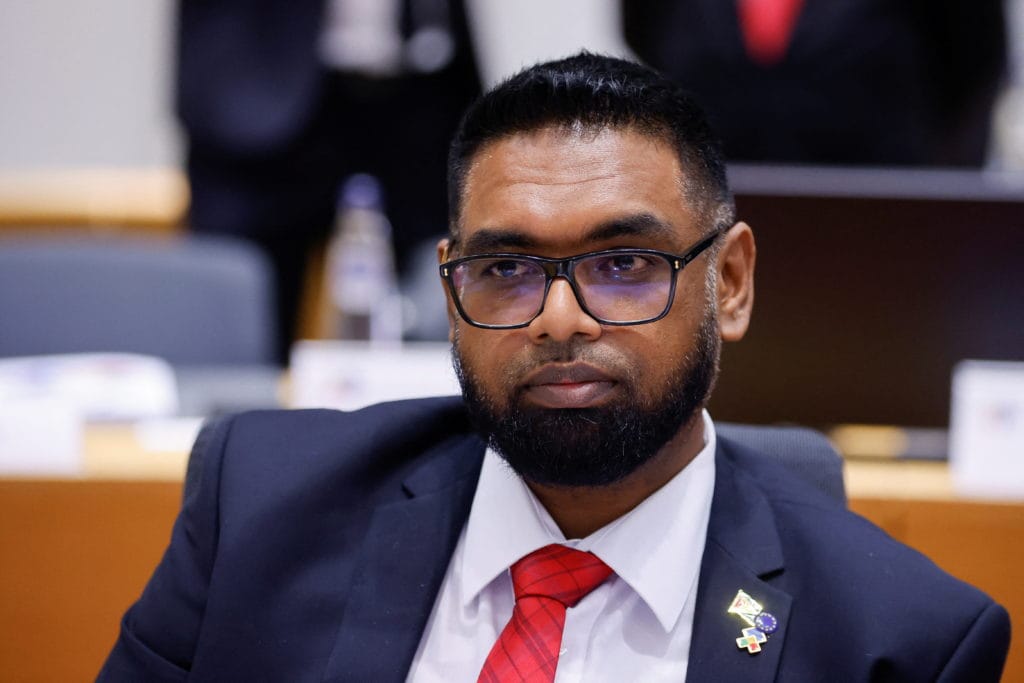
Guyanese officials reportedly found the suggestion troubling and have asserted that the Essequibo’s status is non-negotiable. Reuters does not name the Guyanese officials reportedly involved in the talks, and Guyana’s government did not respond to its requests for comment.
The report describes the idea as a suggestion raised in private meetings, not a formal U.S. proposal. None of the reported details specify how much territory would change hands or under what terms. “Partial control” could describe several arrangements, and “ceding” is the shorthand used in Reuters’ headline.
Washington’s Response to the Report
Lewin left the State Department at the end of October. In an interview, he confirmed preliminary discussions with representatives of both countries, which he said were authorized by the White House and followed a May letter from Rodríguez to President Donald Trump requesting American mediation.
He said Rodríguez also raised the issue with him in Caracas in July. The reports reviewed do not say whether Lewin addressed the specific suggestion that Guyana yield territory.
A State Department official said the department receives various policy proposals from outside parties but that its position on the Venezuela-Guyana boundary has not changed. The White House referred questions to the State Department and did not say whether it directed the discussions or received Rodríguez’s letter.
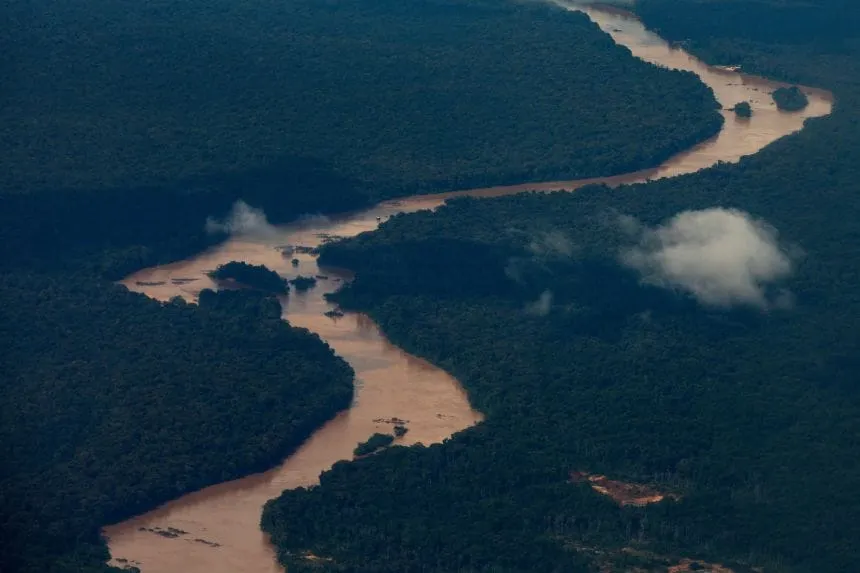
Venezuela has claimed the Essequibo for more than 180 years. The region is rich in gold, diamonds and bauxite. Guyana controls it and holds that an 1899 arbitration award settled the boundary.
The area covers about 160,000 square kilometers and is home to about 125,000 of Guyana’s 800,000 citizens. Venezuela’s claim has drawn more attention since Guyana’s offshore oil discoveries in 2015. Guyana took the case to the International Court of Justice in 2018, and the court held a week of hearings in May 2026. A ruling has not been reported.
Guyana has said before that the territory is “not up for discussion, negotiation or deliberation” (a December 2023 government statement), and it has called for the court to decide the matter.
The report places the talks against improved U.S.-Venezuela relations after a January U.S. operation that captured former President Nicolás Maduro. On the same Wednesday the report appeared, Defense Secretary Pete Hegseth met Rodríguez in Caracas and signed an agreement to strengthen military cooperation.
At the U.N. General Assembly in September, Rodríguez called on Guyana to enter negotiations over the territory’s legal status.
U.S. officials had previously voiced strong support for Guyana’s sovereignty, including a January 2025 statement by Secretary of State Marco Rubio.
The policy on the land boundary between the two countries has not changed. The United States reaffirms its support for the 1899 Arbitral Award that determined the land boundary between Venezuela and Guyana, which should be respected unless or until a new boundary is set by a… pic.twitter.com/U9I6rlLUJg
— U.S. Embassy Guyana (@EmbassyGuyana) November 19, 2026