


BOGOTÁ — Colombia’s government has called a New York Times report that says it rejected a U.S. plan for joint military operations “absolutely false.” Presidential spokesperson Miller Soto wrote on X pushing back against the U.S. publication, adding that the Colombian government “has not communicated any such thing to Washington.”
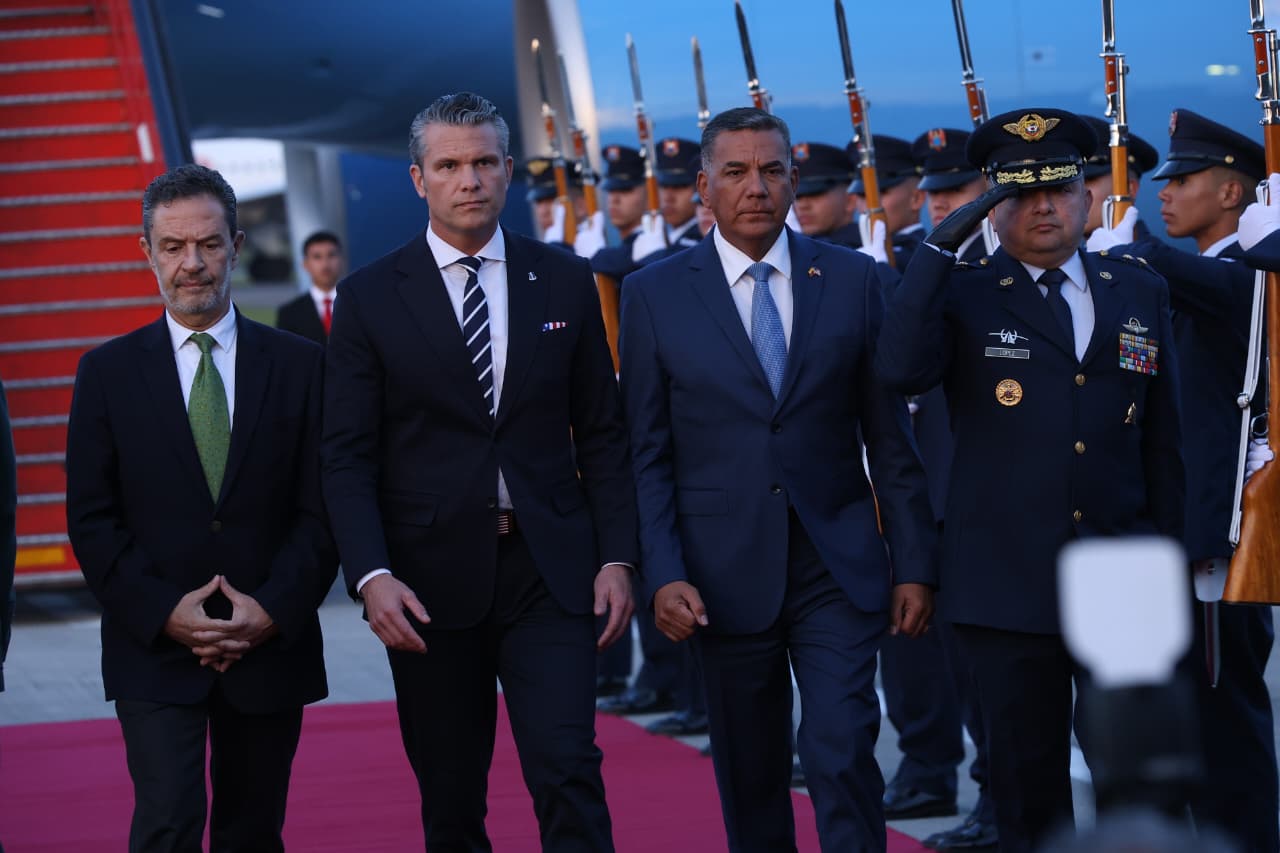
The denial came on the day U.S. Defense Secretary Pete Hegseth, who the Times said had planned to press the proposal, arrived in Bogotá to deliver a C-130 aircraft and meet Colombian defense leaders.
The Times report, by Maria Abi-Habib and Eric Schmitt, said President Abelardo de la Espriella had rejected a U.S. plan for joint military operations in Colombia, calling it a major setback for the Trump administration’s campaign against drug trafficking gangs. The report said it relied on U.S. officials who spoke anonymously about a sensitive diplomatic matter.
The plan, known as “Title 10,” would have allowed U.S. forces to operate in Colombia and carry out joint airstrikes and ground operations.
According to the report, De la Espriella told Washington this week that he supports collaborating with the Pentagon against drug trafficking organizations but lacked the votes in Congress to approve the measure. The report also noted that opposition in the legislature, and likely public opinion, could view foreign troops as a violation of sovereignty.
The Pentagon declined to comment, and at publication the White House and the Colombian government had not responded.
Soto responded on X to a post by journalist Luis Carlos Vélez, who had relayed the report. The government has not publicly said which part is false: that the plan was presented, that it was rejected, or that it lacked votes in Congress.
Soto’s statement denies only that Colombia communicated “any such thing” to Washington.
Later, during the meeting with Hegseth, Foreign Minister Omar Bula said the government would seek Congressional approval for joint operations with the U.S. on Colombian soil. “We know that any decision by the Executive in this context will have to go through Congress,” he said, adding that the process should be done “as quickly as possible” to “save human lives.”
He said negotiations start from national sovereignty and summed up the approach as “Colombia decides what happens in Colombia.”
Bula’s remarks do not settle the dispute. They show the government is not ruling out joint operations, and they also acknowledge that Congress is a necessary step, which is the obstacle the Times described.
Hegseth landed at about 5:05 p.m. after his Caracas stop and was received by Bula and the military leadership. He delivered a Hercules C-130 to strengthen the transport capabilities of Colombia’s public security forces. Hegseth reported he called the military relationship decades old and the partnership deeper than ever.
Hegseth also announced an “offensive” against drug cartels in which Colombian troops and police would take the lead “in an unprecedented way,” and said narco-terrorists would have no safe haven in Colombia. The Times reported that Hegseth cut short his four-country regional tour and made only a brief stop in Colombia.
Colombian outlets describe a full meeting with Mora and military commander Gen. Erik Rodríguez.
The Times said Colombia is central to the Pentagon’s plans to expand military operations across Latin America, being one of the region’s largest countries with one of its most sophisticated armed forces.
In August, Hegseth said Colombia had authorized joint military operations, and the Colombian Defense Ministry said cooperation would respect sovereignty, the Constitution and international law. The Times noted that relations remain strong, with a recently concluded major training exercise and a meeting last week between Gen. Dan Caine and Colombia’s military leaders in Bogotá.
Former State Department lawyer Brian Finucane told the Times the case should be a “dose of reality,” showing that even allied presidents face domestic political and legal limits on U.S. military action on their soil.
Amen, Mr. President. The fake news cannot help themselves. Totally false. Our partnership to defeat the narco-terrorists that threaten your country, and ours, is stronger than ever before. The @DeptofWar is with you all the way. 🇺🇸🇨🇴 https://t.co/IaGbAIFz5v
— Pete Hegseth (@PeteHegseth) November 19, 2026