

MIAMI — When U.S. forces began striking suspected drug-trafficking vessels in Caribbean waters last September, the immediate goal was straightforward: disrupt the maritime corridors that move cocaine from South America toward the United States and Europe. Eight months later, maritime drug smuggling has dropped by more than 90%, according to U.S. government figures.
But the trafficking networks have not disappeared. They have moved.
That shift is now visible across the region in ways that security analysts, local governments, and law enforcement agencies are actively tracking. New land corridors have opened through Central America. New criminal actors have emerged to fill gaps left by disrupted organizations. Established gangs have expanded into new territories and new criminal markets. The geography of organized crime in Latin America in May 2026 looks different from what it looked like a year ago — and governments from Tegucigalpa to Santiago are managing the consequences.
Mexico: A High-Value Capture and Unauthorized Presence
On April 29, Mexican authorities captured Joaquín Lastra Ramos — known as “El Jardinero” — a senior operational figure in the Jalisco New Generation Cartel, or CJNG, described by analysts as a key power broker within one of Mexico’s most powerful criminal organizations. The Mexican government acknowledged that U.S. intelligence assistance contributed to the capture, a notable public admission of bilateral cooperation in an operation of this significance.
But the same operation produced a complication. According to reports, DEA agents were present during the raid alongside Mexican state security forces — without the knowledge or authorization of Mexican federal authorities. The incident raised immediate questions in Mexico City about the scope of U.S. operational activity on Mexican soil, and the boundaries of the intelligence-sharing arrangements between the two governments.
The episode arrives at a sensitive moment. A New York federal court has indicted Sinaloa Governor Rubén Rocha Moya — currently on leave — along with nine other Mexican officials on drug trafficking charges, a move that has already strained U.S.-Mexico relations. The unauthorized DEA presence in the “El Jardinero” raid adds another layer of tension to a bilateral security relationship that is simultaneously producing results and generating friction.
President Claudia Sheinbaum’s government has not issued a formal public response to the DEA presence revelation. How Mexico City manages the diplomatic dimension of these incidents will be a defining test of the security cooperation framework for the remainder of the year.
Honduras: New Gangs, Murdered Priests, and a President Under Pressure
Among the most significant security developments of 2026 is the rapid rise of a previously marginal criminal group in Honduras. The Cartel del Diablo has emerged as the dominant violent actor across a corridor connecting Yoro, Comayagua, and Francisco Morazán departments — territories that link the Honduran capital to the country’s northern border and to key trafficking routes heading toward Guatemala and Mexico.
The group’s escalation came into sharp public focus on April 20, when suspected Cartel del Diablo members kidnapped an evangelical pastor in Yorito, Yoro, killed him, and left his body at the scene.
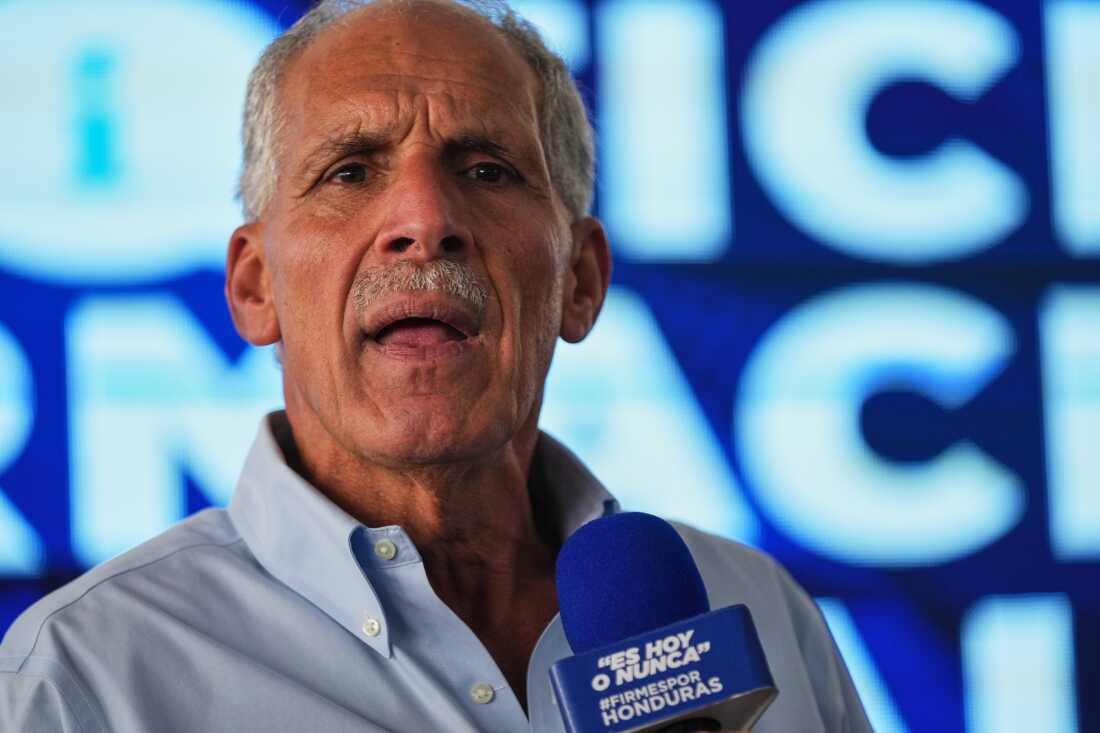
The killing — the latest in a series of violent attacks attributed to the group since February — sparked public outcry and pressure on newly inaugurated President Nasry Asfura, who took office in January, to respond. Security operations launched in the weeks following led to the arrest of at least three Cartel del Diablo members, including a logistics leader.
Honduras’ security minister, Gerzón Velásquez, has attributed the group’s rise directly to the disruption of sea-based trafficking routes. With cocaine moving less freely through Caribbean maritime corridors, criminal networks are competing more intensely for control of overland routes — and Honduras sits at the center of several of them.
The Cartel del Diablo’s rapid territorial expansion in 2026, according to ACLED analysts, illustrates how pressure on one trafficking channel can accelerate the emergence of new violent actors in adjacent corridors.
Tren de Aragua: From Street Violence to Financial Sophistication
Tren de Aragua, the Venezuela-origin gang that the Trump administration designated as a foreign terrorist organization in early 2025, has continued its transnational expansion in 2026 — and a new InSight Crime analysis shows the organization has evolved significantly beyond its origins as a street-level violent group.
A money laundering scheme identified in Chile earlier this year revealed the degree to which Tren de Aragua has developed financial infrastructure to support its cross-border operations. The gang now maintains confirmed operational presence in Chile, Peru, Colombia, and the United States, with financial networks that analysts say are growing in sophistication alongside the group’s geographic reach.
The expansion is partly a product of the Venezuelan migration crisis — Tren de Aragua has recruited heavily from displaced Venezuelan populations moving through South America and Central America — and partly a reflection of the organizational capacity the group built during years of operating inside Venezuelan prisons with limited state interference.
Its evolution into a money-laundering actor, rather than solely a violent one, represents a new phase in its development as a transnational criminal organization.
Ecuador: A Security Pact Hits Constitutional Limits
Ecuador’s President Daniel Noboa, whose security agenda has made the country one of Washington’s closest regional partners in the counter-cartel effort, has encountered a significant obstacle in his plan to return foreign military bases to Ecuadorian territory.
The Ecuadorian constitution, rewritten under former President Rafael Correa, explicitly prohibits foreign military installations on Ecuadorian soil — a provision inserted specifically after the closure of the U.S. air base at Manta in 2009. Getting around that prohibition requires a national referendum, a process that Noboa’s government has not yet formally initiated.
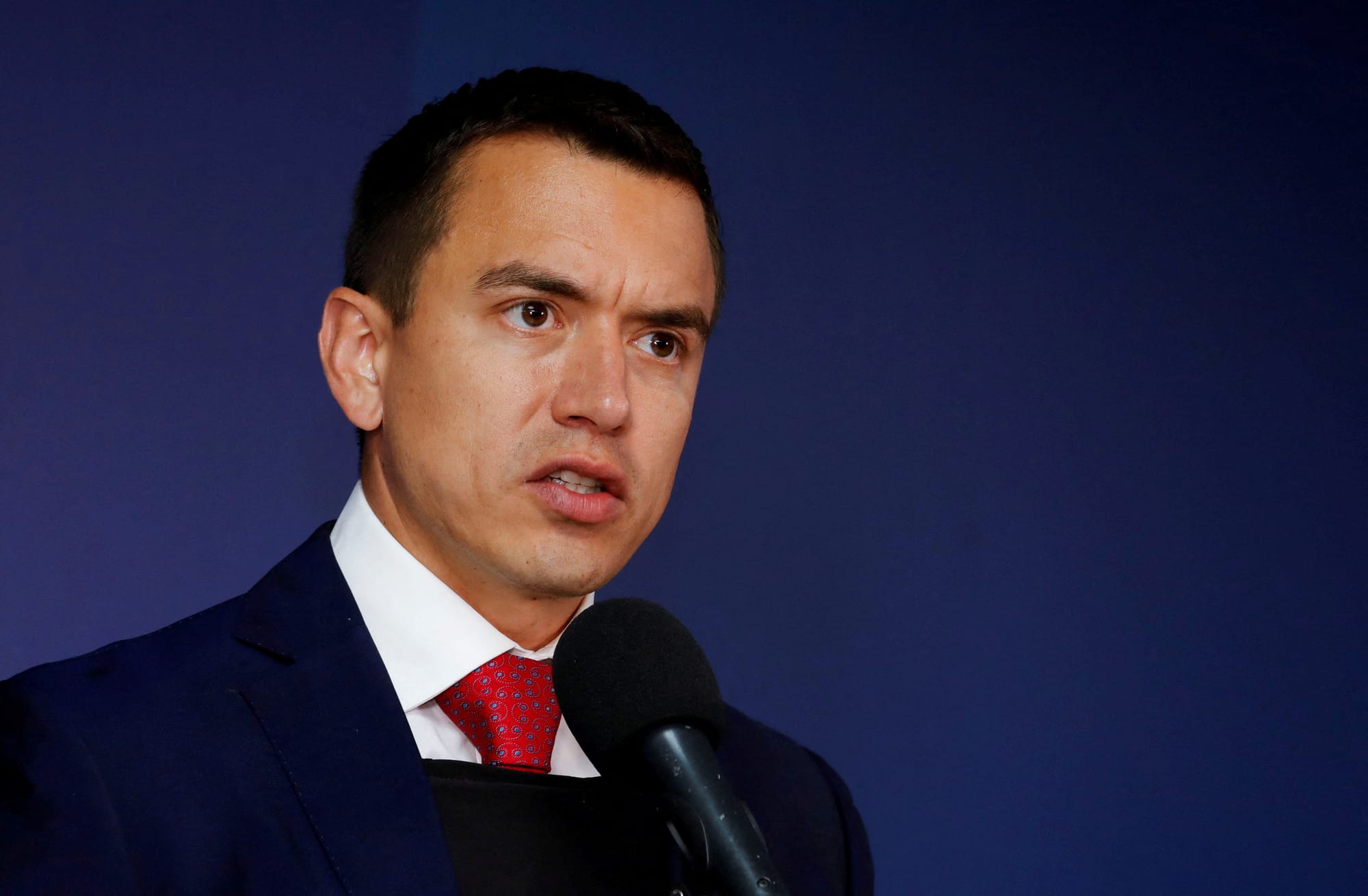
The plan, which would have deepened Ecuador’s operational integration with U.S. security forces, has stalled as a result.
Ecuador remains under a state of exception — now in its ninth consecutive day under Decreto 370, covering nine provinces — and Noboa has positioned himself as the region’s most aggressive adopter of the militarized security model. The constitutional barrier to foreign bases is the clearest limit his agenda has encountered.
Panama: Record Seizure, New Legislation
Panama has also recorded its largest-ever cocaine seizure earlier this year, a milestone that President José Raúl Mulino has cited in pushing for the country’s first dedicated anti-mafia legislation.
The proposed law would give Panamanian authorities new tools to prosecute organized criminal networks operating in and through Panama — a country that, by virtue of its geography, banking sector, and canal infrastructure, functions as one of the region's key logistics and financial nodes.
The legislative path is uncertain, however. Panama’s National Assembly has a complex political composition, and the anti-mafia proposal faces opposition from lawmakers who have raised concerns about its scope and potential for abuse. But the record seizure and the broader regional security environment have given Mulino political momentum to push the legislation forward.
The Broader Picture
What the data from ACLED, InSight Crime, and regional security monitors shows collectively is a criminal landscape in motion. The organizations that have dominated Latin American drug trafficking for decades — the Sinaloa Cartel, CJNG, and their regional affiliates — are under sustained pressure. Some, like CJNG, are losing senior figures to capture operations. Others are rerouting supply chains, recruiting in new populations, and developing new revenue streams to replace disrupted ones.
The countries absorbing the most immediate pressure from these shifts are the ones that sit along the new corridors — Honduras, Guatemala, and Ecuador foremost among them. For their governments, the challenge is managing a security environment that is changing faster than institutional responses can keep pace with.
Sociedad Media will continue to cover security & organized crime across Latin America. Tips, sources, and feedback welcome at info@sociedadmedia.com


