

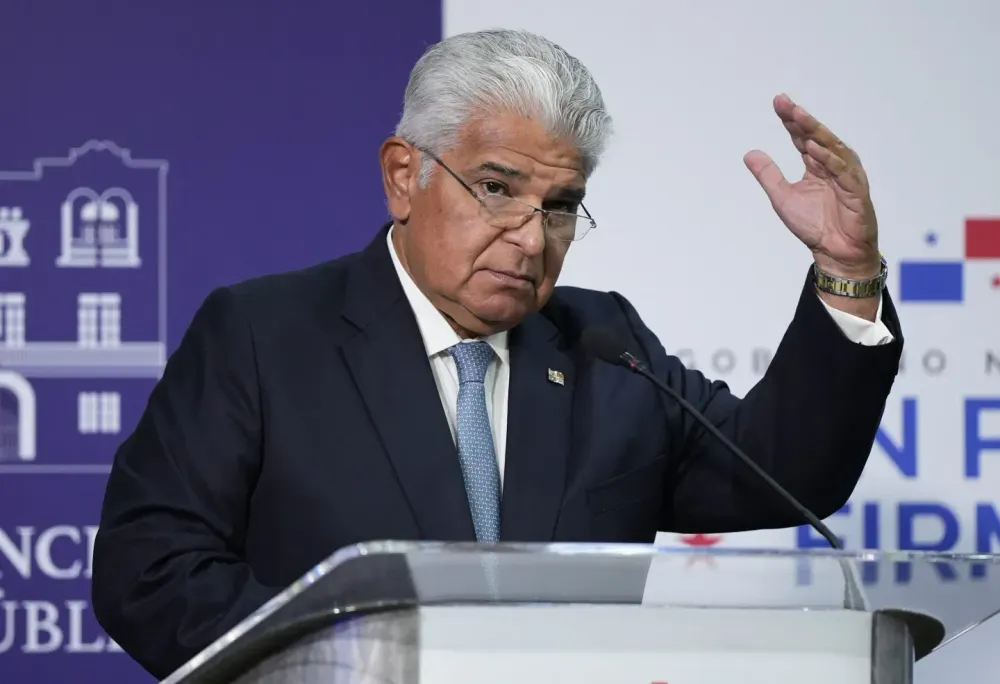
Panama intercepted one of its largest cocaine shipments on record earlier this year — a seizure that President José Raúl Mulino has since used as the political foundation for a push to fundamentally reshape how his country prosecutes organized crime.
The proposed legislation, which Mulino’s government has framed as Panama’s first dedicated anti-mafia law, would give prosecutors new tools to pursue criminal networks as organizations rather than pursuing individual members case by case.
The distinction matters. Under Panama’s current legal framework, dismantling a trafficking network requires building separate prosecutions for each actor within it. Anti-mafia statutes — modeled on Italy’s pioneering anti-Cosa Nostra legislation and the United States’ RICO framework — allow prosecutors to target the organization itself, its leadership structure, and its assets simultaneously.
Why Panama, Why Now
Panama’s geographic position makes it one of the Western Hemisphere’s most important drug transit corridors. Cocaine produced in Colombia moves north through Panamanian territory — by sea, by land, and increasingly through the Darién Gap, the lawless jungle region on Panama’s southern border that has also become one of the world’s busiest irregular migration routes. The same infrastructure that moves drugs moves people, and the same criminal networks that profit from trafficking have increasingly embedded themselves in Panamanian financial and political life.
The record seizure that triggered Mulino’s legislative push demonstrated both the scale of the problem and the capacity of Panamanian security forces to address it when properly resourced. What the seizure also demonstrated, implicitly, was that existing legal tools are insufficient to convert interdiction success into lasting disruption of the networks behind it.
Mulino took office in July 2024 on a platform that included significant security commitments, and his government has moved faster on that agenda than observers expected. The anti-mafia proposal is the most ambitious element of it.
Washington Is Watching
The timing of Panama’s security pivot is not incidental to its geopolitical context. The Trump administration completed the handover of the Panama Canal to full Panamanian operational control earlier this year — a resolution to months of tension during which Trump repeatedly questioned Panama’s management of the waterway and raised the possibility of reasserting U.S. influence over it.
With that dispute formally closed, Panama has strong incentives to demonstrate its value as a reliable security partner. The anti-mafia legislation, the record seizure, and Mulino’s broader security posture collectively send a message to Washington: Panama is serious, capable, and aligned. The administration’s 2026 Counterterrorism Strategy, which explicitly calls on regional partners to develop their own counter-cartel frameworks in coordination with U.S. priorities, provides the doctrinal backdrop against which Panama's moves are being read in Washington.
U.S.-Panama security cooperation has accelerated accordingly, with joint maritime interdiction operations contributing to several significant seizures in Panamanian waters.
The Legislative Path Is Uncertain
Despite the political momentum behind it, the anti-mafia proposal faces a complicated path through Panama’s National Assembly. Opposition lawmakers have raised concerns about the legislation’s scope — specifically, provisions that critics say could be applied too broadly, creating a risk of abuse against legitimate businesses or political opponents.
Those concerns are not unfounded in the regional context. Anti-mafia and anti-terrorism statutes across Latin America have a documented history of being applied beyond their stated purposes once enacted. Panamanian civil society organizations have called for robust safeguards in any final legislation, including independent judicial oversight of prosecutorial decisions made under the new framework.
Mulino’s government has indicated willingness to negotiate on specific provisions while maintaining the legislation’s core architecture. Whether that produces a workable coalition in the Assembly — where Mulino’s Realizando Metas party does not hold a majority — remains the central uncertainty.
What Comes Next
Panama’s anti-mafia push is the latest signal that the region’s smaller transit states are recalibrating their security postures in response to both U.S. pressure and genuine domestic need.
Ecuador under Noboa, Honduras under Asfura, and now Panama under Mulino are each moving, at different speeds and with different tools, toward a harder security posture than their predecessors maintained.
Whether that posture produces durable results — or simply displaces trafficking networks toward countries with weaker enforcement capacity — is the question that will define the region’s security trajectory over the next several years.
Sociedad Media will continue to cover security & organized crime across Latin America. Tips, sources, and feedback welcome at info@sociedadmedia.com