

MIAMI — His father warned him.
Carlos Pérez told reporters he had attempted to persuade his son not to travel to the rural area of Briceño, a municipality in Antioquia in northern Colombia, where FARC dissident factions and the Clan del Golfo compete for territorial control of cocaine trafficking routes and where the state’s presence has been, for years, intermittent at best. Mateo Pérez Rueda, 25, the editor and founder of the online news site El Confidente in the nearby town of Yarumal, went anyway.
He was a journalist, and he traveled to Briceño in search of the story.
On the afternoon of May 5, Pérez entered the rural area of Palmichal to gather information on combat between the Colombian army and the 36th Front — a FARC dissident faction that re-armed following the 2016 peace treaty that demobilized most FARC fighters. According to witnesses, he was intercepted at a roadblock by armed men, interrogated, and killed in front of several local residents.
His family was unable to reach the area where his body had been left. On May 8, a humanitarian mission coordinated with the International Committee of the Red Cross recovered his body between the rural areas of Palmichal and El Hoyo. He was transferred to the forensic medical examiner’s office in Antioquia. His motorcycle was found with signs of violence. His cell phone and personal belongings were also found nearby.
Mateo Pérez Rueda was the 170th journalist killed in Colombia since 1977 for reasons related to his work. He was also, in the specific circumstances of his death, the most direct illustration of the contradiction at the heart of Gustavo Petro’s “Total Peace” policy — the man who authorized his killers to sit at a negotiating table in pursuit of peace, and the 25-year-old journalist those killers murdered for covering his nation’s civil war.
Who Killed Him — and Who They Are Talking To
The faction responsible for Pérez’s death is the FARC dissident structure commanded by alias Calarcá — Alexander Díaz Mendoza — operating in northern Antioquia. The presumed material author of the killing is alias Víctor Chalá, a member of the Calarcá structure who authorities believe was transferred to Antioquia specifically to evade military encirclement and who has since been leading criminal activities and intimidation operations in Briceño.
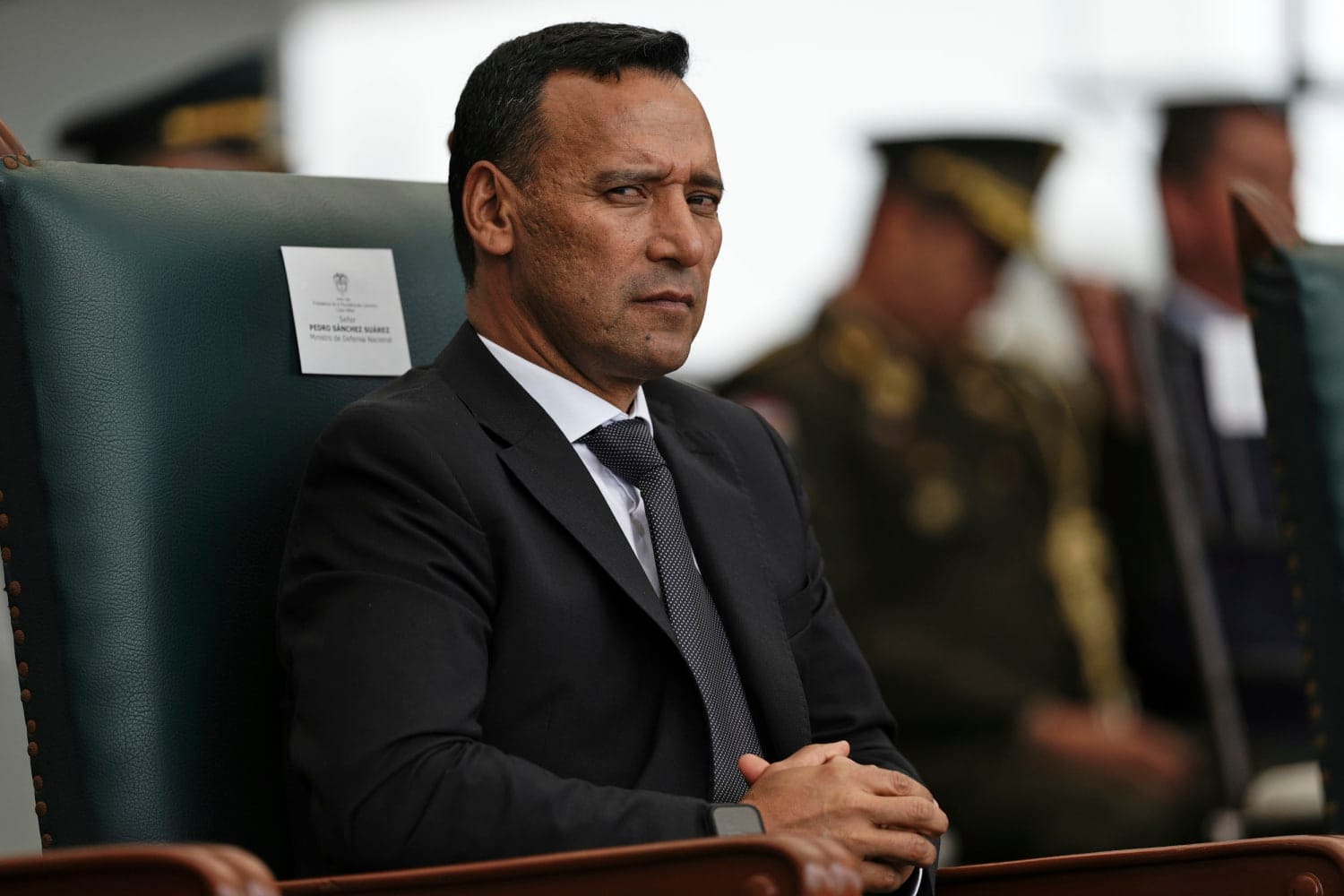
Colombia’s Defense Minister Pedro Sánchez announced that the reward for information leading to the capture of alias Víctor Chalá has been increased from 300 million to 500 million Colombian pesos.
The Calarcá faction’s response to the killing was remarkable in its specificity — and its implications. The FARC dissidents led by alias Calarcá issued a communiqué denying that the national leadership authorized the assassination of Mateo Pérez Rueda, stating that the killing was not reported to commanders in advance and that they are re-establishing contact with their bases to determine responsibility.
Read charitably, the communiqué is an internal accountability statement — a command structure disowning an unauthorized act by one of its members. Read critically, it is a document issued by an armed organization currently engaged in peace negotiations with the Colombian government, attempting to manage the political fallout of a murder that has generated national outrage, in the middle of a presidential election campaign.
Gloria Cuartas, director of the Peace Accord Implementation Unit, publicly demanded that peace commissioner Otty Patiño explain whether alias Calarcá is still at the negotiating table following the killing.
The question has not received a definitive public answer.
What Pérez Was Covering — and Why It Got Him Killed
Mateo Pérez was killed after witnessing actions by the criminal organization linked to cocaine trafficking and for the ongoing coverage he was conducting on violence in northern Antioquia through El Confidente. He had previously used his social media to warn about episodes in which political actors and sectors of power in Yarumal attempted to silence his work through lawsuits, legal complaints, and judicial proceedings.
The Foundation for Press Freedom — FLIP — had accompanied him through those earlier threats, providing institutional support when local power structures attempted to use legal mechanisms to stop his reporting. FLIP described Pérez as having become “an important voice for the local community” through his reporting and social media presence, noting that the killing demonstrates that “regional journalism in Colombia continues to be carried out in conditions of extreme vulnerability under pressure from illegal armed groups and illicit economies.”
The territory where Pérez was killed sits at the intersection of multiple competing criminal interests. A journalist colleague described the situation in Briceño in stark terms: “The north of Antioquia is held hostage by the dissidents and the Clan del Golfo. In Briceño they even surveil people with drones.”
Into that territory — without a security team, without institutional protection, without the resources that major media organizations provide to correspondents in conflict zones — Mateo Pérez traveled alone to carry out his own independent journalism on the crises plaguing Colombia’s rural communities.
He was a regional journalist covering a regional conflict. That is the most dangerous combination in Colombian journalism — and it has been for fifty years.
The Political Fault Line
The killing of Mateo Pérez has detonated inside a political environment that was already at its most volatile in years — 22 days before a presidential election where security is the defining issue and where Petro’s “Total Peace” policy is on trial.
The governor of Antioquia, Andrés Julián Rendón, attributed political responsibility for the killing directly to Petro’s government: “Between more criminal, better Petro’s government treats you,” he said. Juan Manuel Galán, director of the Nuevo Liberalismo, stated:
“A peace broker killed Mateo Pérez. As a father, I send my solidarity to his family. A young journalist’s life was extinguished by the criminal barbarity that continues to bleed entire regions of Colombia.”
The framing — that alias Calarcá’s faction killed Pérez while simultaneously participating in the peace process that Petro constructed — is the right-wing’s most powerful electoral argument about “Total Peace” rendered in the most specific and devastating terms. It is not an abstraction. It is a named journalist, a named armed group, a named peace process, and a body recovered by the Red Cross on May 8.
For the left, the killing demonstrates exactly the opposite — not that “Total Peace” has failed, but that the absence of a ceasefire has allowed lower-level commanders to act outside any negotiated framework, and that the peace process’s survival is more necessary, not less, in the face of violence that flourishes precisely because negotiations are incomplete.
The Justice Minister Jorge Iván Cuervo expressed the government’s position: “The exercise of journalism must be free of violence. Every death of a journalist affects press freedom, the essence of a democratic society.” What the government has not explained is how the faction responsible for Pérez’s death is simultaneously a peace partner and a murder suspect — and what that contradiction says about the framework that was supposed to end the war.
Colombia’s Unbroken Record
Historian Juliana Bernal, reflecting on Pérez’s death, placed it in a specific context: “Mateo is the latest on a list that now numbers more than 170 journalists killed since 1977. His death, like so many others, is the result of a country where information and truth can cost you your life.”
She identified the consistent pattern across fifty years of Colombian press violence: “Journalism in Colombia is uncomfortable because it reveals what many want to hide — the alliances between politicians and armed actors, land dispossession, institutional corruption, the narcotrafficking business, and the persistence of war in the most vulnerable territories.”
Regional journalists — those covering the war from inside the very communities civil strife affects, without institutional protection, without national platforms, without the resources that make major media outlets harder targets — are the most exposed. FLIP has documented 387 aggressions against the press since 2022 alone, with threats and forced displacement the most common forms of censorship.
Mateo Pérez founded El Confidente to give Yarumal and northern Antioquia a voice that the national press did not provide. He covered what the major outlets would not reach — the specific violence, the specific corruption, the specific alliances between armed groups and local political figures that define life in a region the rest of Colombia knows only when someone dies there.
He died there. And the rest of Colombia is paying attention — for now.
What This Means for May 31
The murder of Mateo Pérez is the third major security event in Colombia in the final stretch of the presidential campaign. The Cajibío bombing killed 21 people in Cauca. The Clan del Golfo FTO designation stalled peace negotiations with Colombia’s most powerful criminal network. And now a journalist has been killed by a FARC dissident faction that is simultaneously at the peace table.
Each event feeds the same electoral dynamic. Security is the defining issue. Petro’s “Total Peace” is the target. Paloma Valencia — who leads the polls’ right-wing vote with a proposal to make Álvaro Uribe her Defense Minister — has the clearest argument. Iván Cepeda — who leads the polls overall at 44% — has the hardest defense to make.
The next Colombian president will inherit Briceño. Will inherit northern Antioquia. Will inherit the question of what to do with alias Calarcá’s faction — negotiate, pursue, or some combination of both that no previous government has managed to execute. And will inherit the knowledge that on May 5, 2026, a 25-year-old journalist named Mateo Pérez Rueda drove into that territory to do his job and did not come back.
“Contar historias en este país es una condena a muerte,” wrote Vorágine’s José Guarnizo — (Telling stories in this country is a death sentence).
Colombia votes in 22 days.
Sociedad Media is monitoring press freedom, Colombia’s May 31 presidential election, and the security crisis in Antioquia. For tips and reporting, contact info@sociedadmedia.com


