

MIAMI — The teaser opens with four footballs. One for 2006. One for 2010. One for 2014. And one for now.
Shakira posted the clip from the pitch of Rio de Janeiro’s Maracaná Stadium on Thursday — dancing in Colombia’s yellow and blue, holding the Trionda, the official match ball for the 2026 tournament, with a global troupe of dancers behind her dressed in the colors of the 48 nations that will play in North America this summer. The aerial shot that closes the teaser shows the stadium lit with fireworks and a single message: “We Are Ready.”
The clip received 2 million likes in less than 24 hours.
“Dai Dai” — an Italian expression meaning “Come on, come on” or “Go for it” — is the official anthem of the 2026 FIFA World Cup, featuring Nigerian Afrobeats star Burna Boy. The full track releases May 14, four weeks before the tournament opens at the Estadio Azteca in Mexico City on June 11.
With it, Shakira becomes the first Latin American artist to compose four official FIFA World Cup anthems. The record is hers alone.
20 Years of World Cups
The relationship between Shakira and the World Cup spans half of the Colombian singer’s professional life — and more than half of the tournament’s modern era.
In 2006, she performed “Hips Don't Lie” at the closing ceremony in Germany, reaching a global football audience in a way few pop artists had before. In 2010, she delivered “Waka Waka (This Time for Africa)” — the official anthem for the South Africa tournament alongside South African band Freshlyground — which became one of the most successful World Cup anthems in history and remains her most enduring contribution to football culture.
In 2014, she performed “La La La (Brazil 2014)” at the closing ceremony in Rio de Janeiro, deepening her connection to the event across multiple editions.
Each of those moments occurred at a different stage of Shakira’s career and at a different moment in the World Cup’s cultural evolution. In 2006, she was a Colombian pop star breaking into global mainstream consciousness. In 2010, “Waka Waka” made her the voice of an entire continent’s tournament — a song that sixteen years later still plays at football grounds, at weddings, and at quinceañeras across Latin America and Africa simultaneously. In 2014, she returned to Brazil — the country where fútbol is not a sport but a theology — and performed at the closing ceremony of a tournament that ended in the most traumatic defeat in Brazilian footballing history.
Now she is back. Twelve years later. At 49 years old. At Maracaná. Wearing Colombia yellow.
The Burna Boy Collaboration
The choice of Burna Boy as the featured artist on “Dai Dai” reflects something specific about what the 2026 World Cup is trying to be.
Burna Boy — a Nigerian Grammy-winning Afrobeats artist — brings a sound that sits at the intersection of West African rhythm, Caribbean influence, and global pop. His collaboration with Shakira creates a fusion of Latin-pop roots and Afrobeats that fits the multicultural energy of a tournament hosted across three nations for the first time in history.
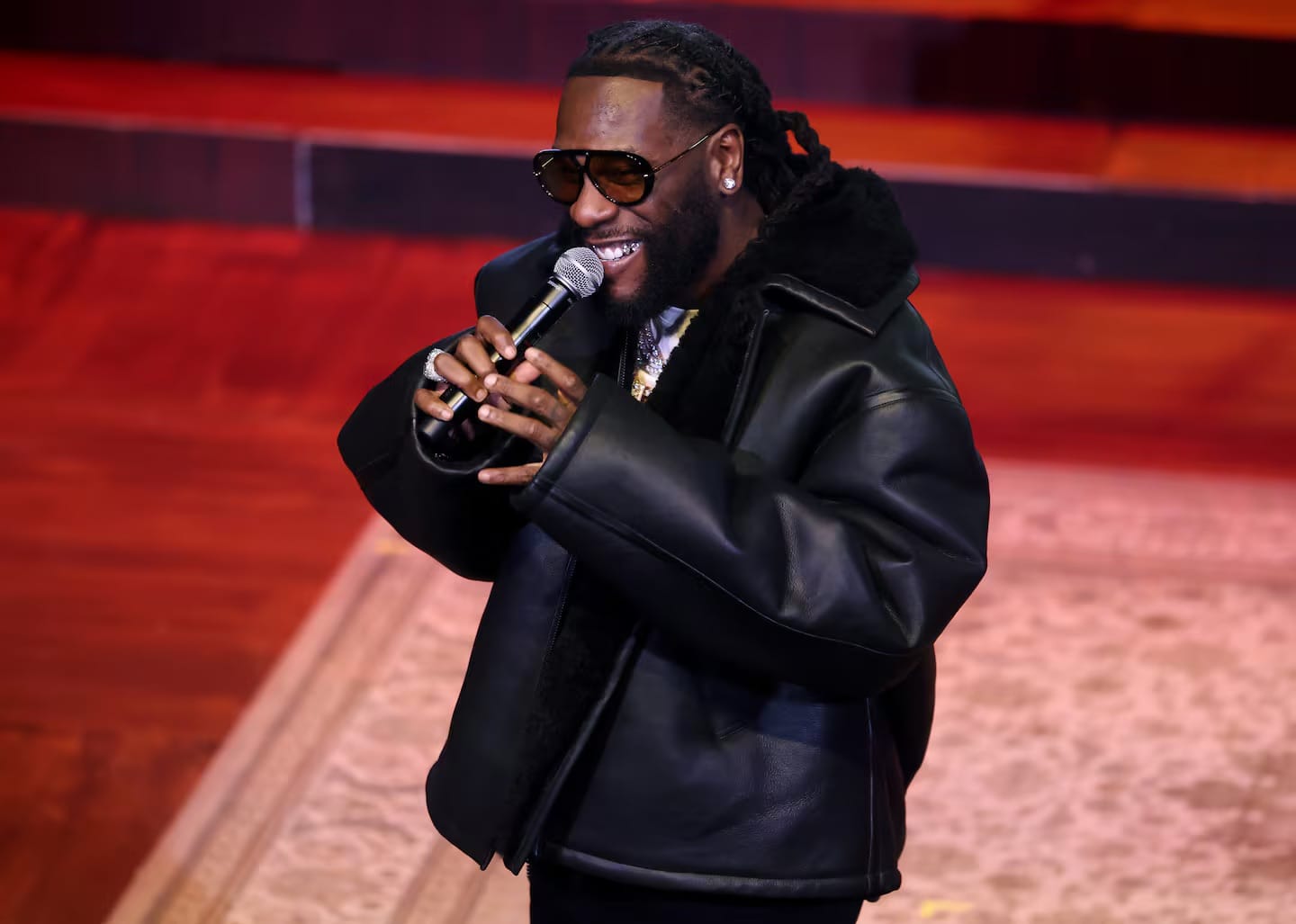
The expanded 48-team format means the 2026 World Cup includes nations that have never appeared at the tournament before — Haiti among them, playing its first World Cup in Miami and Philadelphia. African nations will play on American soil in front of diaspora communities that have never had a home game at this scale. The Shakira-Burna Boy collaboration is FIFA’s cultural acknowledgment of that expanded geography — a Latin voice and an African voice, recorded at the most iconic stadium in South American football, for a tournament that is happening in North America.
The teaser clip starts with four footballs — one from each of the four World Cups Shakira has contributed a hit song to — and ends with a series of fireworks, along with an aerial shot of the stadium adorned with the words “We Are Ready.”
What It Means for Colombia — and for Miami
Colombia will be among the 48 nations competing at the 2026 World Cup — in Group A alongside Mexico, Czech Republic, and South Korea. For the Colombian diaspora in Miami — the third-largest Latin American community in the city, a community that has been watching its country navigate a political and security crisis through the prism of a presidential election 23 days away — the image of Shakira at Maracaná wearing Colombia yellow carries a weight that goes beyond fútbol.
Shakira is Colombia’s most internationally recognized cultural export — a figure who has spent thirty years translating Colombian identity into global musical currency, who raised her children in Spain and Barcelona, who went through a very public separation with Gerard Piqué with the entire world watching, and who has emerged from that period with her global standing not diminished but enlarged.
Her connection to Colombia runs through the music, through the language, through the accent she has never lost, and through the choice she made Thursday — when she could have worn anything for the biggest musical moment of her year — to wear yellow and blue.
For Miami’s Colombian community, which is watching Colombia’s election unfold with anxiety and its fútbol team prepare for the World Cup with pride, the Shakira-Maracaná-Colombia yellow image is the one that lands differently than it does anywhere else. This is their artist. This is their country. This is their tournament.
The full song drops May 14. The World Cup begins June 11. Colombia plays its first match on June 16.
For now, the teaser has 2 million likes. And Shakira is wearing yellow.
Sociedad Media is covering the 2026 FIFA World Cup and Latin American culture from Miami. For tips and reporting, contact info@sociedadmedia.com
🚨🎥🇨🇴 Shakira announces ‘Dai Dai’ with Burna Boy, new World Cup theme song 🎶
— Sociedad Media (@sociedadmedia) May 7, 2026
20 years from now, will it be iconic? https://t.co/pGL6HcDUVI


