

MIAMI — When FIFA released the 2026 World Cup group stage schedule in December, Miami’s Colombian community did not need to be told which match to circle. They already knew. Colombia vs. Portugal. Hard Rock Stadium. June 27. 7:30 p.m.
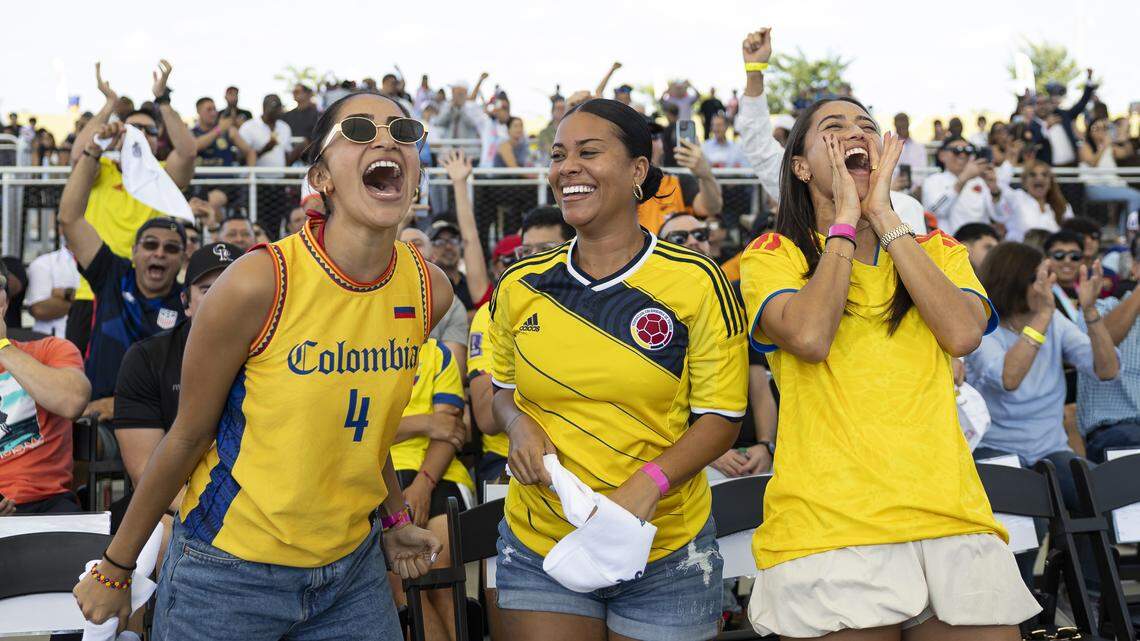
The Colombia vs. Portugal match in Miami is already the most requested World Cup group stage game in the entire tournament. More than 30% of the Colombian diaspora in the United States lives in Florida, and Colombians have requested more tickets than almost any other nation for the summer tournament.
That number tells you something about what June 27 is going to feel like in Miami Gardens — and in every Colombian restaurant, sports bar, and living room from Kendall to Aventura to Weston.
Miami, home to one of the most concentrated Colombian communities in the United States, will be the unofficial capital of the Colombian World Cup experience in South Florida. But the energy will not be contained within any single neighborhood. For a city whose identity is inseparable from Latin American fútbol culture, Colombia at the World Cup in Miami is as close to a home tournament as any diaspora community gets.
The Team: Redemption With a Future
To understand what Colombia is carrying into this World Cup, you need to go back to 2022 — the year they were not there.
Colombia failed to qualify for Qatar 2022. In the aftermath, an institutional inquest was launched and given a name: “Fútbol con Futuro” — Football with a Future. The focus was on pouring resources into the national team setup to restore quality on the pitch and make Colombia a competitive force once again.
The results were rapid and unmistakable. Under Argentine coach Néstor Lorenzo, who had served as an assistant during Colombia’s celebrated 2014 World Cup run, the team went on a 28-match unbeaten run. They reached the Copa América final in 2024, losing narrowly to Argentina, and qualified for 2026 comfortably — finishing third in CONMEBOL qualifying behind Ecuador and Argentina.
This is not a Colombian national team that stumbled its way to the World Cup. It is a team with a genuine project, a settled defensive structure, and an attack capable of beating anyone on the day.
El Capitán: James Rodríguez Needs a Miracle
Twelve years ago in Brazil, a 22-year-old James Rodríguez took the world’s breath away. He won the Golden Boot with six goals. He scored a chest control and volley against Uruguay that is still played on highlight reels as one of the greatest World Cup goals ever scored. He was, for three weeks in the summer of 2014, the most exciting player on the planet.
He is 34 now. He plays for Minnesota United in the MLS. And the question hanging over Colombia’s entire World Cup campaign is whether that version of James Rodríguez can be found again — or whether his country will arrive at the tournament’s biggest stage relying on a player who, by most objective measures, is operating well below the level the occasion demands.
The situation has gone from concern to a full-blown national alarm in Colombia.
With less than two months until the World Cup, Rodriguez is not only far from his best form — his recent return to action at Minnesota United exposed what many feared: lack of rhythm, physical struggles, and a performance far removed from the player who shone with Colombia in 2024.
Athletic journalist Felipe Cárdenas delivered a stark verdict: “He will need a fútbol miracle.”
Minnesota’s coach addressed the situation carefully after Rodriguez’s debut — a 6-0 defeat to Vancouver Whitecaps in which he entered late with the result already beyond reach. Rodriguez had gone nearly four months without competitive action before his return, raising questions about his sharpness ahead of the World Cup.
None of that changes who he is to Colombia. He is the captain. He is the symbolic and tactical leader. He is the player whose country will still be relying on him to come up with moments of magic in what is almost certainly his last World Cup.
Whether he can produce those moments is the central dramatic question of Colombia’s summer.
The Players Who Do Not Need a Miracle
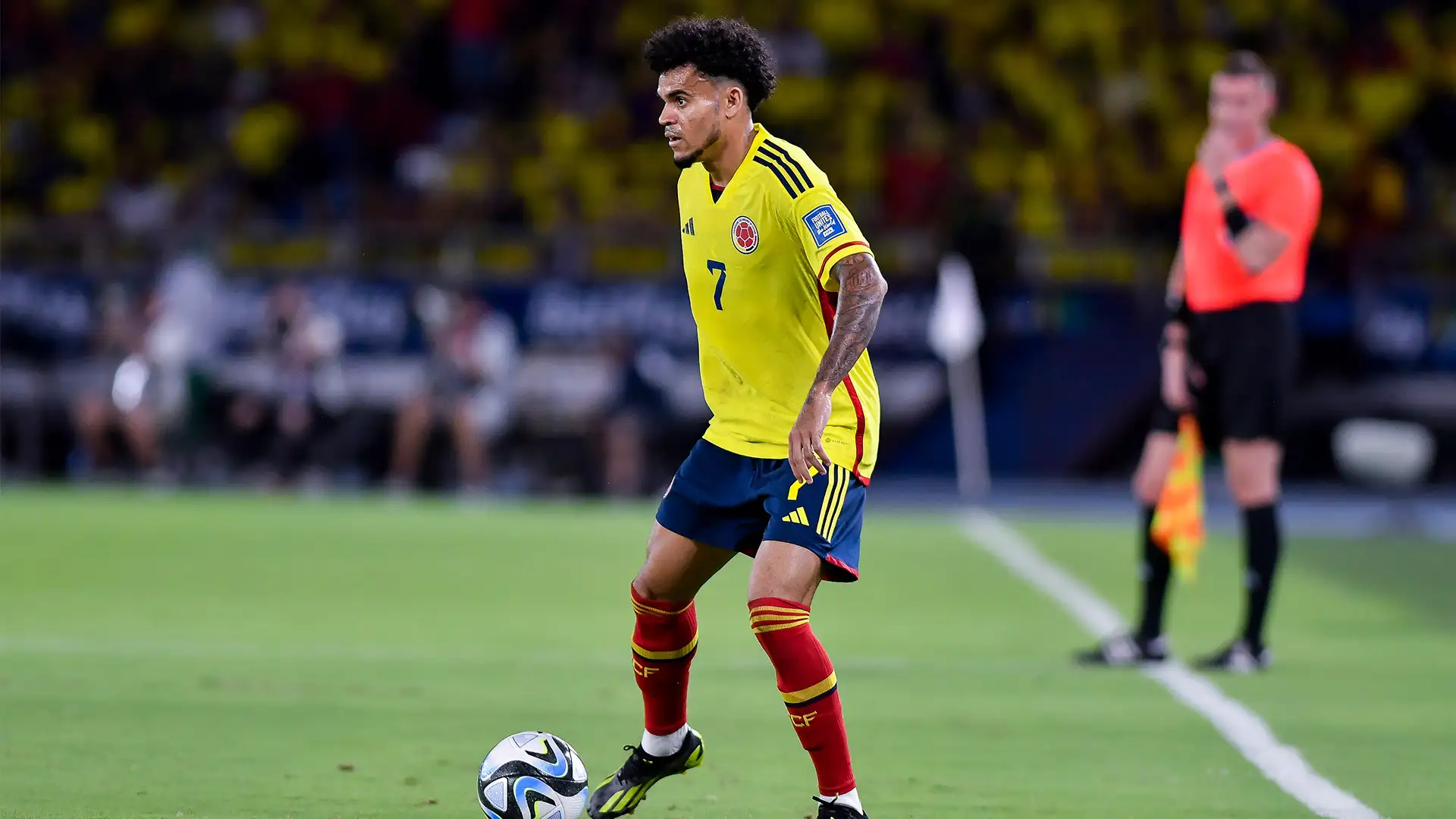
Whatever James Rodríguez produces or fails to produce, Colombia will not live or die by his form alone. The squad assembled under Lorenzo is genuinely deep — and in Luis Díaz, it possesses one of the most exciting wide players in world fútbol.
Díaz made a high-profile move to Bayern Munich last summer and has not looked back. He is currently ranked among the top five left wingers in the world, and his give-all attitude — nicknamed “Lucho” — or fighter — and South American flair make him impossible to look away from. When Díaz is running at defenders in full flow, the Colombian squad is a different team entirely.
In midfield, Richard Ríos made the move from South America to Benfica in Portugal, where he has continued to develop rapidly and will likely be one of Colombia’s most dangerous tools at the World Cup. He is the engine the team needs — a player who can win the ball, distribute it quickly, and cover ground at a tempo that the knockout rounds demand.
Up front, Jhon Durán provides a different dimension — a striker ready to pounce on any opportunity to put the ball in the back of the net. Colombia’s attack, when functioning at full capacity, combines Díaz’s pace and creativity, Rodríguez’s vision and set-piece delivery, and Durán’s physical presence in a way that causes problems for any defensive structure.
The Group: Colombia’s Path to the Knockout Rounds
Colombia is in Group K. The three group stage games are: June 17 vs. Uzbekistan in Mexico City, June 23 vs. DR Congo in Guadalajara, and June 27 vs. Portugal at Hard Rock Stadium in Miami.
The group is winnable. Uzbekistan is making its World Cup debut and represents the most accessible three points in the group. DR Congo is a capable, well-organized side — but ranked 46th in the world and led by French coach Sébastien Desabre — but not beyond Colombia’s reach. The real test is vs. Portugal in Miami.
Colombia enters the tournament ranked 13th in the world under Néstor Lorenzo. A team of this caliber, in this form, in front of this crowd, in this city, should be expected to advance from the group stage. The question is not whether Colombia makes the knockout rounds. The question is how far they go — and whether James Rodríguez finds himself in time to help take them there.
Cristiano Ronaldo in Miami — and What Comes After
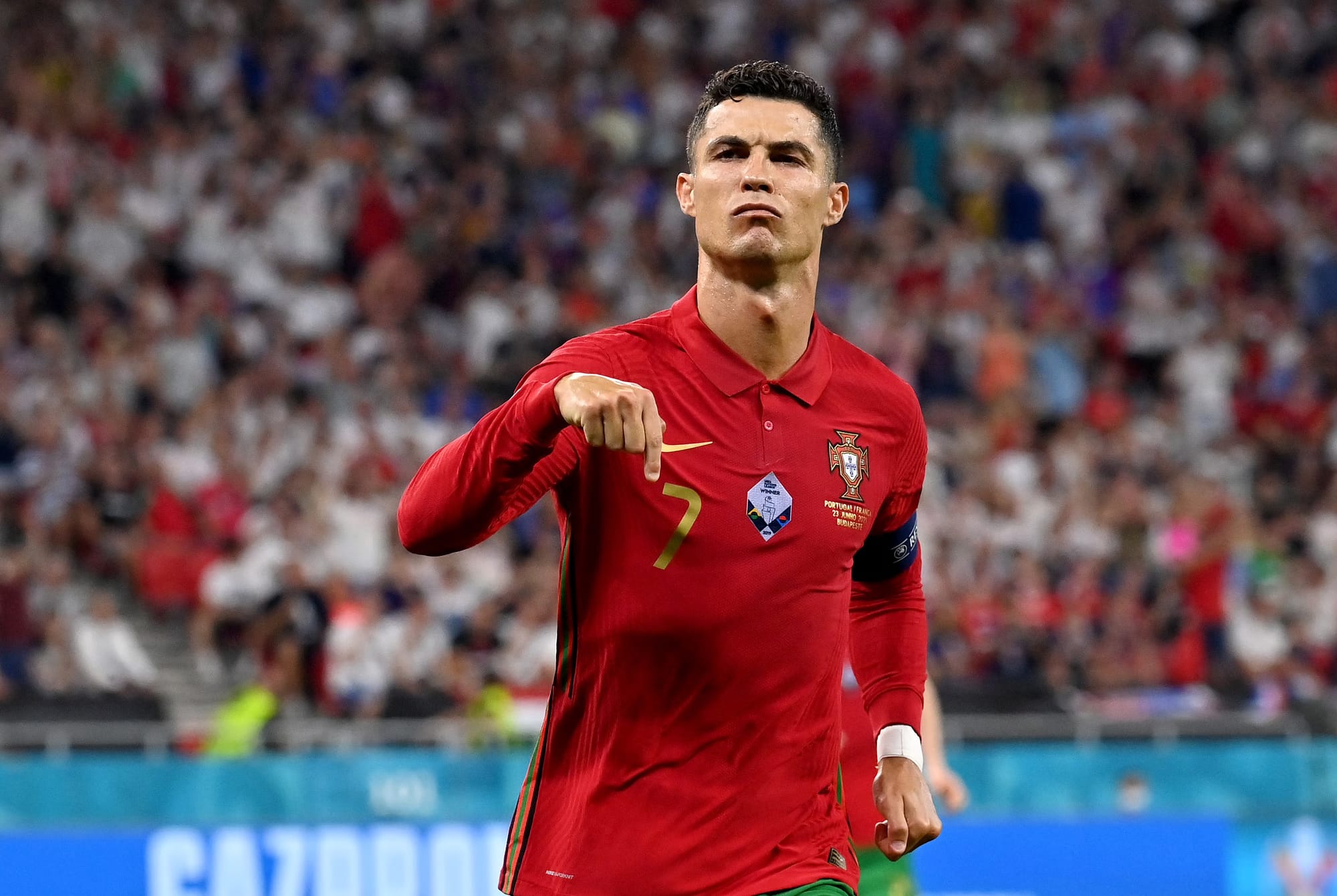
Portugal’s arrival in Miami on June 27 brings with it one of the most talked-about presences in world fútbol — a player whose name will be chanted in Hard Rock Stadium despite the fact that most of the 65,000 fans in the building will be cheering against him.
At 41, Cristiano Ronaldo is chasing a World Cup trophy that has eluded him across a career of extraordinary individual achievements. He arrives as Portugal’s all-time leading scorer and as the man with more international goals than any other male player in history — 143 in 266 appearances. He did not play in Portugal’s friendly against the United States in Atlanta on April 1 due to a hamstring injury, and there is no reason to believe he will not be named to the final squad unless that injury worsens.
His presence in Miami carries an additional layer of intrigue that has nothing to do with the match itself.
Since January, reports have circulated from multiple credible outlets that Inter Miami C.F. co-owner David Beckham has been exploring the possibility of bringing Ronaldo to South Florida after the World Cup — the most audacious potential signing in MLS history, which would unite the two greatest players of their generation on the same club team for the first time.
Inter Miami is plotting a move to lure Ronaldo away from Al Nassr, with Beckham hoping to capitalize on the current uncertainty surrounding Ronaldo’s future in Saudi Arabia. LAFC and Inter Miami are reported to be the frontrunners among MLS teams tracking Ronaldo’s situation, with his contract at Al Nassr potentially becoming a negotiating point as early as June 2026.
The obstacles are real. Inter Miami’s three Designated Player slots are currently occupied by Messi, Rodrigo De Paul, and Germán Berterame. Transfer journalist Fabrizio Romano has been direct in describing the reports as not “realistic” and confirmed there is nothing concrete regarding a move to Inter Miami.
But Fabrizio Romano has been wrong before. And Beckham, who convinced Lionel Messi to come to Miami when that seemed equally impossible, has demonstrated a particular talent for making the improbable happen.
What is certain is that on June 27, Cristiano Ronaldo will walk out onto the Hard Rock Stadium pitch — the same stadium where Messi plays his home games, in the city where the Inter Miami dream is most alive — and face Colombia in front of a crowd that will be one of the most charged atmospheres of the entire tournament.
Whether that night ends in a Colombian celebration or a Portuguese one, Miami will be the center of the fútbol world for ninety minutes. For a city that has spent decades absorbing the passion of Latin American fútbol into its DNA, the wait is almost over.
Sociedad Media covers the 2026 FIFA World Cup through the eyes of Miami’s Latin American community. Join us on the journey to the most exciting sports event in human history. Tips and World Cup experiences: info@sociedadmedia.com


