

The 2026 FIFA World Cup Final takes place on July 19 at MetLife Stadium in East Rutherford, New Jersey — a venue that will host eight matches in total and, for the first time in World Cup history, a full halftime entertainment show. FIFA president Gianni Infantino confirmed this week that Coldplay’s Chris Martin will curate the performance, which will feature multiple artists and an extended 25-minute halftime break in place of the standard 15 minutes.
It will, by all accounts, be spectacular, but a swift departure from the game’s more traditional norms.
Getting there will also be spectacular — in a different sense of the word. And the responsibility for that lands on two parties who have spent the past week pointing at each other.
$150 for a 15-Minute Train Ride
New Jersey Transit announced Friday the final prices fans will pay just to get to the stadium. A round-trip train ticket to MetLife will cost $150 — an elevenfold increase over the typical $12.90 fare for the roughly 15-minute, 9-mile ride from Manhattan’s Penn Station.
Let that settle for a moment. One hundred and fifty dollars. For a commuter train. That costs $13 under normal circumstances.
To be precise: NJ Transit set that price, not FIFA. The state transit agency says it has no choice — it faces $48 million in additional operating costs to run dedicated World Cup service, and it has decided fans attending the matches should absorb that cost rather than the regular New Jersey commuters who depend on the system daily. FIFA, for its part, refused to cover the bill.
The result is a $150 train ticket that neither side is fully willing to own.
A bus ride will set fans back $80. And because stadium lots are off-limits to fan parking, the only nearby option is a mall parking lot — at $225 per pass.
Only 40,000 round-trip train tickets will be available per match. NJ Transit president Kris Kolluri confirmed that once they are gone, they are gone. The tickets are non-transferable, non-refundable, and can only be purchased on the NJ Transit mobile app beginning May 13. Penn Station will partially close for four hours before each match, with access between Penn Station and Secaucus Junction restricted to fans holding valid match tickets.
If you are a regular New Jersey commuter who needs to get somewhere during those four hours, you will need to make other arrangements. Because of the World Cup.
How This Happened
The story behind the price tag involves a disagreement between New Jersey’s governor and FIFA that has been playing out publicly for weeks — and which has produced one of the more entertaining political standoffs of the year.
New Jersey Governor Mikie Sherrill, a Democrat who took office in January, said her administration inherited an agreement where FIFA contributed “$0 for transportation” while leaving the state’s perpetually cash-strapped transit agency “stuck with a $48 million bill.”
Sherrill’s position was direct: “FIFA should pay for the rides. But if they don’t — I’m not going to let New Jersey get taken for one.”
In a post on social media, she went further, noting that FIFA is charging fans up to $10,000 for a single ticket to the final, charging over $200 for premium parking at the nearby American Dream Mall, and is set to make $11 billion from the World Cup overall.
FIFA’s response managed to be both defensive and, depending on your perspective, fair. It pointed to other U.S. host cities keeping transit rates unchanged, argued that no other global event has been asked to absorb the costs of “arbitrarily set” transit prices, and noted that the 2018 host city agreements called for free transportation for fans to all matches.
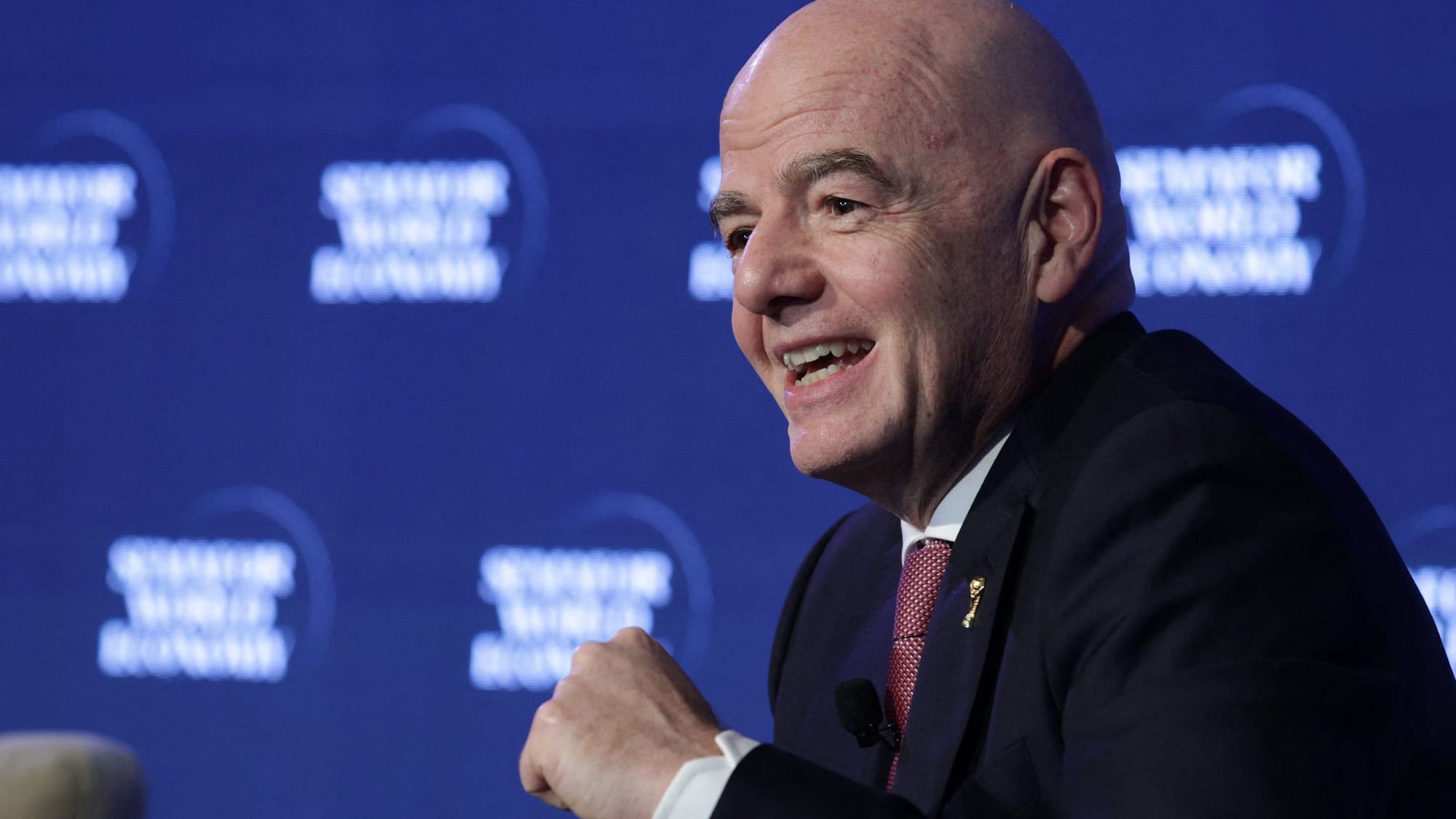
FIFA’s chief operating officer Heimo Schirgi called the price hikes a concern, warning they would have a “chilling effect” and that elevated fares would push fans toward alternative transportation, increasing congestion and diminishing the economic benefit to the region.
He is not wrong. He is also representing an organization that is set to generate $11 billion from this tournament, while arguing that FIFA should not pay for a train.
The Comparison That Stings
For international fans — including the tens of thousands from Latin America planning to attend matches in New Jersey — the contrast with other host cities is difficult to ignore.
Houston, which is hosting seven World Cup matches, is keeping fares at current levels: $1.25 for buses and light rail, with park-and-ride options ranging from $2 to $4.50. Los Angeles, Dallas, and Philadelphia have all pledged to keep transit rates unchanged. Kansas City is running shuttles to the stadium for $15 round-trip.
Boston is no paragon of affordability either — express buses to Gillette Stadium will cost $95, and round-trip train tickets from the city to the commuter rail station near the stadium are going for $80, four times the normal game-day fare.
But $80 is not $150.
Senate Minority Leader Chuck Schumer put it plainly, blaming FIFA for the dilemma. “Give me a break. Charging more than eleven times the normal fare for a train ride is a ripoff — plain and simple. FIFA is making billions from this World Cup, and fans are being hit with a $150 ticket before they even walk through the gate. FIFA should cover the ride, not stick fans with the bill.”
Alternative Options
For South American supporters planning the trip of a lifetime to see Brazil, Argentina, Uruguay, or Colombia at the World Cup Final — if their teams make it — the New Jersey transit situation is a practical planning problem, not just a political dispute.
The math is stark. A family of four traveling from Manhattan to the final by train pays $600 before they reach the stadium entrance. Add the match tickets — which for the final start at several hundred dollars and can reach five figures for premium seats — and the total outlay for a single afternoon becomes genuinely prohibitive for the diaspora communities across New York, New Jersey, and Connecticut, who have been waiting for this tournament for decades.
The options for those who cannot absorb the train fare are limited. Ride-share services will be in extreme demand. There is a designated ride-share pickup at Meadowlands Racetrack, from which fans will need to walk approximately one mile to the stadium. That is not a hardship — but it is not what anyone pictured when they imagined attending the World Cup Final.
Enter, Coldplay
While the transit dispute has dominated headlines, there is legitimately exciting news coming out of MetLife Stadium for the Final.
FIFA president Gianni Infantino confirmed in an interview with Semafor that the July 19 final will feature a halftime show — the first in World Cup Final history — curated by Chris Martin and Coldplay.
“I cannot yet tell you which artists will be performing, but it’s not one, it’s more than one,” Infantino said. “And it will be the biggest in the world. It will be fantastic.”
The final is expected to include an extended halftime break of around 25 minutes, replacing the traditional 15-minute interval. Martin’s role is as curator rather than sole performer — he is expected to help shape the lineup, which will feature multiple artists, in a format inspired by the Super Bowl halftime show.
The show is being organized in association with Global Citizen, and Infantino described it as “a historic moment for the FIFA World Cup and a show befitting the biggest sporting event in the world.”
Infantino also confirmed that FIFA will take over Times Square for the final weekend, with the Final and the bronze medal match shown live on screens in midtown Manhattan.
The Super Bowl comparison is apt and deliberate. FIFA has spent years watching the NFL’s halftime show become one of the most culturally significant entertainment events in the world, and it is now making a direct play for that same cultural real estate. Whether a show curated by a British rock band — however globally beloved — achieves that for football is an open question. But the ambition is clear.
Fútbol’s Biggest Stage is Starting to Look Like Something Else
The halftime show announcement is not just a novelty. It is a signal about where FIFA believes the World Cup needs to go — and for a significant portion of the fútbol world, that signal is not entirely welcome.
World Cup finals have always had pre-match entertainment. Robbie Williams performed before the France vs. Croatia final in Russia in 2018. Ozuna and Gims performed at Qatar 2022. But those appearances were shorter, less elaborate, and firmly positioned as warm-up acts before the main event — the fútbol itself.
What FIFA is now proposing is structurally different. The standard 15-minute halftime interval that has defined the rhythm of every World Cup Final in history will be extended to approximately 25 minutes to accommodate the show.
The match — the thing 78,000 people paid anywhere from several hundred to ten thousand dollars to attend — will pause for ten additional minutes so that a curated entertainment production can unfold on the pitch.
The model FIFA is explicitly drawing from is the NFL’s Super Bowl halftime show — an event that has evolved into a global pop culture moment often attracting audiences beyond the sport itself, most recently with Kendrick Lamar’s performance at Super Bowl LIX, driving enormous viewership and cultural conversation, and Bad Bunny’s 2026 halftime show that catered to the U.S. Latino community.
The comparison is instructive in ways FIFA may not have intended. The Super Bowl halftime show works partly because American football has a natural structural pause — teams switch ends, players rest, and the gap between the two halves is genuinely dead time in the stadium.
But fútbol does not work that way. Halftime in a World Cup Final is when managers make tactical adjustments, when players recover, and when the tactical narrative of the match pivots. Stretching it by ten minutes for a pop concert is a change that serves television audiences and commercial partners far more than it serves the players on the pitch or the supporters in the stands who flew in from Buenos Aires or Bogotá or Lagos to watch a football match.
Social media reaction to the announcement has reflected that unease. A recurring complaint among fútbol supporters is that the sport’s governing body is increasingly willing to reshape the game itself — its format, its calendar, its traditions — to accommodate broadcast windows, commercial partnerships, and entertainment industry interests.
The expanded 48-team format, the new Club World Cup, and now a halftime show curated by a British rock band in association with Global Citizen are all of a piece.
Each incremental change has a reasonable justification. Taken together, they sketch a portrait of an institution that has decided fútbol is not quite enough on its own.
Rock band Coldplay, by any measure, is one of the biggest bands in the world. Chris Martin is a genuinely gifted curator with a track record of ambitious live production. The show on July 19 will almost certainly be visually stunning. And when the second half kicks off — ten minutes later than any World Cup Final in history — the players will still have to win a fútbol match.
For many supporters, that tension — between the sport they came to watch and the spectacle being built around it — is the real story of the 2026 World Cup.


