

MIAMI — For Miami’s Cuban community — the largest outside the island itself — this week delivered news that crystallized months of escalating tension into something more concrete and more alarming.
The Pentagon has been quietly ramping up its strategic planning for a potential military operation in Cuba, should President Donald Trump give the order to intervene. According to a report by USA Today, which cited two officials with the Pentagon, while no definitive decision has been made, the internal discussions indicate Cuba is being actively considered within the Department of War’s strategic planning.
The story first surfaced in the Zeteo newsletter under the headline “Is Cuba Next?” and spread quickly across Capitol Hill and Washington’s political circles.
The Pentagon’s response, when asked by EFE to confirm or deny the report, was careful. The Department of War said it “would not speculate on hypothetical scenarios” — but added that the U.S. armed forces are prepared to carry out the President’s commands.
What Trump Has Actually Said
Trump’s public statements on Cuba over the past several weeks have been among the most aggressive from any U.S. president in decades.
On March 27, Trump declared in Miami Beach: “Cuba is next, but pretend I didn’t say that.”
On March 16, he said at the White House: “I think I’ll have the honor of taking Cuba.”
On March 30, speaking from Air Force One, he predicted Cuba “will fail very soon, and we’ll be there to help our great Cuban-Americans.”
And on April 13, standing at the White House, he said the United States “may stop by Cuba after we finish this” — referring to the ongoing conflict with Iran.
Despite that rhetoric, Trump explicitly ruled out direct military action against Cuba in March, stating he was prioritizing economic pressure. The gap between his public statements and his stated policy is precisely what has kept the situation uncertain — and what has driven the Pentagon’s discreet planning process.
The Legal Framework Washington Has Already Built
The military planning sits within a legal and executive framework the Trump administration has been constructing since January.
On January 29, 2026, Trump signed Executive Order 14380, declaring a national emergency over Cuba and citing the Cuban government’s alignment with Russia, China, Iran, Hamas, and Hezbollah as threats to U.S. national security. The order accused Cuba of hosting Russia’s largest overseas signals intelligence facility and of building deep intelligence and defense cooperation with China.
According to Responsible Statecraft, citing the Zeteo report, Trump has grown increasingly frustrated with Díaz-Canel’s open defiance of U.S. threatening remarks, particularly amid the near-total oil blockade Washington has imposed on the island.
The frustration has reportedly led Trump to consider operations against the Cuban leadership akin to the January operation that removed Nicolás Maduro from Venezuela.
What the Experts Say: Easy to Win, Hard to Govern
The military question is not straightforward — and the experts closest to it say winning would be the easy part.
Brian Fonseca, Vice President of Research in Defense and National Security and Director of the Jack D. Gordon Institute at Florida International University, believes a U.S. military action would likely succeed quickly, given Cuba’s outdated military equipment and internal system weaknesses. But he cautions that the true challenge would begin afterward. “It would be a very easy military victory, but a much more difficult political victory,” Fonseca said, emphasizing the enormous hurdles involved in rebuilding institutional order, ensuring stability, and supporting a political transition on the island.
The scenario raises complex questions with no clear answers: who would take power after the collapse of the current system, how would internal security be managed, and what role would external actors play in reorganizing the country.
The parallel most frequently cited by analysts is Iraq. A military operation that removed Saddam Hussein in 2003 succeeded in days. The political reconstruction took years, cost trillions of dollars, and produced instability that persists to this day. Cuba presents different but comparable challenges — a deeply institutionalized one-party state with seventy years of revolutionary identity embedded in its military, educational, and civic structures.
Díaz-Canel Responds: “We Will Defend Ourselves”
Cuba’s president has not been silent. In his first-ever interview with a U.S. broadcast network — NBC News Meet the Press with Kristen Welker on April 12 — Díaz-Canel delivered a direct message to Washington.
“An invasion of Cuba would have costs. It would affect the security of Cuba, the United States, and of the region. If that happens, there will be fighting, and there will be a struggle, and we will defend ourselves, and if we need to die, we’ll die,” he said through a translator — invoking Cuba’s national anthem, which declares that “dying for the Fatherland is to live.”
He was direct about the question of dialogue as well: “I think dialogue and deals with the U.S. government are possible, but they’re difficult.” He said he had not spoken to Secretary of State Marco Rubio and does not know him.
When Welker asked if he would be “willing to step down to save your country,” citing U.S. pressure for leadership change, Díaz-Canel bristled. “Do you ask that question to Trump?” he responded, before asking whether the question was “coming from the State Department.” He insisted that Cuba’s leaders “are elected by the people, although there’s a narrative trying to disregard that.”
On April 17, speaking at the Coloquio Internacional Patria digital communications forum in Havana, Díaz-Canel addressed the question that has dominated coverage of Cuba since January — whether what happened in Venezuela could happen in Cuba. His answer was direct and deliberate. Cuba, he said, is not Venezuela. The two countries have different histories, different institutional structures, and different relationships with the concept of revolutionary resistance. Cuba has spent more than sixty years under blockade, under aggression, under pressure — and has survived all of it. The strength of Cuban unity, he said, is something specific to Cuba, and not something that can be undone from the outside.
He reminded the audience that 32 Cuban combatants died in Venezuela defending Maduro in January, and asked what millions of Cubans defending their own soil would look like.
Back in Miami
For Cuban Americans in South Florida — many of whom have spent decades hoping for the end of the Castro-era government — the Pentagon planning report lands differently than it does for the broader American public.
The desire for change in Cuba runs deep in this community. Many Cuban Americans lost property, family members, or their own futures to a government that has ruled the island for 67 years. The prospect of a U.S. intervention that ends Communist Party rule carries a weight here that it does not carry in Washington policy circles.
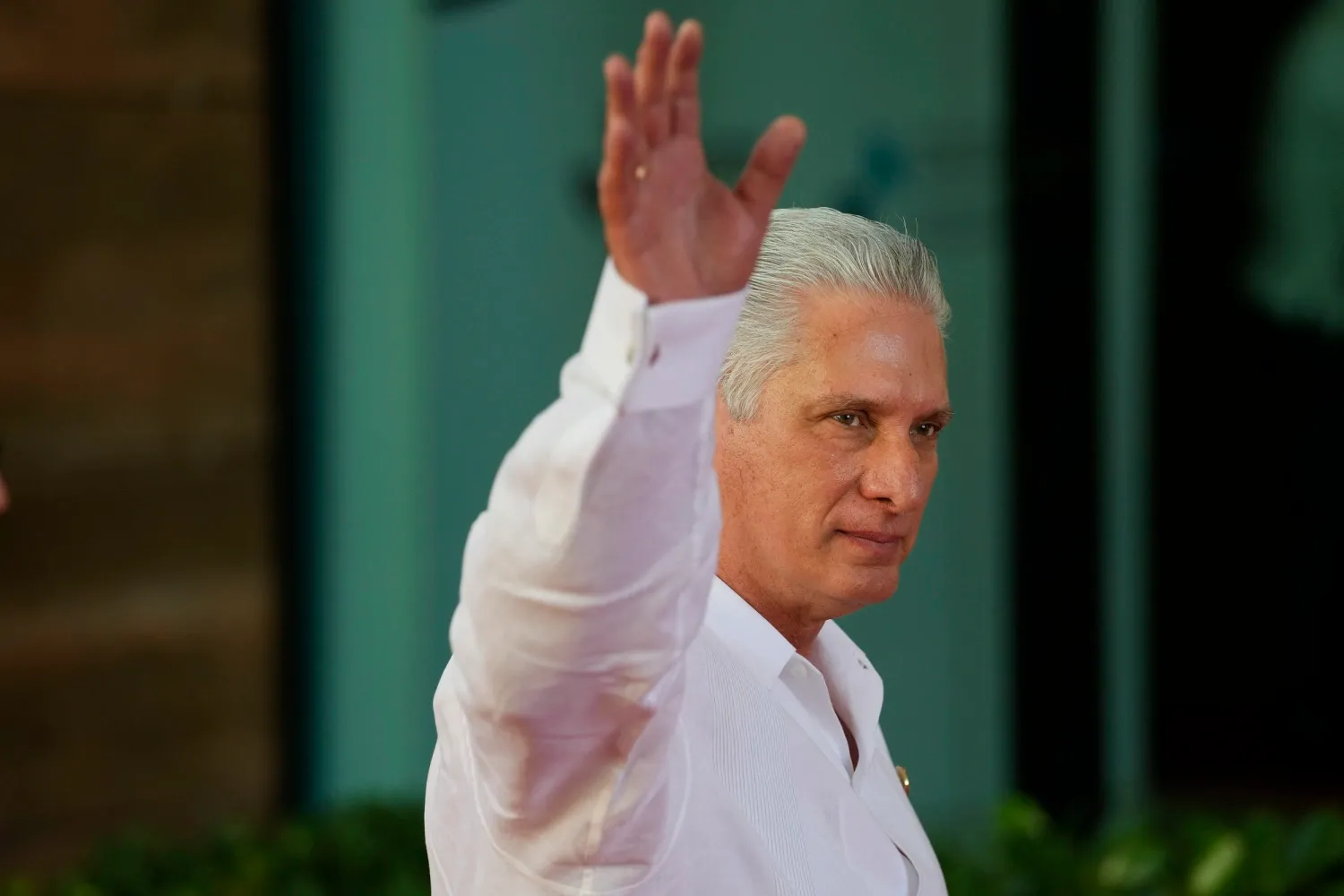
But the FIU expert’s warning — easy military victory, very difficult political victory — resonates in Miami, too. South Florida’s Cuban community knows better than anyone in Washington how complicated Cuba’s political culture is, how deep the revolutionary identity runs in certain sectors of Cuban society, and how difficult the question of “what comes next” would be to answer. A Cuba without the Communist Party is not automatically a stable Cuba.
A Cuba occupied by U.S. forces is not automatically a free Cuba.
Democratic Congresswoman Nydia Velázquez described the prospect of conflict in Cuba as “madness” and urged the passing of a war powers resolution.
Republican voices in Miami have been more divided — with some Cuban American lawmakers expressing support for maximum pressure while stopping short of endorsing military action.
What Comes Next
The Pentagon’s planning is preparation, not a decision. No order has been given, and no timeline for action has been confirmed by any official source. The Trump administration has maintained publicly that economic pressure rather than military action is its primary instrument against Cuba.
But the combination of the Pentagon directive, the executive order, Trump’s own public statements, and the Zeteo report of White House frustration with Díaz-Canel’s defiance suggests a situation in which the gap between rhetoric and action is narrowing — even as both sides say they prefer a negotiated resolution.
Cuba is not Venezuela. The institutional comparison Díaz-Canel drew on April 17 is one that analysts largely agree with — the Cuban state is more deeply institutionalized, the military more integrated with the revolutionary identity, and the potential for asymmetric resistance significantly higher. What that means for U.S. planning, and for the island of 11 million people 90 miles from Florida, is the question that no one in Washington or Havana has yet answered.
Recent developments in Cuba is one of Sociedad Media’s most important beats, dedicated to keeping Miami’s Hispanic community updated on the latest in what’s happening in U.S.-Cuba relations and their impact on South Florida. For questions and inquiries: info@sociedadmedia.com
🚨🇺🇸🇨🇺 | AHORA/CUBA: At an event in Phoenix, Arizona, President Trump stated that “great strength” will help to bring in a “new dawn for Cuba,” backing up a recent report by @USATODAY that claims the Pentagon is planning possible military action in Cuba.
— Sociedad Media (@sociedadmedia) April 17, 2026
President of Cuba… pic.twitter.com/B16oFbDEM0


