

MIAMI — The International Monetary Fund announced Thursday that it will resume formal contact with Venezuela’s government — a decision that ends one of the most prolonged financial estrangements between a member country and the institution in its history.
A majority of IMF member countries backed the resumption of contact in a survey gauging member relations with Venezuela’s government, paving the way for the acting administration of Delcy Rodríguez to potentially regain access to the institution’s financing.
For Venezuela, a country that has spent the better part of a decade cut off from the global financial system, the announcement is groundbreaking. For the eight million Venezuelans who left their country since 2014 — many of whom are now living in Miami, across the United States, and throughout Latin America — it is the clearest signal yet that the financial isolation that helped drive that mass exodus is beginning to lift.
How Long Has Venezuela Been Locked Out — and Why
To understand what Thursday’s announcement means, it helps to understand how long and how completely Venezuela has been excluded from the international financial system.
Venezuela has been a member of the IMF since December 30, 1946 — among the institution’s founding members. For decades, the relationship was unremarkable. Venezuela borrowed when it needed to, repaid its debts, and participated in the normal rhythms of international finance.
That began to change under Hugo Chávez. In a symbolic move, Venezuela paid off its debts to both the IMF and the World Bank five years ahead of schedule in 2007, subsequently cutting off formal financial relations with the organizations. Chávez had long contended that the IMF merely served U.S. interests.
The break became complete under Nicolás Maduro. In April 2019, after opposition leader Juan Guaidó claimed Venezuela’s presidency and dozens of countries recognized him as the legitimate leader, the IMF suspended Venezuela’s access to its Special Drawing Rights — the reserve assets member countries hold at the Fund — citing political chaos over who actually governed the country.
The last formal IMF economic assessment of Venezuela was conducted on September 13, 2004 — meaning the institution has gone more than two decades without a proper look at the official books of one of the world’s largest oil-producing nations.
The practical cost of that exclusion was enormous. When the IMF distributed $650 billion in emergency financial relief to member countries during the COVID-19 pandemic in 2021, Venezuela — one of the countries that needed it most — received nothing. About $4.9 billion worth of Special Drawing Rights that belong to Venezuela by right of its membership were frozen, inaccessible, held in Washington, while Venezuelans went without medicine, food, and basic services.
How This Was Anticipated — and Who Drove it
The restoration of IMF relations did not come from Venezuela asking nicely. It came from Washington deciding the time had come — and then making it happen.
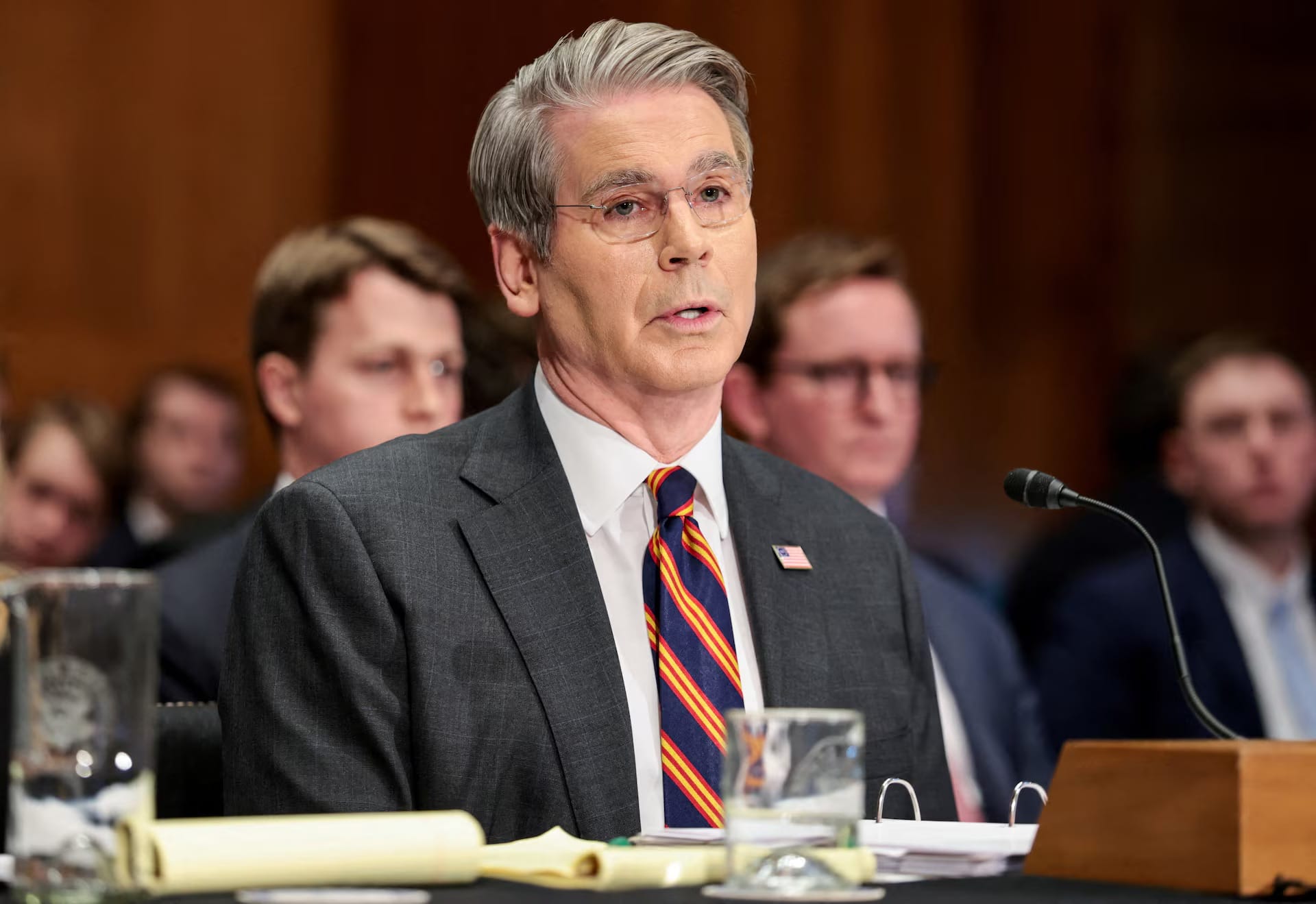
As early as January 9, 2026 — just six days after U.S. forces captured Nicolás Maduro — Treasury Secretary Scott Bessent told Reuters that the Trump administration would be willing to convert Venezuela’s SDRs to dollars to help rebuild the country’s economy as more sanctions were lifted. The IMF and World Bank convened extraordinary unscheduled sessions that same week to assess Venezuela’s economic crisis.
The IMF’s own managing director made the conditions clear. IMF Managing Director Kristalina Georgieva told Reuters in February that the Fund was ready to support Venezuela, but needed its major shareholders — including the United States — to recognize the country’s leadership, and Venezuelan authorities to seek assistance. In other words, the IMF was waiting for Washington’s green light.
Washington provided it in stages. Sanctions on Rodríguez personally were lifted on April 1. On April 14, the U.S. Treasury Department lifted financial sanctions on Venezuela’s Central Bank and three other state-owned banking institutions — the most significant easing of the punitive regime in place since 2017.
On the same day, Treasury Secretary Bessent publicly endorsed efforts by the IMF to reintegrate Venezuela into the international financial system. “The IMF is working to bring Venezuela back and make it look like a normal economy,” Bessent said.
Spanish Economy Minister Carlos Cuerpo, attending the IMF and World Bank spring meetings in Washington on Thursday, confirmed the direction of travel hours before the announcement: “I think we will be able to reach the required majority and we will know the result in the next days,” he said.
Those days turned out to be hours.
What Venezuela Actually Gets
Resuming formal contact is the beginning of a process, not the end of one. Here is what it means in practical terms.
The most immediate benefit is the potential unfreezing of Venezuela’s $4.9 billion in Special Drawing Rights. SDRs are reserve assets whose values are tied to five currencies — the U.S. dollar, the euro, the Chinese renminbi, the Japanese yen, and the British pound. In plain terms, they are a form of international money that Venezuela can exchange for hard currency to pay for imports, stabilize its currency, or cover government expenses.
For a government whose Central Bank has been unable to operate in dollars for nearly a decade, access to that liquidity is immediately meaningful.
Beyond the SDRs, formal IMF engagement opens the door to something more substantial over time — a full lending program. Venezuela’s external debt represents roughly 180 to 200% of its gross domestic product, making it one of the world’s largest unresolved sovereign defaults. The $60 billion in defaulted bonds once issued by the government and state oil company PDVSA have ballooned past $100 billion as accumulated interest has compounded for years.
No country can attract serious foreign investment while carrying that weight unresolved. An IMF program — which typically comes with conditions for economic reform in exchange for financing — is the standard mechanism for beginning that restructuring process.
What it Means for Ordinary Venezuelans
For Venezuelans inside the country, the IMF’s return is a distant institutional development with consequences that will take time to reach daily life. The more immediate change came from the Central Bank sanctions being lifted simultaneously.
Correspondent banks, payment processors, and remittance platforms based in the United States will, for the first time in nearly a decade, be able to serve Venezuelan institutions without violating sanctions. The inability to operate in dollars through the Central Bank had forced Rodríguez to choose between printing money — risking inflation — or holding the line on public-sector wages until financial relief arrived.
Public workers had protested in Caracas last month over salaries of roughly $160 per month.
The ability to move dollars through the Central Bank legally changes that calculation. It does not immediately raise wages. It does not rebuild hospitals, restore electricity service, or bring back the eight million people who left. But it removes one of the key structural barriers that kept Venezuela’s economy in permanent crisis — the inability to function in the global financial system at all.
What it Means for Washington
For the United States, Thursday’s IMF announcement is the institutional completion of a strategy that has been in motion since January 3. Throughout the IMF’s history, the U.S. Treasury has generally gotten its way with the Fund, thanks to its veto power over key decisions and the tendency of Western allies to defer to Washington on questions of Fund policy.
The speed with which the IMF moved once Bessent signaled support — from extraordinary unscheduled sessions in January to a formal vote in April — reflects that dynamic precisely.
Washington’s motivation is not purely charitable. The Trump administration’s Venezuela strategy has been explicit from the start: control of Venezuela’s oil revenues is the instrument, and economic normalization is the goal. An IMF program for Venezuela would impose conditions — fiscal discipline, transparency in oil revenues, debt restructuring — that serve U.S. creditor interests as much as Venezuelan public interests.
U.S. creditors hold the bulk of Venezuela’s debt. Most bonds were issued under New York state law. The Trump administration’s stated goal of reviving Venezuela’s oil industry depends on a debt resolution that protects American investors while unlocking new investment capacity. The IMF is the most effective available tool for managing that process, which is precisely why Washington pushed for its return.
The question that Thursday’s announcement leaves open is the same one that has hung over every development in Venezuela since January: whether the economic normalization being built by Washington and managed through the Rodríguez government will eventually produce the democratic opening that Venezuela’s people voted for in 2024 — or whether it will produce a stabilized authoritarian system with better oil infrastructure and a seat at the IMF table.
The Fund is back in Caracas. What it finds there, and what it demands in exchange for its support, will shape the answer to that question over the months ahead.


