


MIAMI — The U.S. House of Representatives advanced legislation on Wednesday that would extend Temporary Protected Status for Haitian nationals through April 2029, setting up a final passage vote for Thursday afternoon.
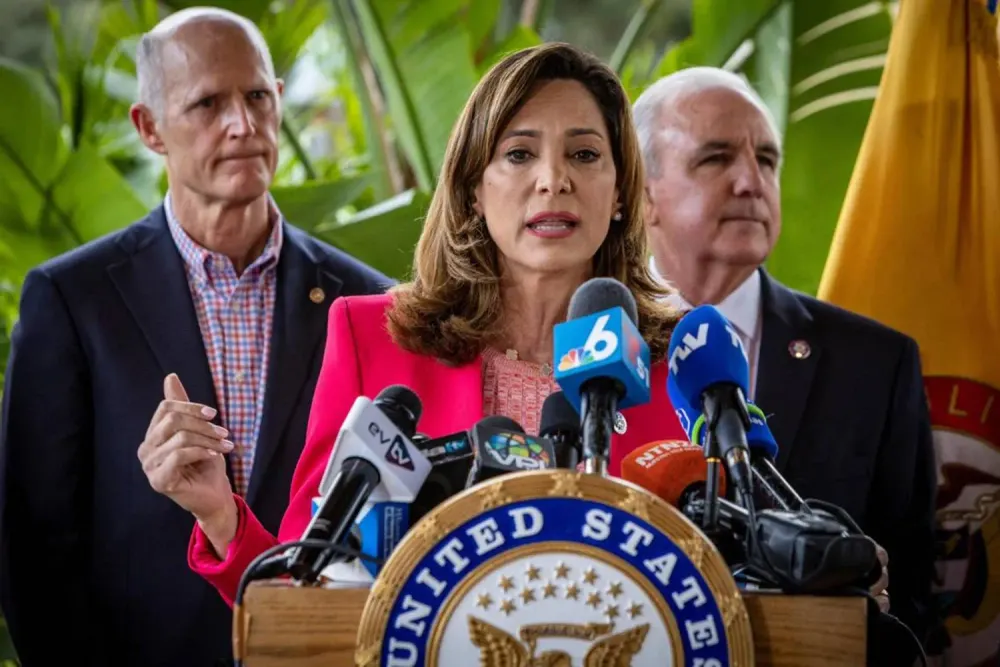
Six Republicans and independent Representative Kevin Kiley joined all House Democrats to deliver a 219–209 procedural vote in favor of moving the measure forward. Among the six Republicans were two South Florida members — Rep. María Elvira Salazar of Florida’s 27th district and Rep. Carlos Giménez of Florida’s 28th — whose votes carry particular weight given the size of the Haitian immigrant community in Miami-Dade County.
What the Bill Would Do
Temporary Protected Status (TPS) is a federal immigration designation that allows nationals of certain countries to live and work legally in the United States when conditions in their home country — armed conflict, natural disasters, or other extraordinary circumstances — make safe return impractical. It does not, however, provide a pathway to permanent residency or U.S. citizenship.
Haiti was first granted TPS following an earthquake in 2010, and multiple administrations, both Democratic and Republican, have extended the protections in the years since. The legislation before the House, H.R. 1689, was introduced by Rep. Laura Gillen of New York. It would direct the Department of Homeland Security to maintain Haiti’s TPS designation through April 2029.
More than 350,000 Haitian nationals currently rely on TPS to live and work legally in the United States. South Florida — particularly Miami-Dade and Broward counties — is home to one of the largest concentrations of Haitian TPS holders in the country.
How the Vote Happened
The legislation reached the House floor through a discharge petition, a procedural tool that allows members of Congress to bypass House leadership and bring a bill directly to a floor vote when a simple majority of 218 signatures is obtained. Democrat Rep. Ayanna Pressley of Massachusetts led the discharge petition effort.
The petition reached the required 218 signatures on March 28, with all House Democrats joined by four Republicans: Reps. María Elvira Salazar of Florida, Brian Fitzpatrick of Pennsylvania, Mike Lawler of New York, and Don Bacon of Nebraska. Wednesday’s procedural vote added two more Republican supporters — Rep. Giménez of Florida and Rep. Nicole Malliotakis of New York — bringing the Republican total to six.
The Administration’s Position
The Trump administration has opposed extending TPS for Haiti, as it has for several other nationalities over the past year. The administration and former DHS Secretary Kristi Noem have argued that the program was designed to be temporary and that indefinite extensions go beyond its original purpose.
The White House is expected to veto the legislation if it reaches the president’s desk.
DHS moved to terminate Haiti’s TPS designation in 2025. Federal courts have issued orders blocking that termination from taking effect while legal challenges proceed. The Supreme Court announced on March 16, 2026, that it will hear expedited oral arguments on whether the administration can terminate TPS for Haiti and Syria, with arguments scheduled for the week of April 27.
A ruling is expected in late June or early July.
Salazar: A Miami Republican With a Long Record on TPS
Of the Republicans who voted yes, Rep. María Elvira Salazar has been the most vocal advocate for TPS extension over the longest period of time, and her position carries particular significance on a piece of legislation that has such a tremendous impact on Miami and South Florida-based communities.
Salazar, a Coral Gables Republican, signed the discharge petition on February 2 — among the first four members of her party to do so. Her stated reasoning has centered on conditions in Haiti rather than a broader position on immigration policy.
“Haiti is in the middle of a profound humanitarian and security collapse, and this demands leadership from the United States,” Salazar said in a statement. “Sending people back into gang-controlled chaos is neither realistic nor humane.”
She added that she would continue to support TPS while calling for strong criminal vetting measures to remain in place.
Salazar has separately worked with Rep. Darren Soto on a similar discharge petition effort to extend TPS for Venezuelan nationals. “From Haiti to Venezuela, we have to get this right,” she wrote on X:
“TPS exists for a reason — to protect people who cannot safely return home. Until conditions meaningfully improve, we must uphold our commitment to those we granted Temporary Protected Status while ensuring strong criminal vetting measures remain in place.”
Salazar’s position on TPS is part of a broader immigration posture that has at times put her at odds with the majority of her party. She is one of the two leading lawmakers behind the Dignity Act, a bipartisan immigration bill that would provide a pathway to legal status for long-term undocumented immigrants — a proposal that has drawn criticism from members of her own caucus who describe it as an amnesty measure.
The Other Republicans Who Voted Yes
Don Bacon of Nebraska said his vote was driven by workforce concerns. “Removing the TPS status would cost 350,000 healthcare workers their ability to work at a time when we’re already facing serious workforce shortages,” he told Newsweek.
“I’ve heard from healthcare providers and business leaders across Nebraska who are concerned about the impact this would have on patient care and our economy.”
Malliotakis of New York framed her vote around the situation in Haiti itself, saying that deporting people to a country in its current condition would be neither compassionate nor sound policy.
What Comes Next
Thursday’s final House passage vote is the next immediate milestone. If the bill passes, it would move to the Senate, where its prospects are uncertain. Republican Senate leadership has not indicated any plans to schedule a similar vote, and there is no Senate companion discharge petition with enough signatures to force floor consideration.
Even if both chambers were to pass the legislation, it would require veto-proof majorities to overcome a presidential veto — a threshold Wednesday’s 219–209 margin falls well short of.
The Supreme Court’s ruling in Miot v. Trump, expected before the end of June, may ultimately determine the legal status of Haitian TPS holders regardless of what Congress does or does not pass. A ruling in the administration’s favor would allow TPS termination to proceed. A ruling against would preserve existing court-ordered protections. Either outcome would affect whether, and to what extent, legislative action through Congress remains the primary avenue for TPS holders seeking long-term legal certainty.
For South Florida’s Haitian community, the legislative and judicial tracks are running simultaneously, and the outcome of either, or both, will shape the lives of tens of thousands of families in the region.