

MEXICO CITY — On the morning of April 20, Mexican President Claudia Sheinbaum stood before reporters and declared that she had not been informed of a joint operation in Chihuahua in which two CIA officers and two Mexican investigators died returning from a methamphetamine lab raid in the Sierra Tarahumara. The federal government, she said, had not authorized the operation and demanded an immediate investigation into the matter.
That same afternoon, however, Sheinbaum’s government submitted a request to the Mexican Senate to authorize the entry of 23 members of U.S. Navy SEAL Team 8 into Mexican territory — along with a separate permit for U.S. Northern Command forces to conduct a multinational amphibious exercise on Mexico’s Pacific coast.
It was the third such request Sheinbaum had sent to the Senate in 2026. The first two had passed with near-unanimous votes. The third is pending approval within days.
The contradiction at the heart of Mexico’s security posture in 2026 is not subtle. A government that has publicly opposed the U.S. capture of Nicolás Maduro, demanded explanations for CIA operations on its soil, and repeatedly invoked “national sovereignty” as a red line against Washington’s pressure is simultaneously presiding over the densest U.S.-Mexico military training calendar in at least fifteen years — submitting, authorizing, and managing the presence of American special forces on Mexican territory with a consistency and scale that its public messaging has never acknowledged.
The contradiction becomes even more glaring after being reminded of a January 15-minute phone call between President Trump and his Mexican counterpart, in which Sheinbaum made explicitly clear to the Mexican public following the conversation that she had “ruled out” the possibility of U.S. forces operating on Mexican soil.
Sheinbaum stated that during the call, Trump had “insisted that if we ask for it, they could help”, referring to U.S. military support to combat the country’s armed drug trafficking organizations.
Three Authorizations
The record is documented and specific.
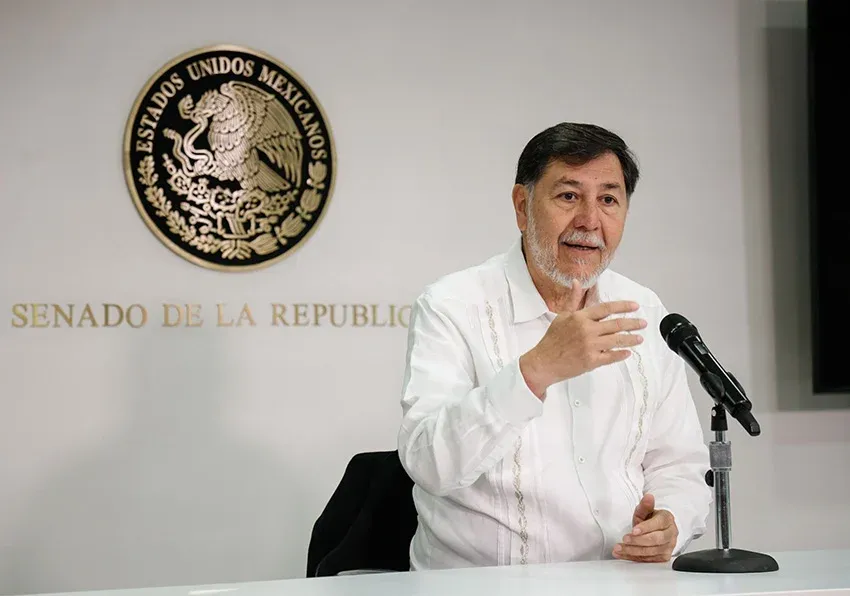
On February 11, the Mexican Senate cleared 19 members of U.S. Navy SEAL Team 2 by 105 votes to none, with a single abstention — Morena senator Gerardo Fernández Noroña — for a training rotation at the San Luis Carpizo naval facility in Campeche.
On March 25, the Senate again authorized 35 U.S. military personnel for the SOF-32 exercise — formally titled “Adiestramiento en Preparación para la Copa Mundial de la FIFA 2026 y Ejercicio VITAL ARCHER” — by 110 votes to 1 with 5 abstentions.
The third request, submitted April 20, packages two distinct authorizations: 23 members of U.S. Navy SEAL Team 8 for SOF 4 training from August 1 to October 15, and U.S. Northern Command forces for the Fénix 2026 multinational amphibious exercise in Campeche from May 8 to 30.
Together, the three 2026 authorizations will bring approximately 77 U.S. military personnel into Mexican territory for training and interoperability exercises across February through October — the densest U.S.-Mexico military training calendar in at least fifteen years. And it is being executed by a president who campaigned explicitly on defending Mexican sovereignty against Trump-era pressure.
The details of the third authorization carry their own significance. The SEAL Team 8 contingent will enter with weapons and equipment aboard a U.S. Air Force C-130 Hercules, with the point of entry at the Adolfo López Mateos International Airport in Toluca — a 90-minute drive from the Palacio Nacional.
Previous authorizations routed U.S. military aircraft through Campeche. The Toluca port of entry is itself a political signal — American special forces will be landing closer to Mexico City than they have under any prior authorization.
The World Cup Dimension
One of the three authorizations — SOF-32 — carries a detail that has received almost no coverage in English-language media: U.S. special forces are training Mexican military personnel specifically for 2026 FIFA World Cup security operations.
The SOF-32 exercise is formally described as preparation for the Copa Mundial de la FIFA 2026. Mexico is co-hosting the World Cup alongside the United States and Canada, with matches at the Estadio Azteca in Mexico City, the Estadio BBVA in Monterrey, and Guadalajara’s Estadio Akron — three of the most high-profile security environments in the hemisphere during the tournament’s June-July window.
The presence of U.S. special forces training Mexican military units for World Cup security is not, in isolation, surprising — the tournament represents an extraordinary security challenge, and interoperability between the three host nations’ security forces is a logical priority.
What makes it significant is the context: these authorizations are being approved by the same Senate that represents a government publicly insisting it does not allow unauthorized U.S. military operations on Mexican soil. The line between authorized and unauthorized has become the central political distinction, and the authorized operations are expanding at the same time that the unauthorized ones are generating diplomatic crises.
The Chihuahua Contradiction
The timing of the April 20 authorization request — submitted the same afternoon Sheinbaum told reporters she knew nothing about the CIA Chihuahua operation — is the sharpest expression of the contradiction Mexico is navigating.
Sheinbaum’s message in submitting the third authorization the same day as her Chihuahua press conference was deliberate: authorized, federally controlled U.S. military training cooperation is expanding, while unauthorized state-level cooperation is the breach she will pursue. The distinction is legally coherent and politically risky.
Sociedad Media reported the CIA Chihuahua operation in detail — two agency officers working directly with Chihuahua’s State Investigation Agency, bypassing federal channels, died in a car crash on the way back from a meth lab raid.
Sheinbaum opened a National Security Law investigation. Federal prosecutors reviewed whether Mexico’s sovereignty had been violated. And on the same afternoon, her government asked the Senate to let more American special forces in through the front door.
The legal distinction between the two situations is real. The Chihuahua operation was conducted without federal authorization, at the state level, through channels that bypassed Mexico City. The Senate authorizations are federal, transparent, and constitutionally proper. But the political optics are more complicated than the legal architecture — because both involve American military and intelligence personnel operating on Mexican soil, and the Mexican public does not readily distinguish between the two.
What Washington is Getting
The three authorizations are part of a bilateral security framework that has been expanding rapidly since Sheinbaum took office — and that represents a significant shift from the posture of her predecessor, Andrés Manuel López Obrador, who resisted U.S. military cooperation far more consistently.
The U.S. Department of State and Mexico’s security apparatus held the Third Meeting of the U.S.-Mexico Security Implementation Group on January 23, 2026 — a high-level coordination body covering intelligence sharing, counter-narcotics cooperation, and bilateral security priorities. The joint statement from the September 2025 inaugural meeting listed priorities including “respect for sovereignty” and “shared and differentiated responsibility” — diplomatic language that papers over the fundamental tension between Washington’s desire for operational reach and Mexico City’s constitutional constraints.
What Washington is getting from the three Senate authorizations is interoperability — the ability of U.S. special forces to train alongside Mexican military units in Mexican terrain, using Mexican logistics and infrastructure, developing the joint operational familiarity that would be essential if the bilateral security relationship ever moved beyond training into active operations. That progression — from training to advising to operating — is the trajectory that the CIA Chihuahua operation suggests has already begun at the state level, outside the federal authorization framework.
Whether the authorized training and the unauthorized operations are parts of the same expanding U.S. operational presence — or genuinely distinct programs with different chains of command and different levels of Mexican government knowledge — is the question that neither government has answered directly, and that the Chihuahua investigation may or may not resolve.
The Vote That is Coming
The Senate Defense Commission is expected to vote on the Fénix 2026 and SOF 4 authorizations within days — the May 8 start date for Fénix gives the Senate no room to delay.
Based on the voting pattern of the previous two authorizations — 105-0-1 and 110-1-5 — the third is expected to pass with a similar supermajority. However, Noroña’s abstention is likely to repeat, but the overall outcome is not in doubt.
What is in doubt is how much longer the distinction between authorized and unauthorized U.S. military presence in Mexico can serve as the organizing principle of Sheinbaum’s security posture — particularly if the Chihuahua investigation reveals that the CIA’s state-level operations were more extensive, and more widely known, than the federal government has acknowledged.
The Chihuahua inquiry will produce its first findings within the month. Two questions will dominate: whether the U.S. Embassy instructors had federal authorization to be on the operation, and whether Mexico’s National Security Law was violated. If the answers are yes and yes, the authorized-versus-unauthorized distinction that Sheinbaum has used to manage the contradiction collapses — and the full scale of U.S. military and intelligence operations in Mexico becomes the story.
For now, the Senate will vote, and it will almost certainly approve the measure. And the 77 American special forces operators authorized to operate in Mexico in 2026 will become more.
Sociedad Media has covered the CIA Chihuahua operation and U.S.-Mexico security relations in depth, and will continue to monitor Mexico’s drug war and any other related developments. For information or general inquiries, contact info@sociedadmedia.com


