

At midnight on Friday, in a brief video posted to social media, Rubén Rocha Moya addressed the people of Sinaloa for what may be the last time as their governor.
“My conscience is clear,” Rocha Moya, 76, said in the recording. “To my people and to my family, I can look you in the eye because I have never betrayed you, and I never will.”
Governor Moya said he was taking “temporary leave” from the position he has held since 2021 to defend himself against what he called the “false and malicious” allegations — the U.S. indictment unsealed six days earlier that charged him with conspiring with Los Chapitos to flood the United States with fentanyl, heroin, cocaine, and methamphetamine in exchange for political protection and bribes.
On the same day, Juan de Dios Gámez Mendívil — the mayor of Culiacán, Sinaloa’s state capital, and the second most prominent name in the indictment — also announced that he would step down. Sinaloa’s local congress voted to approve Rocha’s 30-day leave of absence and appointed Yeraldine Bonilla Valverde — his Secretary of Government and close political ally — as interim governor.
Four days. That is how long it took for a U.S. federal indictment to remove a sitting Mexican governor from office — without an extradition request, without a Mexican prosecution, and without a single formal legal proceeding on Mexican soil.
What Resignation Means — Legally
The resignations are not only political events. They are legal ones — and the legal consequence is the one that Washington wanted.
As serving governor and mayor, Rocha Moya and Gámez Mendívil had enjoyed blanket immunity from criminal prosecution under Mexican law. By leaving their posts — even temporarily — both men lost that protection. Arturo Zaldívar, a former Mexican Supreme Court justice who now advises President Sheinbaum, posted on X: “They can be detained like any person.”
The immunity question has been at the center of Washington’s frustration with Mexico’s handling of cartel-affiliated officials for years. U.S. prosecutors can indict Mexican officials in the Southern District of New York — and they have been doing so with increasing frequency — but those indictments are legally unenforceable inside Mexico as long as the defendants hold office. By resigning, Rocha Moya and Gámez Mendívil removed the structural shield that made the indictments primarily symbolic rather than operational.
Mexico’s attorney general’s office said it would not arrest Rocha or the other accused officials pending investigation — but the pathway to detention is now legally open in a way that it was not six days ago.
Whether Mexican prosecutors pursue it, whether the attorney general’s office finds the “clear and irrefutable evidence” that Sheinbaum set as her public threshold for action, and whether the political will exists inside the Morena government to prosecute its own senior officials — those are the questions that will determine whether Friday’s resignations are a genuine accountability moment or a tactical retreat designed to manage the political damage while the legal situation clarifies.
Sheinbaum’s Response — and Her Prediction
Sheinbaum addressed the indictment at her Thursday morning press conference, or Mañanera, in language that carefully balanced Morena’s anti-corruption platform against the sovereignty concerns that Washington’s extraterritorial prosecution raises. She said her government had not been provided with concrete evidence to back up the claims, suggesting the information in the indictment was insufficient.
“My position on these events is as follows: truth, justice and the defence of sovereignty,” she said. If “clear and irrefutable evidence” is presented, the U.S. must still proceed “in accordance with the law under our jurisdiction.”
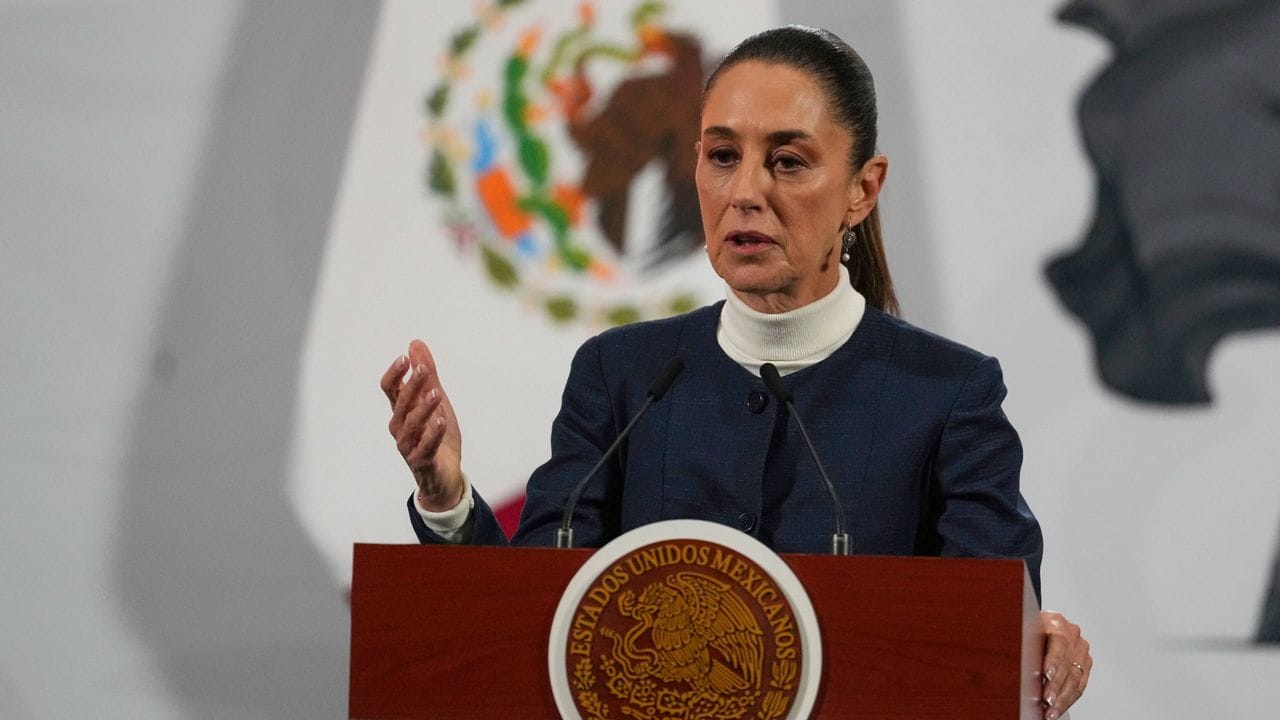
The formulation was precise. Sheinbaum did not defend Rocha Moya. She did not attack the U.S. indictment as fabricated, but she did set a procedural bar — irrefutable evidence, Mexican jurisdiction — that allows her to maintain both her anti-corruption credibility and her sovereignty posture simultaneously. It is the same narrow channel she has been navigating since the CIA Chihuahua operation forced her to demand explanations from Washington while simultaneously authorizing more U.S. special forces onto Mexican soil.
Then she said something that cut through the diplomatic language entirely: more U.S. indictments of Mexican officials were likely to come. She predicted it directly, without hedging.
That prediction is not rhetorical. It is based on documented reality. The Southern District of New York has been filing Sinaloa Cartel-linked indictments since 2023 — with the total number of defendants now exceeding 30. Rocha Moya is the most senior figure charged to date. The indictment’s language — “corruption that enables organized crime will be investigated and prosecuted wherever U.S. jurisdiction applies” — is a declaration of reach, not a one-time exercise of it.
The indictment accused the then-Deputy Prosecutor of Sinaloa’s State Attorney General’s Office of receiving approximately $11,000 per month from the Chapitos in exchange for protecting cartel members from arrest and leaking information about U.S.-backed law enforcement operations to the cartel. That allegation — a sitting prosecutor selling intelligence about U.S.-backed operations — is the documented confirmation of why the CIA was operating at the state level in Chihuahua, bypassing Mexico City’s federal channels entirely.
Sociedad Media reported this connection when the indictment was first unsealed. The resignations do not resolve it. They confirm it.
The Sinaloa Political Fallout
The political damage to Morena in Sinaloa could be significant.
Rocha Moya is a close personal ally of former President Andrés Manuel López Obrador — the founder of the left-wing Morena movement and the politician who built the party on an explicit anti-corruption platform. At least three of the ten officials named in the indictment are Morena-affiliated.
The party that came to power promising to end the collusion between government and organized crime that defined previous administrations has now had its sitting governor, sitting mayor of the state capital, and sitting deputy prosecutor charged by Washington with exactly that collusion.
The political irony is not lost on Sinaloa’s residents. “It’s an open secret,” said Sergio Estrella, 42, a shopkeeper in Culiacán. “The government needs to take a different tack, to recognize how deeply drug trafficking is embedded in politics.”
Rocha Moya’s biography makes that embeddedness specific. He was born in the same town as “El Chapo.” His name appeared in a letter written by a then-Sinaloa cartel capo in 2023, who said he believed he was on his way to meet Rocha when he was kidnapped by a rival faction and handed to U.S. law enforcement. Rocha denied involvement at the time. The same courthouse that convicted El Chapo and sentenced him to life in prison has now charged the governor of the state where El Chapo was born.
What’s Next?
The interim governor Bonilla Valverde is a Rocha ally — and appointed by a legislature that the outgoing governor’s political network still controls. Whether her 30-day appointment is extended, whether Rocha attempts to return after the legal situation clarifies, and whether the Mexican attorney general’s office opens a formal investigation are the three variables that will determine whether Friday’s resignations represent a genuine institutional rupture or a managed pause.
Washington’s position is clear. The indictment stands. The Southern District of New York is not withdrawing charges because the target resigned. The 40-year mandatory minimum that Rocha Moya and Gámez Mendívil face — if convicted — does not diminish because they are no longer in office. The extradition question — which Sheinbaum has not answered directly — remains the central unresolved legal issue between the two governments.
Sheinbaum’s government said it would not extradite officials without irrefutable evidence presented through proper legal channels. The U.S. Embassy reiterated its position: corruption that enables organized crime will be investigated and prosecuted wherever U.S. jurisdiction applies.
Those two positions have not been reconciled. The USMCA review deadline is July 1 — 57 days away. The pressure Washington has been building through the indictment, the CIA Chihuahua investigation, the Mexican Senate special forces authorizations, and the USMCA leverage is not a series of disconnected events. It is a coordinated campaign, and the resignations of a governor and a mayor — in the middle of the night, on a Friday, four days after an indictment — are its first visible result.
Sheinbaum said more are coming. She would know.
Sociedad Media — Miami’s only digital news outlet covering the top stories in Latin America — will continue to monitor the Sinaloa indictment fallout, U.S.-Mexico relations, and Washington’s expanding reach into Mexican politics. For tips and reporting, contact info@sociedadmedia.com


