

MIAMI — On paper, Venezuela has never been more open to American investment since Hugo Chávez began his big nationalization projects in the early 2000s.
Between January and March 2026, the U.S. Treasury’s Office of Foreign Assets Control issued a cascade of new and expanded General Licenses — GL 46B, GL 48A, GL 49A, GL 50A, GL 52 — that collectively represent the most significant expansion of authorized U.S. commercial engagement with Venezuela since comprehensive sanctions were imposed in 2019. General License 52 alone authorizes U.S. companies to enter new investment contracts, form joint ventures, and engage in exploration, development, and production activities with PDVSA — Venezuela’s state oil company — for the first time in years.
The signal from Washington was clear. “The U.S. government has made a deliberate policy decision to facilitate legitimate American commercial participation in Venezuela’s economy — particularly in the energy, electricity, and minerals sectors,” legal analysts at Leech Tishman wrote in a March 2026 analysis. “For companies and investors that have been waiting on the sidelines, now is the time to evaluate their position carefully.”
The companies on the sidelines have not rushed in. The reasons why tell the real story of Venezuela’s economic transition — a story that the oil export numbers and the ribbon-cutting ceremonies do not fully capture.
The Compliance Wall
The new General Licenses are genuine expansions of legal authorization. They are also extraordinarily complex instruments that require significant compliance infrastructure before any company can safely act on them.
General License 52 imposes strict guardrails alongside its authorizations. It prohibits transactions involving Specially Designated Nationals, entities located in or organized under Russian, Iranian, North Korean, or Cuban law, and entities owned or controlled by Chinese persons or organizations. It bars non-commercially reasonable payment terms, debt swaps, payments in gold, and payments in Venezuelan digital currency — including the petro. It also maintains a detailed reporting regime for any company exporting or supplying Venezuelan-origin oil or petrochemical products to destinations outside the United States.
But with all the advancements, specific obstacles are still holding companies back. Political and security uncertainty, questions about governmental authority and long-term stability, the safety of personnel and equipment, global oil market conditions that are directing capital toward more stable fields in the U.S. and Guyana, and the infrastructure requirements needed to restore Venezuela’s production to historic levels, which could require substantial and sustained investment over many years.
The arbitration problem is particularly acute. ExxonMobil and ConocoPhillips remain embroiled in legal battles over assets seized by the Venezuelan government, representing billions of dollars in outstanding arbitration awards.
Companies with those outstanding claims face open questions about how prior claims will factor into new investment opportunities. Investing in Venezuela while simultaneously litigating against Venezuela for past expropriation requires a legal architecture that most companies have not yet built.
To attract meaningful investment, the administration will likely need to offer significant incentives or protections for investors — including guarantees of payment of outstanding arbitration awards, investment protections, or other support for industry. Those guarantees have not yet materialized in concrete form.
The CITGO Question
At the center of the payment uncertainty is an asset that has been in legal limbo for years — and that Washington keeps protecting from resolution.
CITGO Petroleum Corporation — one of the largest refiners in the United States — is technically a Venezuelan asset. It is wholly owned by PDV Holding, which is owned by PDVSA, which is owned by the Venezuelan government.
Since 2019, OFAC has repeatedly extended a General License that prevents creditors from seizing CITGO shares as collateral for unpaid Venezuelan debts — specifically the PDVSA 2020 8.5% bond.
On May 5, 2026, OFAC issued General License 5W — the latest in a long series of extensions — further delaying U.S. persons’ ability to enforce bondholder rights to the CITGO shares until June 19, 2026. The extension continues a pattern that has been running since 2019: every time the authorization is set to expire, OFAC extends it again, preventing creditors from accessing their collateral and keeping CITGO in play as a policy instrument.
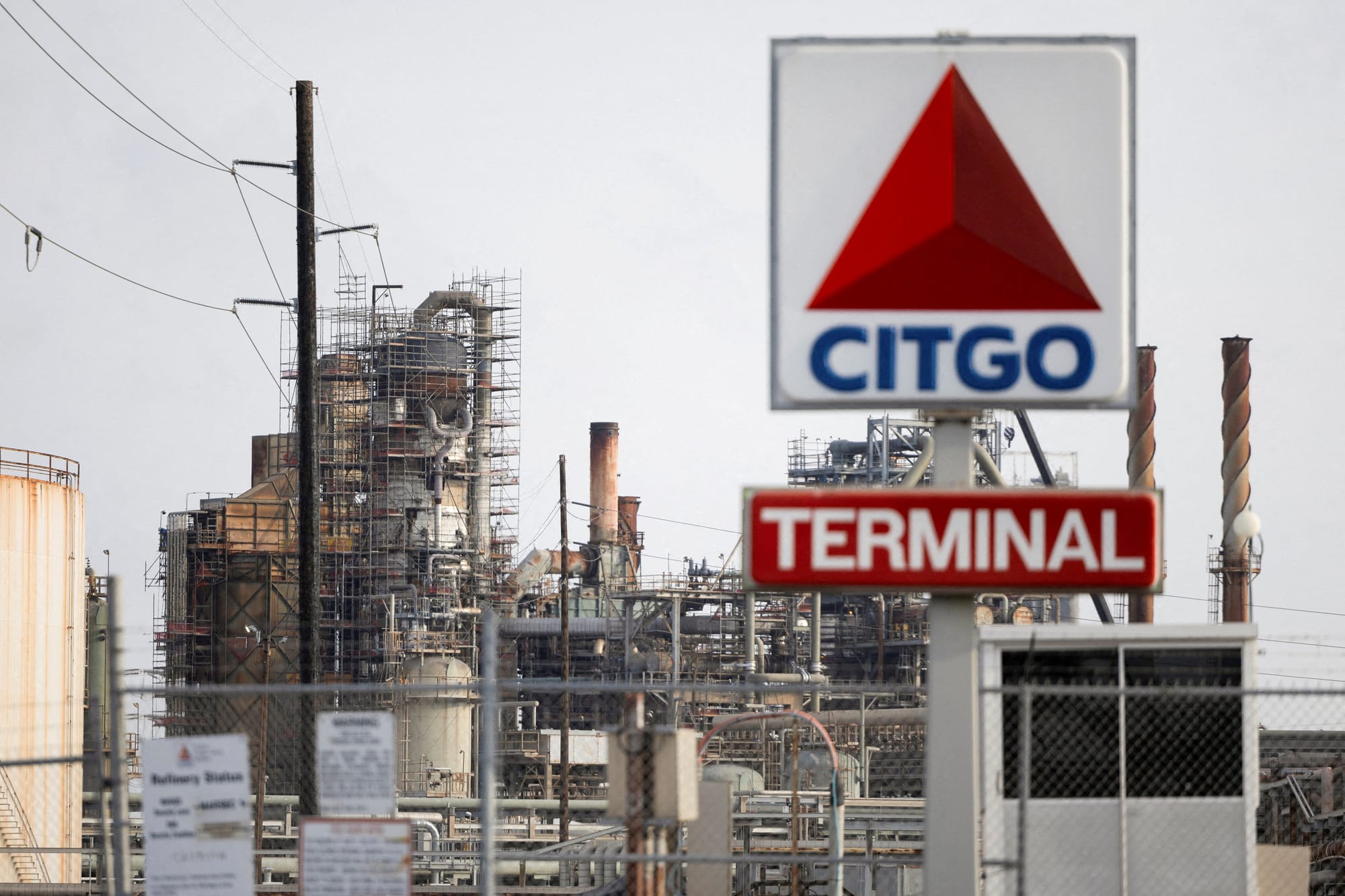
The extension is a signal as much as a legal instrument. Washington is telling the market that CITGO’s ultimate disposition — whether it is eventually returned to Venezuelan government control, transferred to creditors, privatized, or restructured as part of a broader debt settlement — has not been decided. That uncertainty is not incidental to investor hesitancy. It is one of the major issues preventing multinational companies from diving right in.
Companies evaluating investments in Venezuela’s energy sector need to understand how CITGO fits into the financial architecture they would be entering. OFAC’s repeated extensions mean that the architecture remains unresolved.
The pace of General License amendments in 2026 — multiple new licenses and revisions in less than three months — signals that the framework will continue to evolve.
Companies that move without a sound compliance foundation risk OFAC enforcement actions, reputational damage, and transaction failure. For risk-averse energy majors managing global portfolios, that risk profile argues for watching rather than moving.
The Bridge Nobody Fixed
While Washington was issuing General Licenses and PDVSA was reviewing joint venture models, a bridge on the Colombia-Venezuela border was quietly deteriorating.
On May 3, Venezuela announced the complete closure of the Francisco de Paula Santander international bridge for 15 days, citing structural damage to the bridge’s foundations and upper structure on the Venezuelan side caused by heavy rains and rising water levels in the Táchira River.
The bridge connects Cúcuta, Colombia, with Pedro María Ureña, Venezuela, and carries more than 8,000 vehicles per day — the second busiest border crossing between Norte de Santander and Táchira after the Simón Bolívar bridge. A Venezuelan border guard told EFE that the structural deterioration was not new — the rains accelerated a process that had been underway for years.
The bridge is 57 years old. Its foundations on the Venezuelan side had been weakening for years, and nobody in the Maduro government fixed it.
The closure is, in isolation, a logistical inconvenience managed by redirecting traffic to the Simón Bolívar bridge. But in context, it is a display that points to the same analysis as the energy investment hesitancy and the CITGO license extensions. Venezuela’s physical infrastructure — its roads, bridges, pipelines, refineries, power grid, and port facilities — has been deteriorating for two decades. The energy sector rehabilitation that Washington’s General Licenses are designed to facilitate cannot happen in a country where the basic infrastructure needed to move people, goods, and equipment across borders is literally falling into the river.
Colombian and Venezuelan authorities have confirmed they are working jointly on the Francisco de Paula Santander rehabilitation. The same bilateral meeting between Petro and Rodríguez at Miraflores that produced the border security cooperation agreement also discussed electrical interconnection and natural gas supply chains as priorities. The bridge closure, in that framing, is not just an infrastructure failure. It is a reminder of how much work the post-Maduro normalization process requires below the level of diplomatic agreements and licensing frameworks.
What the Gap Means
Venezuela’s oil exports reached their highest level since 2018 in April. The American Airlines flight now resumes daily traffic from Miami to Caracas. OFAC has issued more new General Licenses in three months than in the previous three years. Rodríguez has met with U.S. energy officials and signaled openness to foreign investment.
And yet some energy companies are still waiting for Venezuela’s oil ministry to publish detailed joint venture models before evaluating investments. PDVSA is reviewing 26 joint ventures — a process that involves substantial due diligence, legal structuring, and political risk assessment that does not move at the speed of an OFAC license issuance.
The normalization narrative and the operational reality are running on different timelines. The licenses are legal instruments — they can be issued in days. The compliance infrastructure, the physical infrastructure, the financial architecture, and the institutional trust needed to operate inside them take years to build. Venezuela has been without both for a long time.
Energy investors will need to carefully consider compliance frameworks, counterparty risk, and transaction structures before moving forward in this unstable environment. That assessment — from legal practitioners who specialize in sanctions compliance — is a polite way of saying what the bridge in Táchira makes concrete: Venezuela is open on paper. It is not yet open in practice.
The gap between those two things is where the real work of the post-Maduro transition is happening. It is slower, less visible, and less photogenic than a ribbon-cutting ceremony at Miami International Airport. It is also the work that will determine whether Venezuela’s normalization produces a sustainable economic transformation or another cycle of raised expectations and deferred delivery.
Sociedad Media is monitoring Venezuela’s economic transition & U.S.-Venezuela relations. For tips and reporting, contact info@sociedadmedia.com


