

The U.S. Justice Department unsealed an indictment on Wednesday afternoon that will redefine the terms of the U.S.-Mexico relationship — and send a message to every Morena-affiliated official in Mexico that Washington’s anti-corruption campaign has moved from rhetoric to prosecution.
The U.S. Attorney’s Office for the Southern District of New York and the DEA charged Rubén Rocha Moya — the sitting Governor of Sinaloa — along with nine other current and former high-ranking Sinaloa state officials with conspiring with the Sinaloa Cartel to import massive quantities of narcotics into the United States in exchange for political support and bribes.
Rocha Moya, 76, is not a peripheral figure. He is a senior member of Morena — the political movement founded by former President Andrés Manuel López Obrador on an explicit anti-corruption platform — and a close personal ally of the man who built it. His indictment is not just a criminal case — it is a political earthquake that lands directly at the feet of President Claudia Sheinbaum, who governs through the same party and the same political network that Washington is now targeting with federal criminal charges in New York.
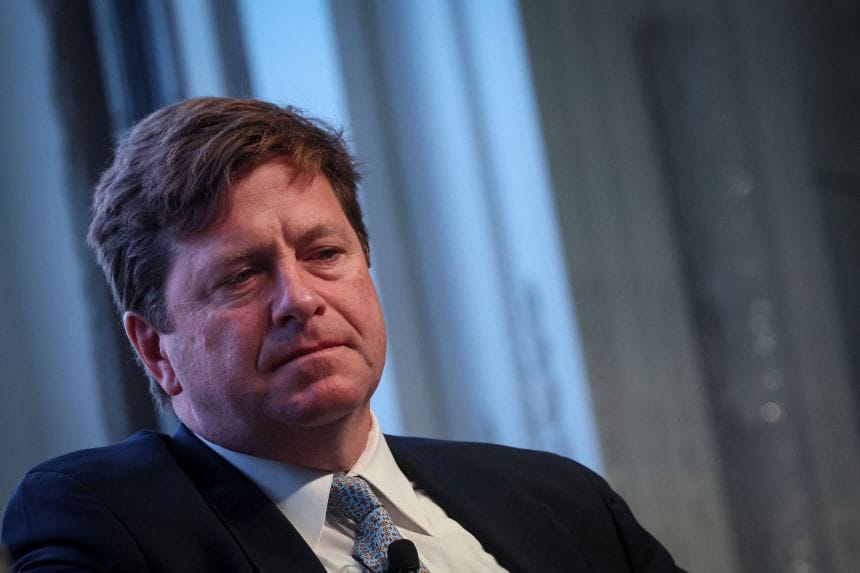
“The Sinaloa Cartel is a ruthless criminal organization that has flooded this community with dangerous drugs for decades,” U.S. Attorney Jay Clayton said in the announcement. “As the indictment lays bare, the Sinaloa Cartel and other drug trafficking organizations like it would not operate as freely or successfully without corrupt politicians and law enforcement officials on their payroll.”
What the Indictment Says
The indictment’s allegations are specific, documented, and reach to the highest level of Sinaloa’s state government.
Rocha Moya is accused of conspiring with Los Chapitos — the sons of Joaquín “El Chapo” Guzmán, who currently lead the Sinaloa Cartel’s most powerful faction — to import fentanyl, heroin, cocaine, and methamphetamine into the United States in exchange for political protection.
According to the indictment, Los Chapitos contributed to Rocha Moya’s election by kidnapping and intimidating his political rivals. Once he took office on November 1, 2021, Rocha Moya allegedly attended meetings with cartel leadership and promised protection for their drug trafficking operations into the United States.
The nine other defendants form a comprehensive picture of alleged state-level cartel penetration:
- Juan de Dios Gámez Mendívil, 41 — the current Mayor of Culiacán, Sinaloa’s state capital.
- Senator Enrique Inzunza Cazárez, 53 — former Secretary General of Sinaloa.
- Former Secretary of Administration and Finance Enrique Díaz Vega, 50.
- Dámaso Castro Saavedra — current Deputy Prosecutor of Sinaloa’s State Attorney General’s Office, allegedly receiving approximately $11,000 per month from the cartel in exchange for protecting its members and leaking information about U.S.-backed operations.
- Juan Valenzuela Millán, alias “Juanito” — former commander of Culiacán’s Municipal Police, facing additional charges for the kidnapping and murder of a DEA confidential source and a relative in October 2023.
- Former State Investigation Police chiefs Marco Antonio Almanza Avilés and Alberto Jorge Contreras Núñez.
- Former Secretary of Public Security Gerardo Mérida Sánchez.
- Former Deputy Director of Sinaloa State Police José Antonio Dionisio Hipólito.
All defendants except Valenzuela Millán face sentences of between 40 years and life imprisonment. All ten are believed to currently reside in Mexico.
The Valenzuela Millán charges deserve specific attention. He is accused of participating in kidnappings that resulted in the deaths of a DEA confidential source and a relative in October 2023 — meaning one of the ten defendants is charged not only with drug trafficking and corruption but with the murder of an American intelligence asset.
That charge transforms the indictment from a corruption case into something that Washington will pursue with the full weight of its national security apparatus. Brookings
The Political Context: A Warning Shot at Morena
The indictment did not arrive without warning, and understanding what preceded it is essential to understanding what it means.
Rocha Moya’s U.S. visa had already been revoked by the State Department before the indictment. He is a Morena stalwart — the ruling party of President Sheinbaum — and a long-time personal ally of former President López Obrador, who built Morena on a platform of zero tolerance for corruption.
Rocha Moya had previously survived a significant political scandal surrounding the 2024 shooting death of his chief political rival, Héctor Melesio Cuén Ojeda — a former lawmaker and university rector — that forced the resignation of Sinaloa’s chief prosecutor while Rocha Moya himself remained in office.
U.S. Ambassador Ronald Johnson had been explicitly telegraphing Washington’s anti-corruption campaign for weeks — traveling to Sinaloa state specifically to deliver the message that the United States would no longer accept business as usual. His remarks were met with protest. When asked about Johnson’s warnings at her morning press conference, Sheinbaum laughed. “That’s exactly what we’re working on,” she said. “The United States should do the same.”
That response — a deflection, not a denial — now reads differently in the context of Wednesday’s indictment. Sheinbaum was aware that Washington was building toward this. The indictment confirms that the warning was real.
The U.S. Embassy in Mexico issued a statement alongside the indictment:
“Corruption that enables organized crime and harms both our countries will be investigated and prosecuted wherever U.S. jurisdiction applies.”
The phrase “wherever U.S. jurisdiction applies” is not a legal formality. It is a declaration of reach — a signal that the Southern District of New York, which has successfully prosecuted “El Chapo” himself, considers the corruption of Mexican state officials to fall within its mandate regardless of where those officials reside.
This indictment comes as part of a broader series filed since 2023 in the same district — bringing the total number of Sinaloa Cartel-linked defendants to more than 30. Rocha Moya is not the end of the list. He is the most prominent name on it so far.
The CIA Chihuahua Connection
The indictment carries a dimension that has received no attention in initial wire reports — but that Sociedad Media’s readers will immediately recognize.
One of the central allegations in the indictment is that Dámaso Castro Saavedra, the current Deputy Prosecutor of Sinaloa’s State Attorney General’s Office, was allegedly leaking information about U.S.-backed operations to the Sinaloa Cartel in exchange for $11,000 per month. A current law enforcement official, still in his position today, allegedly selling U.S. intelligence to the organization it was designed to combat.
That allegation is the documented, on-the-record confirmation of exactly the concern that Sociedad Media identified in its reporting on the CIA Chihuahua operation — the reason U.S. intelligence officers were operating at the state level in Chihuahua, bypassing federal channels, working directly with state investigators rather than routing intelligence through Mexico City. The federal channels were considered compromised.
Wednesday’s indictment explains why — in specific names, specific positions, and specific dollar amounts.
Sheinbaum demanded an explanation for the unauthorized CIA presence in Chihuahua. The explanation was always that the authorized channels were the problem. The indictment makes that argument in federal court.
What This Means for the U.S.-Mexico Relationship
The indictment of a sitting governor — a member of the ruling party of a sovereign nation — is an act without recent precedent in U.S.-Mexico relations. It is more aggressive than anything the Obama or Biden administrations attempted, and it is consistent with the Donroe Doctrine’s explicit assertion that Washington will pursue its security interests in the hemisphere regardless of the diplomatic sensitivities involved.
Sheinbaum, known for her deft handling of Trump, must now walk the most difficult line of her presidency: responding to the indictment of a fellow Morena official without appearing to defend corruption, while simultaneously resisting the implication that Washington has the right to indict the elected officials of a sovereign Mexican state.
The Morena political base — which includes governors, senators, and municipal officials across Mexico who are watching Wednesday’s indictment very carefully — will be watching how she responds.
The USMCA review deadline is July 1 — 62 days away. The indictment arrives at the most sensitive phase of those negotiations, when Washington is pressing Mexico for concessions on trade, supply chain rules, and security cooperation. Whether the timing is coincidental or deliberate — whether Wednesday’s charges are a law enforcement action that happens to coincide with trade negotiations or a pressure instrument being deployed as part of them — is a question that Sheinbaum’s government will be privately gaming out even as it formulates its public response.
What is not in question is the signal. Washington indicted a sitting governor. It charged the mayor of Sinaloa’s capital. It named a sitting state prosecutor. It alleges that a DEA source was murdered by one of the defendants. And it did all of this through the same courthouse in Lower Manhattan where “El Chapo” was convicted and sentenced to life in prison.
Washington’s new Latin American security strategy appears to come with teeth, and it is written in a federal indictment, where there are the names of members of Mexico’s ruling party.
🚨🇺🇸🇲🇽 | ALERTA/BREAKING/U.S.: El Departamento de Justicia acusa formalmente al gobernador del estado de Sinaloa y a otros nueve exfuncionarios mexicanos de cargos de tráfico de armas y drogas.
— Sociedad Media (@sociedadmedia) April 29, 2026
La acusación contra Rubén Rocha Moya, gobernador de Sinaloa, le indica al gobierno de… pic.twitter.com/zYrPvpdpbD


