

When President Trump flies to China next week for a summit meeting with his counterpart Xi Jinping, the formal agenda will focus on trade, the Iran war, AI, and Taiwan. Those are some of the most consequential subjects of our time. But what may not be on the table is another major foothold in the 21st century: Latin America.
For the past four months, the Trump administration has executed the most aggressive restructuring of hemispheric power in a generation. It captured Venezuela’s president and is attempting to embark on a democratic transition. It is strengthening its blockade around Cuba, joined a turf war in Ecuador, and last week, indicted a sitting governor in Mexico. It authorized military exercises on Argentine soil, convened twelve Caribbean and Latin American leaders at the Shield of the Americas summit, and declared that hostile foreign influence would no longer be tolerated in the Western Hemisphere.
One foreign power was conspicuously absent from that declaration’s enforcement. The Donroe Doctrine has addressed Iran, Cuba, Venezuela, and narcotrafficking networks with direct military and economic force. It has not addressed China — the one player whose presence in Latin America is more deeply embedded, more structurally consequential, and more difficult to reverse than any of the others.
China’s trade with Latin America hit a record $518 billion in 2024. Beijing has loaned more than $120 billion to governments across the Western Hemisphere. Those investments have produced a three dozen-strong port network, more space infrastructure in the region than anywhere outside mainland China, and state-owned Huawei burrowed into at least a dozen telecommunications networks across the hemisphere.
Trump is flying to Beijing, and Latin America should be on the agenda.
What China Has Built
China’s presence in Latin America is not a recent development — it has been building for two decades. What has changed in the past five years is its character. The infrastructure loans and commodity-backed financing that defined the first phase of Chinese engagement have evolved into something more strategically significant: dual-use infrastructure that serves both civilian and military purposes, and technological integration that creates dependency at the level of critical systems.
China’s focus has shifted from traditional infrastructure loans to high-tech and digital domains — providing capital to install Chinese-controlled artificial intelligence, 5G, and smart grid technologies throughout the region. This financial leverage creates technological dependency and embeds Chinese influence at the level of the infrastructure that governments rely on to function.
In Brazil, local relationships include direct investment in telecommunications and surveillance command centers that bypass national security screening. In some Brazilian states, Chinese firms have secured contracts for 5G nodes and facial recognition systems directly integrated into local police departments.
The space dimension is the least visible and the most strategically significant.
According to a U.S. Select Committee on China investigation, at least eleven Chinese-linked space facilities — including ground stations, radio telescopes, and satellite laser ranging sites — are located across Argentina, Bolivia, Brazil, Chile, and Venezuela. The Espacio Lejano deep space station in Neuquén province, Argentina — operated by the Chinese People’s Liberation Army — sits on Argentine sovereign territory under a 50-year agreement signed in 2015. It is, by any technical definition, a Chinese military installation in the Western Hemisphere.
In Argentina, despite the pro-U.S. Milei administration, provinces continue to maintain independent technical cooperation agreements with Chinese state-owned enterprises. These agreements provide legal cover for the Espacio Lejano space station and for Chinese interests in the proposed Ushuaia logistics hub — a gateway to Antarctica and the South Atlantic.
The two major projects in southern Argentina will flank the Americas from the South Atlantic and from space.
The mineral dimension is equally contested. Bolivia, Argentina, and Chile hold the world’s largest deposits of lithium — a metal necessary for energy storage and rechargeable batteries. China has positioned itself as the dominant player in the processing and refining of those minerals, creating a supply chain dependency that U.S. critical minerals policy is only beginning to address.
China controls approximately 8.5% of Nicaraguan territory through mining concessions. Venezuela remains permanently indebted to Beijing. Almost two dozen Latin American countries have signed on to China’s Belt and Road Initiative.
Beijing has constructed a parallel financial architecture in Latin America characterized by opaque lending and commodity-backed loans — primarily crude oil from Venezuela and Ecuador, mining from Nicaragua, Chile, and Peru, and agricultural products from Brazil — that is designed to create long-term structural dependency.
What Washington Has Done — and What It Has Not
The Trump administration’s record on reducing Chinese infrastructure in Latin America and curtailing its influence across the region is still to be determined almost half way through his second term in the White House.
The Panama Canal is the clearest win. Panama’s Supreme Court ruled unconstitutional the port concessions that had allowed Hong Kong-based CK Hutchison to operate terminals at both ends of the canal for over two decades.
The government occupied the ports, seized the equipment, and handed operations to Denmark’s Maersk. When Beijing threatened that Panama would “inevitably pay a heavy price,” Panamanian President Mulino rejected the threat publicly. Chinese infrastructure was physically removed from the most important shipping lane in the Western Hemisphere.
The Shield of the Americas summit in March produced a framework — but not yet a replacement architecture. Washington analysts published a blueprint for what the summit could produce as a counter-China architecture: a PLA Influence Mapping Task Force to track Chinese dual-use infrastructure in real time, a “Secure Port of the Americas” certification program to replace Chinese port operators, and a $50–$100 billion infrastructure compact as a direct Belt and Road alternative. Whether the administration builds those instruments or its own version of them, they do not yet exist in operational form.
The critical minerals summit produced agreements with Argentina, Ecuador, Mexico, Paraguay, and Peru to reduce supply chain vulnerabilities — Argentina committed to prioritizing the United States for its copper, lithium, and critical minerals over “market-manipulating economies,” in a direct reference to China. But Argentina’s Foreign Minister acknowledged simultaneously that the agreement does not prevent Chinese investment in the country’s mining sector.
The commitment is directional, not binding.
The complications are real and documented. Ecuador’s President Noboa stated he is aligned with Washington on combating crime but ruled out distancing himself from China — because he cannot pick a fight with his second-largest trading partner. Uruguay’s Economy Minister told business leaders privately that U.S. pressure to break with China was “unimaginable” and “unsustainable.” Chile’s new government clashed internally over a proposed Chinese submarine fiber-optic cable — with the U.S. imposing visa restrictions on Chilean officials involved in the project.
The pattern is consistent: governments in the region support the Donroe Doctrine’s security architecture and are willing to align on narcotrafficking and organized crime. They are far more reluctant to sever economic relationships with China that predate the current U.S. pressure campaign and that provide financing, trade volumes, and infrastructure investment that Washington has not yet matched.
The Summit in the East
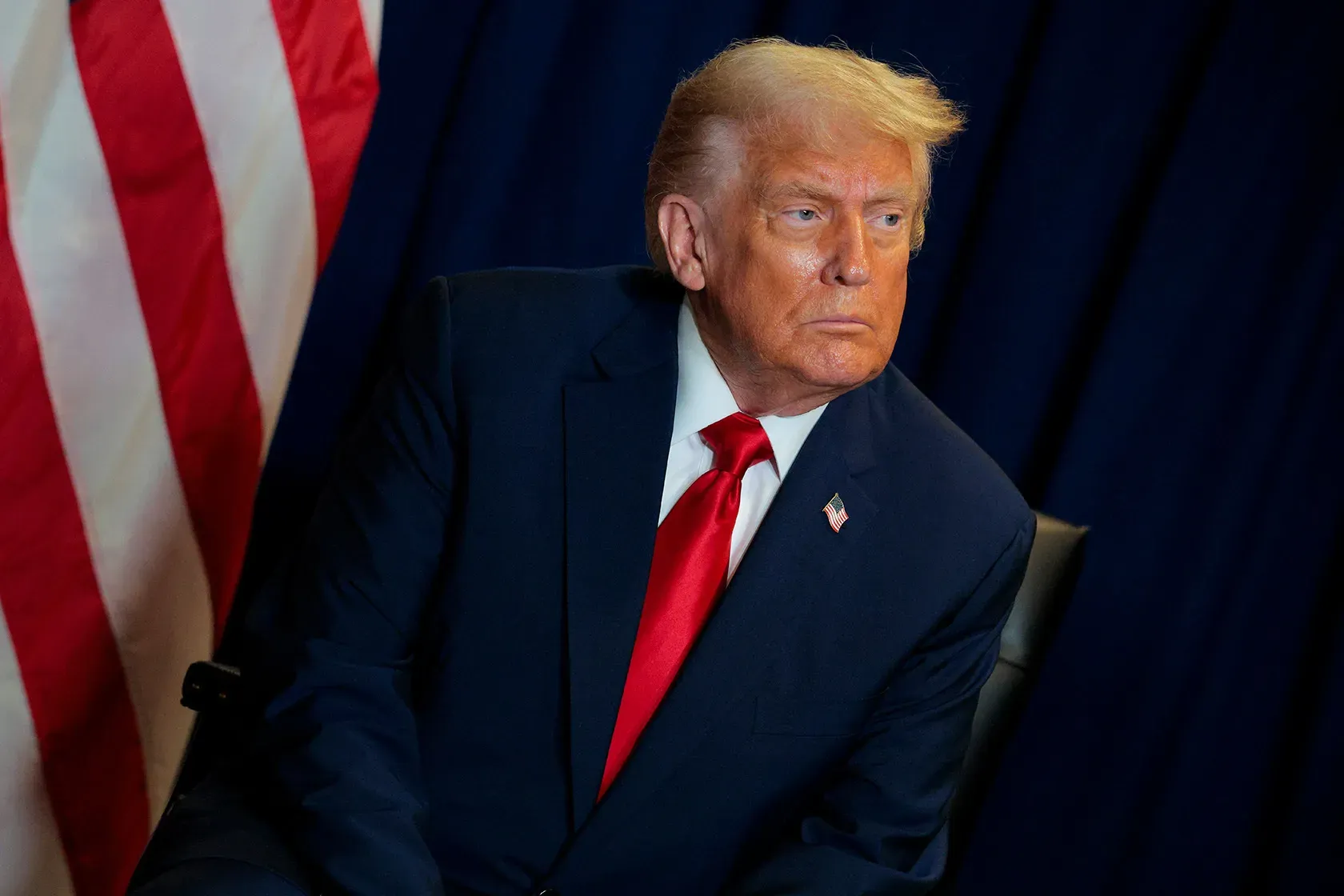
Trump’s visit to China is the first direct U.S.-China leadership engagement since the Iran war began — and it will be watched in every capital in the hemisphere as a signal about how far Washington is willing to push its counter-China strategy in the region it claims as its own.
Experts argue that Trump must offer tangible economic benefits to Latin America to curb China’s growth in the region. The U.S. remains the biggest overall trade force in Latin America and the Caribbean — with U.S. imports from the region at $661 billion and exports at $517 billion as of 2024 — but China has become the top trading partner in South America specifically.
Rather than choosing sides, many countries in the region are trying to strike a balance between the two powers. “If the U.S. is very boldly telling countries to cut off strengthening ties with China,” analysts note, “the U.S. is going to have to offer them something.”
That something has not been clearly defined. The Shield of the Americas is a security framework. The critical minerals agreements are a beginning. The Belt and Road alternative infrastructure compact has been proposed but not funded. The port certification program has been recommended but not launched. The PLA Influence Mapping Task Force exists as a concept in a think tank paper.
Meanwhile, China’s trade with Latin America grew 7% in 2025 — much of it in sectors where it is dumping excess industrial capacity onto regional markets. The Belt and Road Initiative continues to operate across nearly two dozen member countries. The space stations are still transmitting. The 5G nodes are still running. The facial recognition systems are still operating inside Brazilian police departments.
President Trump’s Latin America stratgey has been remarkably effective at the tasks it set itself in January — capturing Maduro, blockading Cuba, building a security coalition, and indicting corrupt officials in the fight against the drug cartels. What it has not yet done is address the Chinese infrastructure that was already in place before January 3, and that has continued to expand during the four months since, and that represents a more durable form of influence than any cartel network or authoritarian government.
Trump is flying to Beijing next week. The question Latin America will be watching — from Panama City to Buenos Aires, from Bogotá to Brasília — is whether he raises the matter of what China has built in their backyard, and whether he offers anything concrete in exchange for asking them to dismantle it.
The Donroe Doctrine has taken out three of the four threats it identified. The fourth one is the hardest. And it may not have a seat at the table in Beijing.
Sociedad Media is monitoring the Trump-Xi summit, Chinese infrastructure in Latin America, and the regional implications of an expanding U.S. military presence across the Americas. For tips and reporting, contact info@sociedadmedia.com


