

LIMA — Before Wednesday’s cabinet crisis, before the U.S. fighter jet deal collapsed, and before Washington’s ambassador issued a public threat as two key Peruvian ministers submitted their resignations, the troubled South American had already cycled through eight presidents in ten years.
None of them finished their terms. Not a single one.
That is the context in which this week’s events must be read — not as a new crisis, but as the latest episode in a decade-long democratic breakdown that has consumed presidents faster than elections can replace them, hollowed out the institutions meant to govern 33 million people, and turned the world’s eighth-largest copper producer into one of Latin America’s most ungovernable democracies.
Wednesday’s F-16 crisis did not create Peru’s instability. It revealed it — once again.
Why Does This Keep Happening?
Peru’s constitutional architecture contains what analysts have called a “poisoned apple” — a clause allowing Congress to remove presidents on grounds of “moral incapacity,” a standard so vaguely defined that the legislature has wielded it as a political weapon rather than a constitutional safeguard.
Francisco Guerrero, a senior fellow at the Center for U.S.-Mexican Studies at UC San Diego, put it directly:
“The poisoned apple, the apple that is rotting Peruvian democracy, is based on the idea that the way to get rid of presidents is through impeachment, and the impeachment process is based on a reason that is completely elusive, which is this concept of moral incapacity. Who determines the moral incapacity of a president?”
The answer, in practice, has been: whichever congressional majority finds it politically convenient.
The result is a country that has seen Pedro Pablo Kuczynski resign under corruption pressure in 2018, Martín Vizcarra impeached in 2020, Manuel Merino resign after five days following mass protests, Sagasti serve as caretaker, Pedro Castillo arrested after attempting to dissolve Congress in 2022, Dina Boluarte removed amid a crime wave, José Jerí ousted in February 2026 after secret meetings with Chinese businessmen were captured on surveillance footage — and now José María Balcázar, an 83-year-old former judge and the oldest president in Peruvian history, occupying the palace on an interim basis until July 28.
Balcázar was elected by Congress in February after Jerí's removal, tasked with ensuring a smooth government transition ahead of the April 12 general elections. He was not elected by voters. He was appointed by the legislature that had removed every president before him.
Deeper than the constitutional clause is a fracture that runs through the country itself — between Lima’s political and business class and the Andean and Amazonian regions that have repeatedly elected leftist outsiders to the presidency, only to watch the capital’s institutions remove them. Concerns about the power Congress holds over the executive and judiciary branches have led observers at the Council on Foreign Relations to warn that Congress was attempting to build a “mafia state” in the run-up to the 2026 elections.
The Election Nobody Can Finish Counting
In the midst of this environment, Peru held a presidential election on April 12, and the chaos did not end on election day.
The head of Peru’s national election agency resigned Tuesday over logistical failures during the first-round vote — an election that still had not formally declared winners more than a week after balloting.
With 93.8% of votes counted, conservative leader Keiko Fujimori leads with 17.04% of the vote and looks almost certain to enter the June 7 runoff.
Her likely opponent is Roberto Sánchez, a nationalist congressman who campaigned explicitly as the political heir to Pedro Castillo, whose presidency ended in arrest after he dissolved Congress. Sánchez has promised to partially nationalize Peru’s natural resources. López Aliaga, an ultraconservative populist and former mayor of Lima, sits a fraction of a point behind Sánchez and has alleged widespread fraud without evidence, calling for the vote to be annulled.
The runoff sets up a clash between two sharply opposed visions: Fujimori, whose father governed as a strongman in the 1990s before conviction for corruption and human rights abuses, and Sánchez, whose Castillista platform represents the most direct challenge yet to Peru's market-oriented economic model.
Sociedad Media has covered the disputed first-round count — including ballots found in a trash bin and a prosecutor's raid on electoral offices — in detail here.
The Deal That Broke the Cabinet
It was against this backdrop — a disputed election, a contested count, a June 7 runoff with no confirmed second-place finisher, and a caretaker president with no electoral mandate — that Peru’s most consequential defense procurement in decades arrived at its moment of decision.
Peru’s air force currently flies Dassault Mirage 2000 warplanes from the 1980s and Soviet-designed MiG-29 and Sukhoi Su-25 aircraft acquired from Belarus in the 1990s. The fleet is operationally obsolete, and the modernization program has been in planning for more than a decade, surviving multiple government collapses before arriving at what should have been its conclusion.
Peru finalized the selection of 24 Lockheed Martin F-16 Block 70 fighter jets in a deal valued at $3.42 billion, beating out rival bids from France’s Rafale and Sweden’s Gripen after an 18-month evaluation process involving weekly meetings and direct participation of U.S. officials at multiple stages. The Peruvian state missed at least four previous signing deadlines amid political changes that repeatedly reset negotiations.
Balcázar canceled the signing ceremony last Friday just hours before it was scheduled to take place, citing concerns about tying the next government to a major defense commitment he would not be around to oversee.
The contract was then reportedly signed privately at Las Palmas Air Base on Monday — but Balcázar continued publicly saying there was “no purchase yet,” creating a contradiction that neither government has fully resolved.
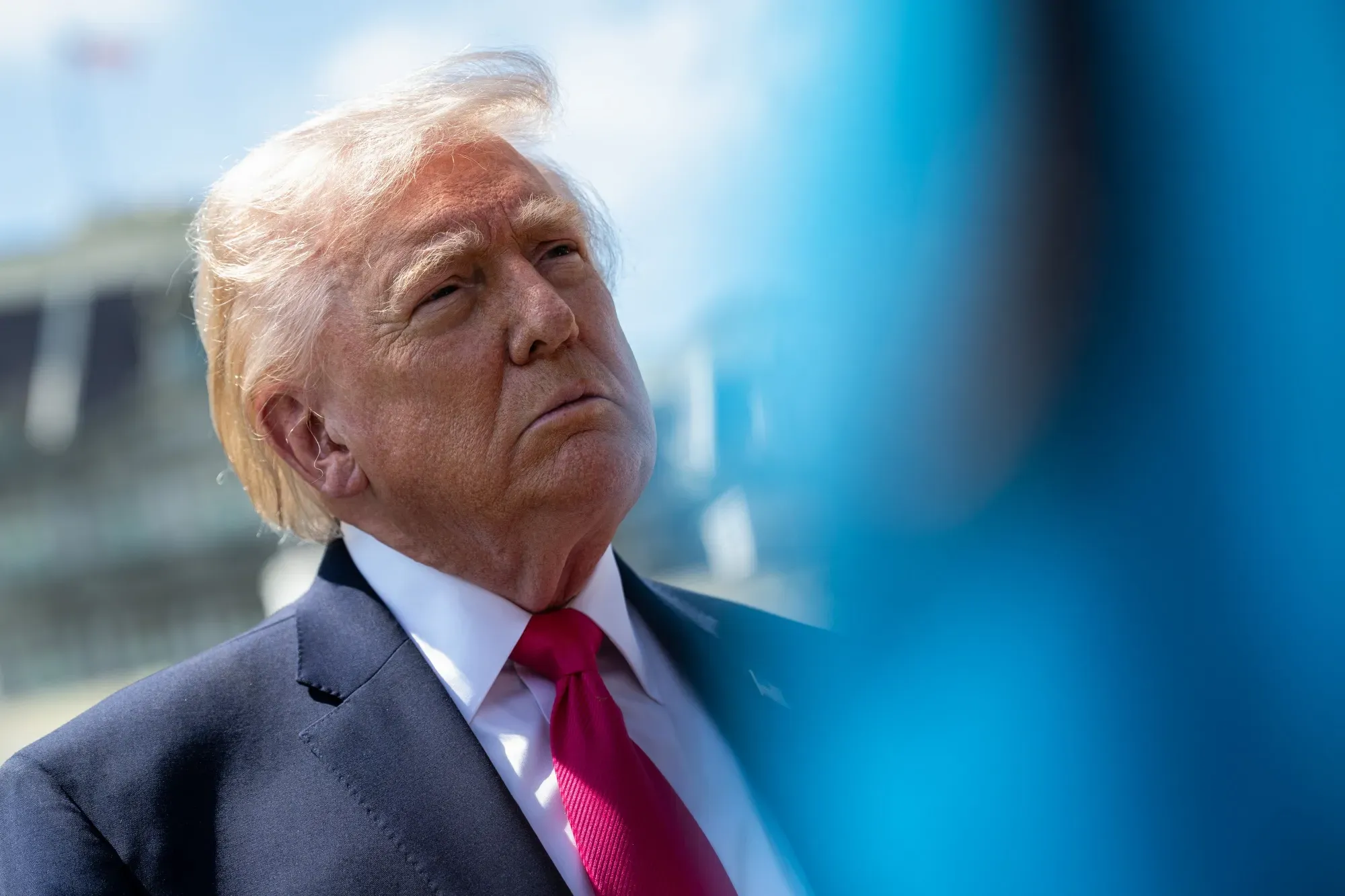
Foreign Minister Hugo de Zela resigned on Wednesday as a result of the PR mess that has ensued, telling RPP radio he stood down “because the political decision made by Mr. Balcázar endangers our country and undermines its credibility,” adding that putting the signed contracts on hold now turned Peru into “a country that cannot be trusted in a negotiation process.”
Defense Minister Carlos Díaz also submitted his resignation for the same reasons, writing that “a strategic decision has been taken in the area of national security with which I have a fundamental disagreement.”
Washington’s Warning
The United States did not wait for the resignations before making its position known.
U.S. Ambassador Bernardo Navarro posted on X within hours of the signing ceremony cancellation:
“If you deal with the U.S. in bad faith and undermine U.S. interests, rest assured, I, on behalf of President Trump and his administration, will use every available tool to protect and promote the prosperity and security of the United States and our region.”
The warning was blunt even by the Trump administration’s standards — and it reflected stakes that go well beyond the purchase of military aircraft.
Washington had offered Peru designation as a Major Non-NATO Ally contingent on the F-16 selection — a status that would unlock preferred access to U.S. defense financing and advanced weapons systems, and would embed Peru firmly in Washington’s hemispheric security architecture at a moment of intensifying U.S.-China competition over South American copper and lithium.
Peruvian analysts have described the fighter jet choice as “similar to a 40-year marriage contract between countries.” Colombia’s leftist government chose the Swedish Gripen over the F-16 in part because of its difficult relationship with Washington. Peru’s selection of the F-16 was read as the opposite signal — a geopolitical alignment choice as much as a military procurement.
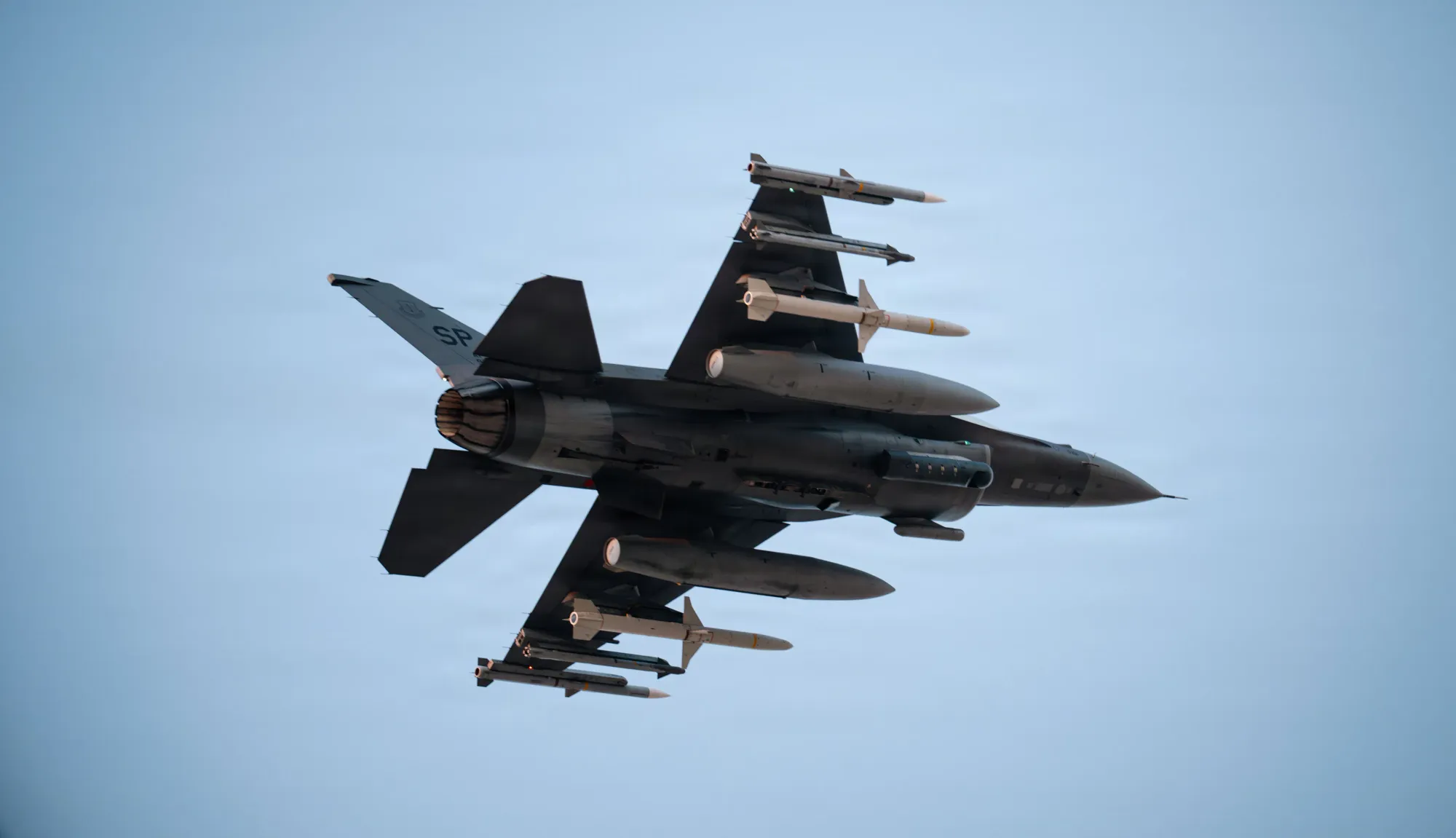
Balcázar's hesitation, whatever its fiscal rationale, was read in Washington as precisely the kind of bad faith the ambassador warned against.
Lockheed Martin has not confirmed whether it will hold the deal’s current terms in place until July, when a new government takes office. If it doesn’t, Peru faces significant contractual penalties — and the loss of a modernization opportunity that its air force has been pursuing for more than a decade.
The Impeachment Threat
Ultraconservative congressman Jorge Montoya moved quickly, suggesting Balcázar become the fifth president in ten years to be impeached. Congress President Fernando Rospigliosi urged Balcázar to honor the deal to avoid a “political, legal and geopolitical problem.”
Whether an impeachment process formally advances depends on congressional arithmetic in the coming days. Balcázar’s term ends on July 28 — a timeline that may lead some legislators to calculate that waiting is easier than the political cost of another removal. But the threat itself is credible precisely because Peru’s constitution makes it so easy to pursue, and because Balcázar has now antagonized both Washington and his own cabinet simultaneously.
His position has become almost untenable.
What the Runoff Will & Won’t Resolve
The June 7 runoff between Fujimori and Sánchez will determine who takes office on July 28. It will not resolve the conditions that produced this week’s crisis.
The “moral incapacity” clause will remain in the constitution. The congressional dominance over the executive will remain intact. The fracture between Lima and the rural provinces will remain unaddressed. The corruption networks that compromise judicial and police institutions will remain operational. And the U.S.-China competition for influence over Peru’s strategic resources — copper, lithium, rare earths — will intensify regardless of who wins.
What the runoff will determine is the character of the next crisis. A Fujimori government would carry Washington’s confidence and the business community’s support — but faces deep legitimacy questions in the provinces and a history of confrontational politics that has already destabilized multiple governments.
A Sánchez government, on the other hand, would inherit a congressional majority hostile to its platform, a business sector prepared to fight resource nationalization, and a U.S. ambassador who has already demonstrated willingness to issue public threats.
Peru has produced nine presidents in ten years. The tenth — whoever it is — will face the same structural conditions that consumed the nine before them.
The question is not whether the next crisis is coming, but rather which version of it will arrive first.
Sociedad Media is monitoring Peru’s June 7 presidential runoff and the ongoing F-16 deal controversy. For the full background on Peru’s decade of political instability, read our earlier reporting here. For tips and reporting, contact info@sociedadmedia.com


