

LIMA — On April 16 — four days after Peruvians voted for their next president — workers in Lima found four boxes containing 1,200 ballots in a trash bin.
The discovery deepened doubts about an election already marked by the failure to deliver ballot materials to dozens of polling stations, a two-day voting extension, a prosecutor’s raid on the electoral authority’s warehouse, and criminal complaints filed against four senior electoral officials.
Eight days after the vote, Peru still does not know who will face Keiko Fujimori in the June 7 runoff. The count has been frozen, challenged, and handed to judges. Results from the first round will not be released until mid-May, according to Yessica Clavijo, secretary general of the National Jury of Elections — Peru’s highest electoral justice authority.
For a country that has had nine presidents in ten years, this is not entirely surprising. It is, however, a new low.
Where the Count Stands
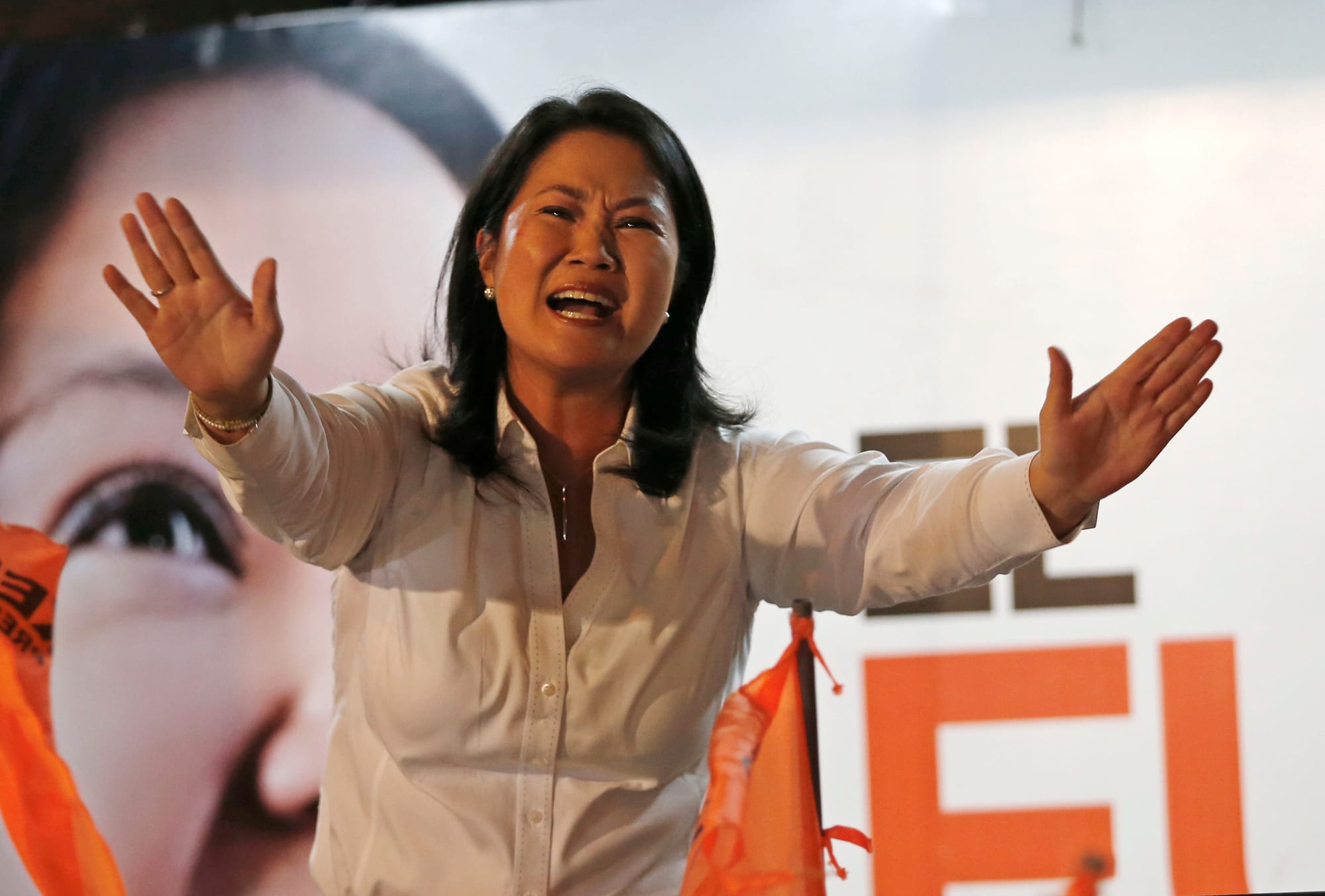
With 93.4% of ballots counted, right-wing candidate Keiko Fujimori leads with 17%. The close race for second place is between leftist Roberto Sánchez, who received 12 percent of the vote, and ultra-conservative Rafael López Aliaga with 11.9% — a gap of approximately 13,000 votes.
Clavijo attributed the slow vote count to the review of more than 15,000 challenged ballot records — actas — approximately 30% of which involve the presidential vote, with the remainder related to legislative elections.
The second runoff spot will be decided by the JNE through the evaluation of approximately 6,000 observed records. The current pattern indicates a razor-thin margin, meaning the final result will only be determined once 100% of the challenges are resolved — a process estimated to take three weeks. That puts the final first-round confirmation squarely in mid-May — just three weeks before the June 7 runoff itself.
Peru will be running a national election campaign while simultaneously resolving whether its candidate lineup is even finalized.
The Trash Bin, the Raid, and the Arrest
The institutional damage from this election goes well beyond a slow count.
On April 16, four boxes containing 1,200 ballots were discovered in a Lima trash bin. No official explanation for how they got there has been published. No candidate has been directly implicated. But the discovery landed in a political environment already saturated with fraud allegations — and it has not been adequately explained.
On April 18, prosecutors raided a warehouse housing ballots from Peru’s presidential election. The raid was conducted at ONPE — the national office responsible for organizing the vote — “in order to determine whether it has fulfilled its duties regarding the election materials used,” officials said.
About one million votes remained in play at the time of the raid.
Roberto Burneo, president of the JNE — Peru’s highest electoral justice authority — told a congressional committee that “there are serious irregularities in the management and performance” of ONPE in the election. ONPE chief Piero Corvetto and three other officials have been reported to JNE for alleged crimes against the right to vote.
An investigation revealed that the government had already penalized the logistics contractor — Servicios Generales Galaga — for failing to fulfill its contracts on three previous occasions, and that as early as March, authorities had warned ONPE of the risks of using Galaga to distribute election materials.
ONPE’s electoral management director, José Samamé Blas, was arrested and charged with dereliction of duty and refusal to perform official duties.
The arrest of a sitting electoral authority director during an active vote count is without precedent in Peru’s recent democratic history. Whether it affects the legitimacy of the final result — and whether any candidate uses the institutional chaos to challenge the outcome — will define Peru’s political stability through the runoff and beyond.
Two Candidates. Two Very Different Perus.
Fujimori’s place in the June 7 runoff is confirmed. Her opponent, however, is not. But the shape of the contest is clear enough to understand what is at stake.
A Fujimori-Sánchez runoff would be the most consequential political contest in Peru since 2021, when Sánchez served as Foreign Trade Minister under Pedro Castillo, the left-wing teacher from the Andes who narrowly defeated Fujimori by 44,000 votes out of 18 million cast before being removed from office in 2022 after attempting to dissolve Congress.
A Keiko–Sánchez runoff would recreate the left-versus-right dynamic of Peru’s 2021 election and reactivate the polarization that defined Peruvian politics for the past five years. Keiko’s own running mate acknowledged that Sánchez in the runoff would be the harder fight.
A Fujimori-López Aliaga runoff, on the other hand, would be the first all-right-wing presidential contest in Peru's modern democratic history — and would leave the entirety of Peru’s left without a candidate in the decisive round.
López Aliaga, the former mayor of Lima, has emerged as the harshest critic of the vote’s delays. He has alleged fraud — but without evidence — calling for the vote to be annulled.
He also called on supporters to march in protest on Sunday.
Sánchez, for his part, also criticized the process. “These serious organizational issues must be investigated, and there must be appropriate sanctions,” he told a press conference Saturday.
Both men are complaining about the same election, and only one of them can advance.
What This Means
Peru’s political system has been in structural crisis for a decade. The winner of the June 7 runoff will be Peru’s ninth president in just ten years. They will inherit a country where the homicide rate has doubled in the past decade and reported extortion cases have jumped from approximately 3,200 to 26,500 per year.
They will also have the responsibility of governing alongside the first bicameral Congress Peru has had since the 1990s — 130 deputies and 60 senators elected in the same chaotic vote, whose composition is also still being counted.
The European Union’s election observer mission said the vote met democratic standards — a verdict that carries weight internationally even if it provides limited comfort to Peruvians watching ballots turn up in trash bins and prosecutors raid the national electoral authority.
The June 7 runoff is confirmed. The second candidate is not. The result that determines which Peru will go to the polls in June will not be known until mid-May. Between now and then, every institution that manages Peru’s democracy is under criminal investigation, under political pressure, or both.
Public distrust in institutions has been the defining problem for the Peruvian government for the last decade.
Sociedad Media has been covering Peru’s 2026 election since before the first round. Tips and firsthand accounts: info@sociedadmedia.com


