

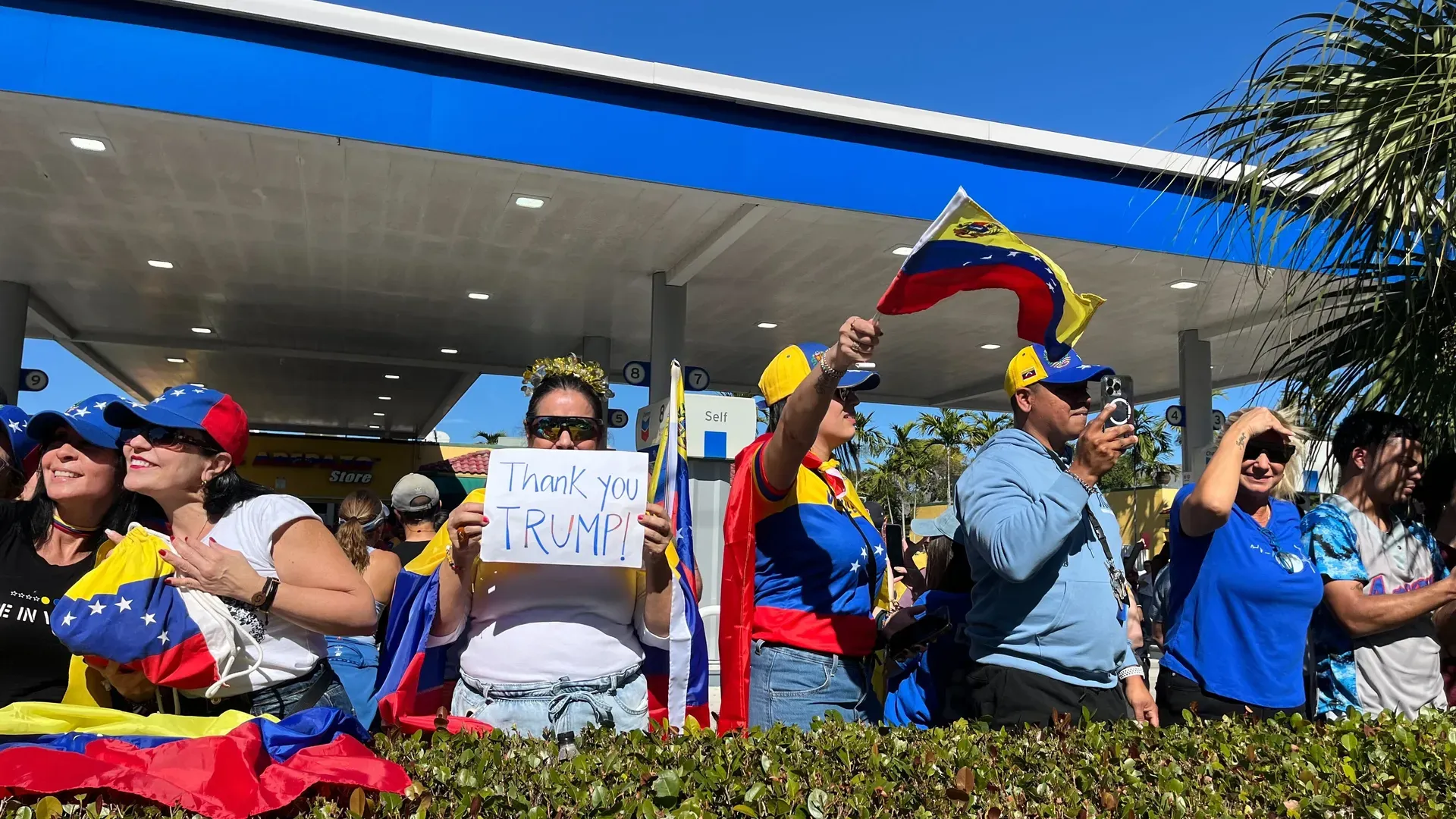
MIAMI — On the morning of January 3, when news broke that U.S. special forces had captured Nicolás Maduro at a military compound in Caracas, Venezuelan families across Miami did something they had not done in years. They cried. They called their parents in the homeland. They gathered in living rooms across South Florida and watched the news together. Some went out into the streets. For a community that had been waiting — through fraudulent elections, through political persecution, through mass exodus, through two decades of grinding authoritarian mismanagement — the fall of Maduro was the moment they had almost stopped believing would come.
Three and a half months later, the relief is real but complicated. The question Miami’s Venezuelan community is now asking is not whether things have changed. They have. The question is whether the change is the one they expected — or something else entirely.
What the New York Times Found
On Saturday, April 18, the New York Times published a major investigation based on 12 sources inside Venezuela. The picture it painted was detailed, specific, and in some ways startling.
In the three months since Maduro’s arrest, Venezuela’s acting president Delcy Rodríguez has replaced 17 ministers, overhauled military leadership, appointed new diplomats, and overseen the detention of at least three businessmen linked to her predecessor. She has stripped most oil contracts from Maduro’s family network, sidelined his relatives from state dealings, and opened the door to American oil and mining investors.
Several high-ranking Venezuelan officials, in conversation with the Times, compared Rodríguez’s governance to working with “a gun to her head.”
The purge has reached figures that would have been untouchable a year ago. Among its most significant casualties is General Vladimir Padrino López — Maduro’s longest-serving defense minister — removed from his post in March and reassigned to run the agriculture ministry.
Maduro’s son Nicolás Maduro Guerra and his stepson Yoser Gavidia Flores have both been marginalized from lucrative state business dealings. Propagandist Mario Silva — whose state television program was a fixture of Chavista politics for two decades — had his show shut down and was forced to broadcast on marginal radio frequencies.
The political calculus for Washington has paid off. U.S. officials have been able to settle scores with Maduro allies who defied them, while simultaneously consolidating Rodríguez’s leadership — a transaction that has delivered tangible wins for both parties.
This Was the Plan All Along
For Miami Venezuelans who have been following this story since January, the Times investigation confirms something that had been circulating in Venezuelan political circles for months — that Rodríguez’s ascent was not accidental.
According to the Miami Herald, a circle of Venezuelan officials centered on Delcy Rodríguez and her brother Jorge privately outlined a roadmap for post-Maduro Venezuela in which Delcy would act as figurehead and a transitional government would welcome U.S. investors and gradually loosen ties to Iran and Russia.
The Venezuelan proposals were made to U.S. envoy Richard Grenell through Qatari channels. The Trump administration initially rejected those overtures — but the outcome of January 3 produced something remarkably similar to what Rodríguez’s circle had proposed.
What this means is that the woman now running Venezuela did not simply inherit power after Maduro’s capture. She had been positioning herself for exactly this moment — and Washington, whatever its public statements about democratic transition, chose her over the opposition.
Influenced by a CIA analysis, Trump stated after the strikes that María Corina Machado did not have the necessary support or respect in the country to govern. Machado voiced discontent with Trump’s decision to back Rodríguez, saying she was “nothing like a moderate” and that the U.S. expected her to take steps toward democracy.
The One Man the Purge Has Not Touched
One figure has, so far, survived the cull: Diosdado Cabello, the interior minister who faces U.S. drug trafficking charges and who effectively controlled Venezuela’s repressive apparatus. His ties to pro-government armed factions make him both a valuable ally and a dangerous target. Cabello made his choice — instead of challenging the new power, he quickly rebranded himself from a “party bulldog” to a “patriotic guarantor of stability.”
His continued presence in the cabinet is the clearest signal that Rodríguez’s purge has limits. The man most directly associated with political repression in Venezuela — with the colectivos, the SEBIN detentions, the post-election crackdowns that sent thousands of Venezuelans to prison — is still in his office in Caracas.
He has simply changed his public framing.
But for the Miami Venezuelans with family members who were detained, tortured, or killed under the apparatus Cabello helped build and run, that is not a small detail.
What Has Actually Changed for Venezuelan Families
The economic architecture of Venezuela is being rebuilt with American involvement at a pace that was unimaginable six months ago. The IMF restored relations last week. The U.S. Treasury lifted sanctions on Venezuelan state banks. Chevron signed major expansion agreements in the Orinoco Belt. Shell is finalizing its own deal for the Loran gas field. Venezuela’s economy is projected to grow 4% in 2026 and 6% in 2027.
For Venezuelan families in Miami sending remittances home, the easing of banking sanctions is the most practically significant development of the entire three-month period.
Venezuelan state banks can now re-enter the U.S. financial system and operate in dollars (legally) — which should, over time, reduce the cost and friction of sending money to family members still in Venezuela.
But the economic opening has not been accompanied by the political opening that Machado and the broader democratic opposition have been demanding. No election date has been set. The Venezuelan Supreme Tribunal has not ruled on Rodríguez's mandate extension beyond the 90-day constitutional limit that has already expired. Hundreds of political prisoners remain behind bars — the amnesty law released some, but human rights organizations estimate that hundreds more remain detained, many from the post-2024 election crackdown.
What Miami’s Venezuelan Community is Actually Thinking
The honest answer is: it depends on who you ask, and when.
There is a significant segment of Miami's Venezuelan community — particularly older exiles whose families were affected by the earliest years of Chavismo — who view any arrangement that removes Maduro from power as a net positive, regardless of what comes next. The man who dismantled Venezuelan democracy, persecuted political opponents, and presided over the largest mass displacement in Latin American history since the Colombian conflict is in a New York federal prison facing narco-terrorism charges. That is not nothing.
For families who waited 13 years for that moment, it is genuinely something.
There is another segment — younger, politically engaged, connected to the Machado movement — who are watching Rodríguez’s consolidation of power with something closer to alarm. They came of age politically in the years of the 2019 Guaidó recognition, the 2024 election fraud, Machado’s campaign, and the extraordinary hope of January 3. What they see now is a Chavista official who was never elected to anything running Venezuela with Washington’s blessing, purging her rivals, opening the economy to American investors, and providing no credible timeline for the free elections that Rubio told Machado would come as part of the phased plan.
The Question Nobody Can Answer
Rodríguez — a veteran functionary of the ruling Socialist Party who has never held elected office — has pivoted from hardline socialist activist to what U.S. officials have publicly lauded as a cooperative partner, a shift that has united Maduro’s scattered loyalists in a shared distrust of her.
Whether she is a transitional figure who will eventually yield to democratic elections, or whether she is consolidating a new authoritarian arrangement with American patronage — a Madurismo without Maduro, as her own roadmap described it — is the question that this week’s financial developments, oil deals, and purges do not answer.
Rubio told the Senate in January that the U.S. is dealing with individuals “that in our system would not be acceptable in the long term,” but that the current phase requires working with the people in charge.
That is a description of a transaction that anti-chavistas do not want. What they want is the democratic project they believed they were getting.
Sociedad Media covers Venezuela’s transition and its direct impact on Miami’s Venezuelan community. Tips, firsthand accounts, and family stories: info@sociedadmedia.com


