

MIAMI — The Wall Street Journal does not often make news in Brazil.
On Monday, it did.
The newspaper published an investigative report describing the Primeiro Comando da Capital — the PCC (a source of frequent coverage by Sociedad Media), Brazil’s largest criminal organization — as one of the biggest criminal groups in the world, comparing it to the Italian mafia and characterizing it as a global cocaine superpower that is reshaping drug flows from South America to the busiest ports in Europe and pushing toward the United States.
Brazilian media covered the story as if Washington had declared war. Which, in a sense, it nearly has.
What the WSJ Said
The investigation, reported by journalist Samantha Pearson, landed with unusual force because of how precisely it framed the PCC — not as a Brazilian prison gang that got too big, but as a professional, globally integrated criminal enterprise that has learned from and surpassed its predecessors.
The WSJ described the PCC’s organizational structure as more horizontal than vertical — a deliberate design that gives members more freedom to form partnerships with other major criminal organizations, including Italy’s 'Ndrangheta, the Japanese Yakuza, and Albanian and Serbian gangs.
These alliances, which Brazilian prosecutors have called “criminal convergence,” have opened new routes and markets for cocaine distribution.
In that arrangement, the PCC acts as a large-scale supplier while the 'Ndrangheta handles European distribution. The price differential explains the business logic: a kilogram of cocaine purchased for as little as $3,000 in South America can reach approximately €30,000 on the European market.
The WSJ differentiated the PCC from Mexican cartels and Colombian militias, which sustain a more flamboyant public posture. PCC members, the paper noted, maintain a discreet and professional profile — seeking fortune, not fame — and avoid the kind of gratuitous violence that attracts police and television news crews. That discipline, the paper argued, is precisely what has made the group so difficult to dismantle.
U.S. authorities have identified people linked to the PCC in Florida, New York, New Jersey, Connecticut, and Tennessee. In Massachusetts, which is home to a large Brazilian contingent, the federal prosecutor’s office announced charges last year against 18 Brazilians with alleged ties to the organization. The PCC currently has approximately 40,000 members and operates in nearly 30 countries across every continent except Antarctica.
The Italian mafia comparison hit a nerve. In Brazil, the reaction from politicians, commentators, and federal police officials ranged from furious rejection to uncomfortable acknowledgment that the newspaper was not entirely wrong.
Why the Timing Matters
The WSJ piece did not land in a vacuum. It landed in the middle of an active diplomatic crisis between Washington and Brasília over exactly this question — and it landed on the same day the Trump administration’s military campaign against Latin American drug trafficking made international headlines for the deaths of CIA officers in Chihuahua.
The Trump administration has been moving to designate the PCC and the Comando Vermelho (CV) — Brazil's two largest criminal factions — as Foreign Terrorist Organizations (FTOs).
The State Department has completed the technical documentation supporting the designation, and the decision awaits only political approval, according to sources familiar with the U.S. government.
On March 10, the U.S. Treasury Department placed a PCC leader, Diego Macedo Gonçalves do Carmo Gonçalves, on its Foreign Assets Control list — a direct signal of where Washington’s intentions lie.
Brazil’s Foreign Minister Mauro Vieira has spoken directly with Secretary of State Marco Rubio to push back. “I spoke on the phone with Secretary Marco Rubio and told him that the Brazilian government is against this classification,” Vieira said in a March 25 interview with G1.
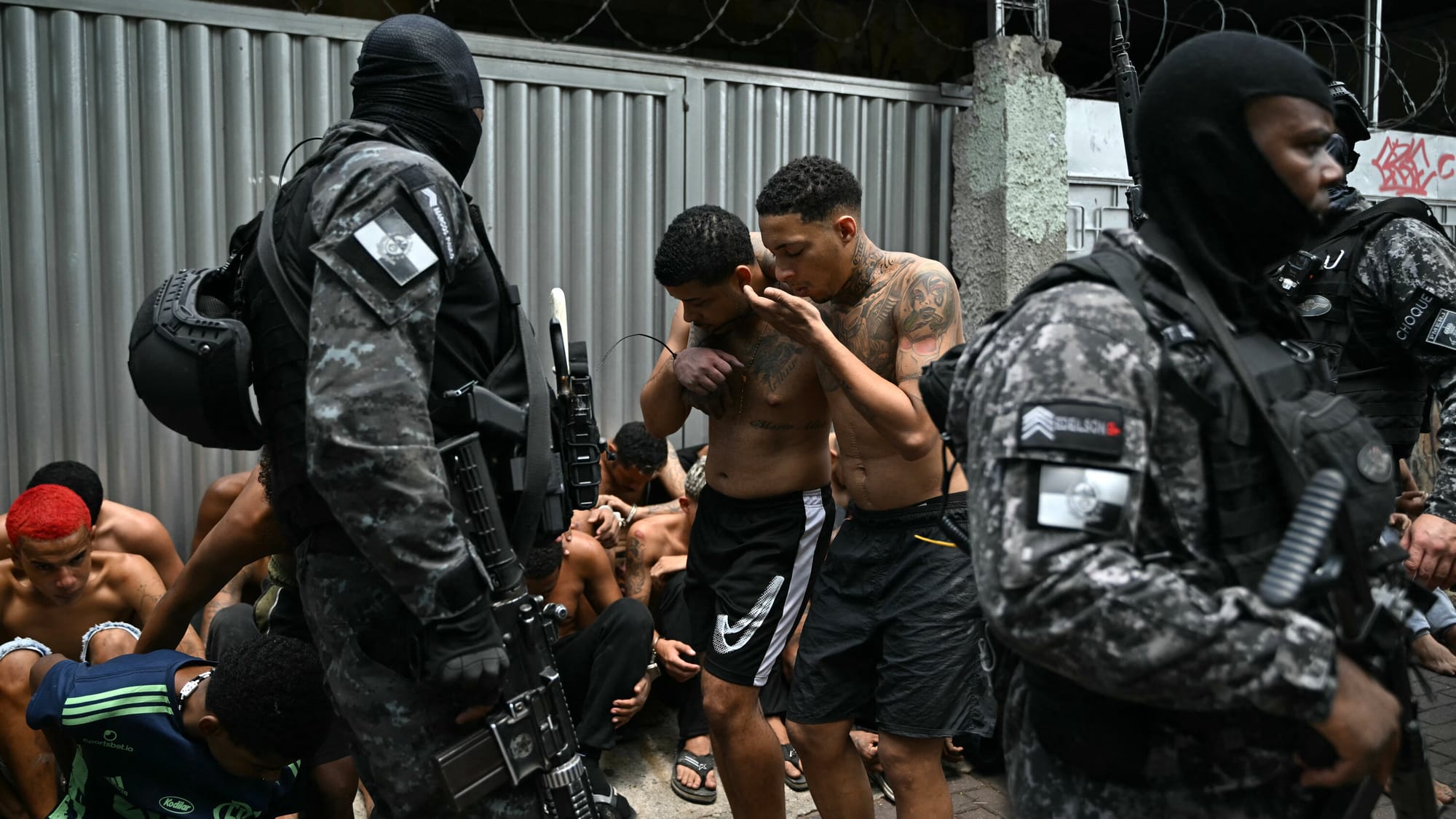
The Lula government’s argument is not that the PCC and CV are benign. It is that an FTO designation carries consequences that go well beyond law enforcement — and that Brasília has seen what those consequences look like in practice.
Brazilian officials cite the Venezuela sequence explicitly: Washington designated the Cartel de los Soles as a terrorist organization, imposed financial sanctions, launched naval strikes, and ultimately sent military forces to capture Maduro in January 2026. The concern in Brasília is not abstract. It is sequential.
How This Hits Home in Brasília
Inside Brazil, the FTO question has become inseparable from October’s presidential election — and the WSJ story just handed fresh ammunition to everyone in the fight.
Eduardo Bolsonaro has actively lobbied Washington for the FTO designation. His brother Flávio Bolsonaro, now a presidential candidate, has accused Lula of protecting organized crime groups from designation. Either way, the terms of the race are being set partly outside Brazil, and officials in Brasília are calling it interference in a sovereign electoral process.
The dilemma for Lula is structural: embrace the designation and appear subservient to Washington, or resist it and be painted as soft on narcoterrorism.
With Brazilian general elections approaching on October 4, 2026, security is one of the top issues for voters — and right-wing candidates are already using the FTO debate as validation for harder security policies.
The WSJ story sharpened that dilemma by making the case that Washington’s concerns about the PCC are not political posturing — they are grounded in documented, transnational criminal activity that reaches American soil.
What the Designation Would Actually Mean
An FTO designation is not just a label. Under U.S. law, it is an operational tool.
The designation criminalizes material support for the organization, enables asset freezes, and opens the door to unilateral military operations abroad. It would make providing material support to the PCC or CV a federal crime, allow for the freezing of assets held in shell companies, and potentially authorize FBI arrests of operatives on foreign soil.
The PCC that emerges from designation pressure may be leaner, harder to trace, and more resilient than before — driving more transactions through cryptocurrency and trade-based laundering, deepening penetration of legitimate sectors, and increasing investment in state capture as insurance against enforcement.
Other countries where drug gangs have been designated as FTOs — including Mexico, Colombia, and Haiti — have yet to see a material decline in violence.
Brazil has also pushed back on legal grounds. Brazil’s Anti-Terrorism Law defines terrorism as acts intended to provoke “social or generalized terror” on the basis of race, color, ethnicity, or religion. Justice Minister Ricardo Lewandowski has argued that criminal gangs “commit offenses already defined in the Penal Code” rather than terrorism as legally defined.
Whether that argument holds in Washington is a different question entirely.
The Bigger Picture
Brasília has been watching the American playbook in Venezuela with close attention and considerable alarm. They see a familiar sequence: designate groups as narco-terrorists, impose financial sanctions, and then act. The WSJ story — published in the most prominent financial newspaper in the United States, two days after it was revealed that two CIA operatives died in Mexico during a covert counter-cartel operation — makes that sequence feel less hypothetical than it did six months ago.
Brazil is Latin America’s largest democracy and its largest economy. It is a country Washington needs for World Cup co-hosting logistics, USMCA-adjacent trade relationships, and any credible hemispheric security framework. It is also a country whose October election is now partly being shaped by decisions being made — and stories being published — in Washington.
The Wall Street Journal’s comparison to the Italian mafia may have been what set off Brazilian media on Monday. But the story underneath the story is simpler: Washington is telling Brasília, in the most visible forum it has, that Brazil’s criminal organizations are America’s problem too. Brasília’s response, and what Lula does before October, will determine how that conversation ends.
Sociedad Media is still monitoring any potential FTO designation by the U.S. State Department and its effects on future U.S. relations with Brazil. For questions, concerns, and general inquiries — contact the outlet: info@sociedadmedia.com


