


WASHINGTON, D.C. — The Trump administration notified Congress on Tuesday of its intention to redirect $52 million in military assistance originally destined for Europe and the Middle East toward four Latin American countries whose governments are closely aligned with Washington — Colombia, Ecuador, Peru, and Panama — in one of the clearest concrete expressions yet of the administration’s declared shift in regional priorities.
A State Department official confirmed the department formally notified Congress of its intent to reprogram funds from the Foreign Military Financing (FMF) program originally allocated to Slovakia, North Macedonia, Tunisia, and Iraq, redirecting them instead to Panama, Peru, Ecuador, and Colombia.
The official said the $52 million will support efforts to combat what the department calls “narcoterrorism” within Washington’s own “zone of influence,” and will help secure the Panama Canal specifically.
The department noted that nearly 80% of FMF funding over the past decade has gone to the Middle East, and framed the reallocation as consistent with the National Security Strategy the Trump administration published in December 2025, which the department said aims to reduce these Latin American partners’ potential defense dependency on U.S. “adversaries.”
The notification came directly on the heels of Secretary of State Marco Rubio’s three-day tour of Colombia, Ecuador, and Peru — the first three of the four countries now receiving the redirected funds, and the trip we covered in detail as it unfolded.
Rubio met with President Abelardo de la Espriella in Barranquilla, President Daniel Noboa in Quito, and President Keiko Fujimori in Lima during that swing.
Panama, the fourth recipient, did not appear on Rubio’s itinerary directly, but its inclusion reflects its role hosting the PANAMAX 2026 multinational military exercise in August and its strategic position over canal security specifically.
A Common Thread: The Shield of the Americas
All four countries receiving the redirected funds have joined the framework Washington promotes as the “Escudo de las Américas” — the Shield of the Americas — a U.S.-led coalition focused on carrying out joint operations against drug trafficking organizations.
Colombia formally joined under De la Espriella’s new government, which took office August 7 after De la Espriella defeated Pacto Histórico candidate Iván Cepeda in a runoff. Peru and Ecuador have similarly aligned themselves with the framework in recent months, and Panama’s own security cooperation with Washington has deepened alongside heightened U.S. attention to canal security this year.
The reallocation is not an isolated gesture. It fits within a series of measures that have reduced U.S. military support to European partners since Trump returned to power in 2025, a period marked by his repeated public criticism of what he considers NATO allies’ insufficient defense spending.
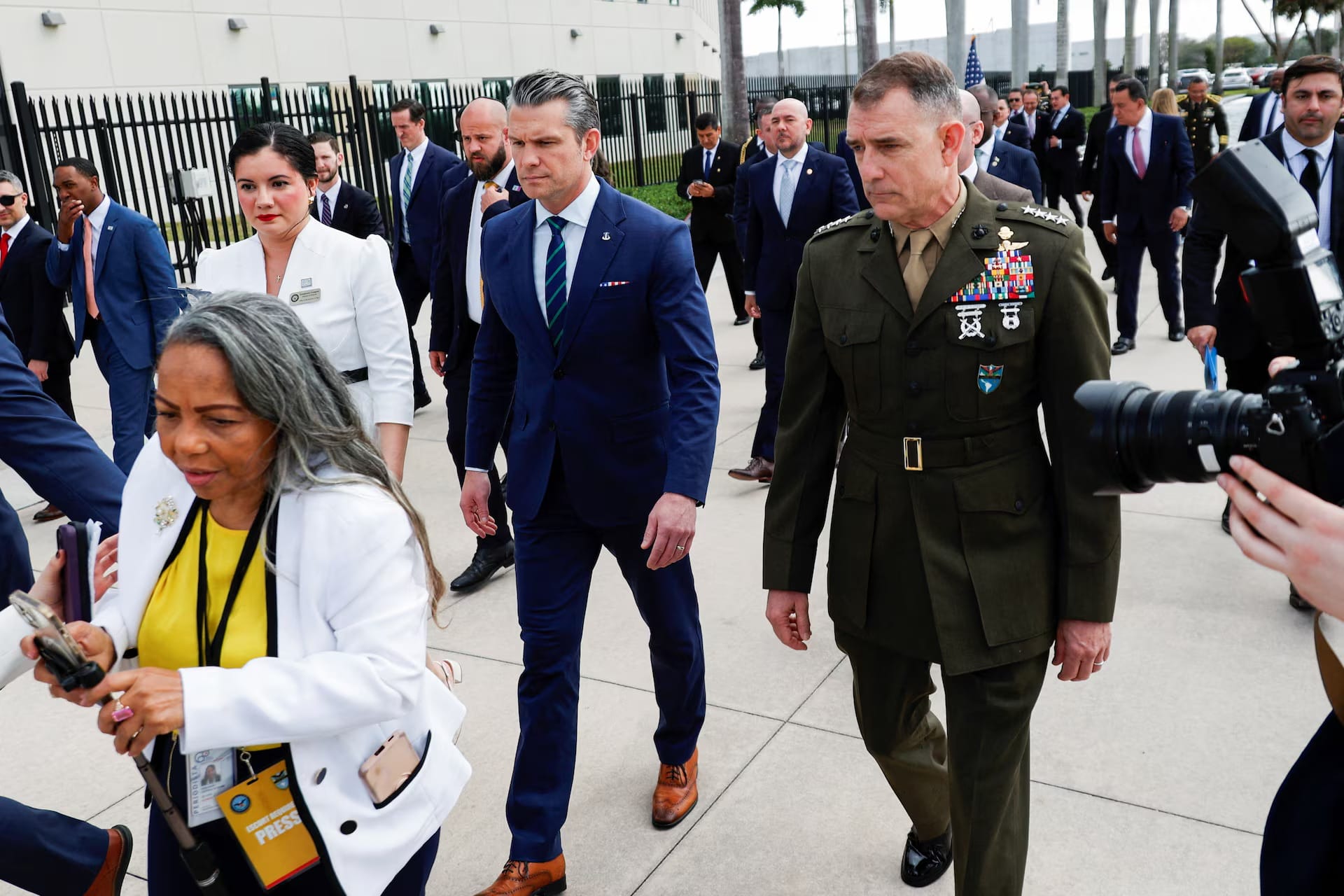
Tuesday’s announcement represents a direct, dollar-for-dollar illustration of the administration’s broader “Western Hemisphere first” reorientation — explicitly taking resources earmarked for European and Middle Eastern partners and reassigning them to a bloc of ideologically aligned Latin American governments instead.
The announcement drew swift attention on social media, including commentary from conservative commentators framing the move as a direct reward for the region’s rightward political shift. Argentine outlet La Nación characterized the decision explicitly as support for “gobiernos de derecha” — right-wing governments — in Latin America, funded by funds pulled from Europe and the Middle East.
The State Department’s own public framing avoided that partisan language, instead emphasizing narco-terrorism, hemispheric security, and reducing strategic dependency on rival powers as the operative justifications.
For Colombia, Ecuador, Peru, and Panama, the reallocated funding adds a concrete financial dimension to what has so far been largely a diplomatic and coalition-building relationship with Washington throughout 2026. It follows Colombia’s earlier $1 billion security assistance pledge, reinforcing a pattern in which the countries moving fastest to align with U.S. counter-narcotics and security frameworks are also the ones receiving the most direct and immediate American resources — even as the underlying $52 million figure remains modest relative to the scale of security challenges facing the region, from Colombia’s ongoing FARC dissident and ELN offensive to Ecuador’s gang violence and Peru’s own organized crime pressures.
With the notification to Congress now formally filed, the redirected funds are expected to move toward implementation in the coming weeks, adding to the broader security assistance architecture the Trump administration has built across Colombia, Ecuador, Peru, and Panama this year.
Whether the reallocation expands further to include additional FMF redirections from other European or Middle Eastern programs, or whether Tuesday’s $52 million marks a one-time adjustment, will likely become clearer as the administration continues implementing the regional strategy it has pursued since Rubio’s tour and the broader "Shield of the Americas" framework took shape earlier this year.