

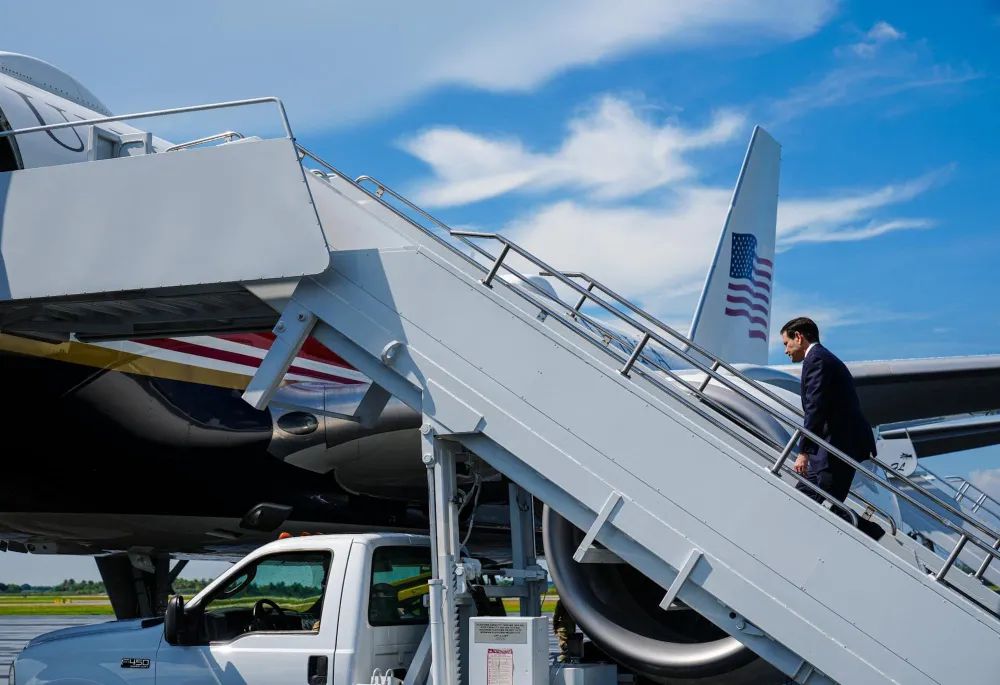
MIAMI — Secretary of State Marco Rubio began a three-day tour of Colombia, Ecuador, and Peru on Tuesday, September 8 — his first visit to Colombia and Peru since taking office, and his fourth trip to Latin America overall — in a swing that puts Washington’s evolving regional strategy on full display, built almost entirely around governments that share Trump’s ideological orientation.
Schedules
Rubio’s trip runs from September 8-10. He begins in Barranquilla, Colombia, meeting President Abelardo de la Espriella, who took office August 7. From there he travels to Quito to meet Ecuadorian President Daniel Noboa, before closing the tour in Lima with Peruvian President Keiko Fujimori, who assumed power July 28.
According to the State Department, the stated purposes of the trip are threefold: reviewing U.S. support for Colombia’s recovery from the devastating August 10 earthquake; deepening cooperation in what the administration calls the fight against “narcoterrorism”; and discussing the benefits of closer commercial ties between the U.S. and all three countries.
State Department spokesperson Tommy Pigott confirmed the trip in a September 4 statement, describing it as an effort “to strengthen key U.S. partnerships in our region.”
All three stops carry specific significance. In Colombia, the visit follows directly from Colombia’s formal accession to the Coalición Contra los Cárteles de las Américas (A3C) — the U.S.-led anti-cartel coalition also known as the Shield of the Americas — and Washington’s earlier pledge of $1 billion in security assistance to De la Espriella’s government.
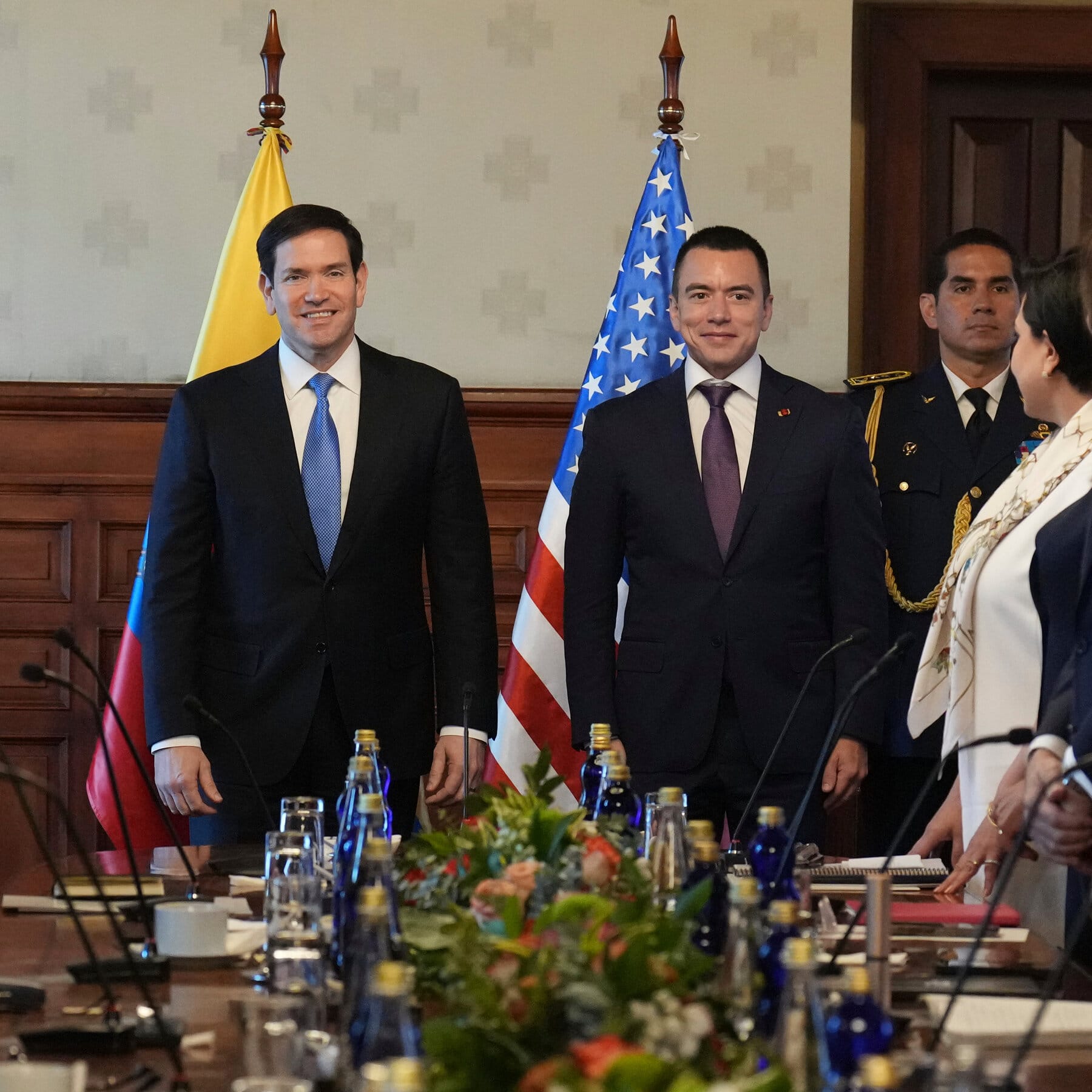
In Ecuador, Rubio and Noboa are expected to build on the counter-narcotics coalition the two governments have already established; this marks Rubio’s second visit to Ecuador, following a September 2025 trip.
In Peru, the visit is Rubio’s first engagement with Fujimori's government since her inauguration, and Peru’s own foreign minister has separately signaled interest in Peru eventually joining the same Shield of the Americas framework Colombia recently joined.
A Trip That Prioritizes Breadth Over Depth
The compressed timeline — three capitals in three days — has drawn some notice on its own terms. As one English-language outlet covering the trip put it, the schedule “signals coverage rather than depth,” with little room for anything beyond structured, set-piece meetings in each capital. What makes the trip notable is less its individual agenda items than the underlying pattern it confirms: all three governments Rubio is visiting took office within the past year, and all three are considered ideologically aligned with the Trump administration.
The “Donroe Doctrine” Framework
Rubio’s tour fits within a broader strategic framework the Trump administration has articulated since at least December 2025, when its published National Security Strategy pledged to “deny non-hemispheric competitors” control of “strategically vital assets” in the Western Hemisphere and to work to push out foreign companies building infrastructure in the region — language widely understood as aimed at China.
The strategy has become popularly known as the “Donroe Doctrine,” a portmanteau of Trump’s name and the 1823 Monroe Doctrine, which originally asserted U.S. opposition to European colonial influence in the Americas.
Trump has used the term himself; following the January 2026 U.S. military operation that captured Nicolás Maduro in Venezuela, he told oil executives at the White House: “If we hadn’t done this, China would have been there and Russia would have been there... but they’re not going to be there now.”
Presidential adviser Stephen Miller offered a blunter articulation of the underlying philosophy on CNN: “We live in a world... governed by power. These are the iron laws of the world since the beginning of time.”
Diplomatic sources consulted separately by the EFE news agency were more skeptical of the doctrine’s practical reach, suggesting no rebranded strategy can reverse two decades of Chinese economic penetration in the region within a matter of months, or unwind the free trade agreements and infrastructure investment China has built over that period.
How the Region’s Rightward Shift Changes the Relationship
Rubio’s tour lands amid what regional analysts have described as a broad rightward realignment across Latin American governments this year, with De la Espriella, Noboa, and Fujimori all representing a wave of ideologically aligned leadership that gives Washington a fundamentally different set of counterparts than it had even two years ago.
That alignment appears to be translating into faster, more concrete security and economic cooperation: Colombia’s rapid accession to the Shield of the Americas coalition just weeks into De la Espriella’s term, Ecuador’s already-established counter-narcotics coalition with Washington, and Peru’s stated interest in following Colombia’s example all point to governments moving quickly to formalize security ties with the U.S. rather than negotiating them cautiously over years, as was more typical of the region’s relationship with Washington under differently aligned predecessor governments.
At the same time, this alignment carries real limits and tradeoffs the tour itself doesn’t resolve. Deeper security cooperation and explicit ideological alignment with Washington do not automatically translate into the kind of large-scale trade and investment relationships China has spent two decades building in the region — a gap Ríos and other skeptics argue the Trump administration has not shown it can close.
The rightward political alignment currently deepening U.S. ties with Bogotá, Quito, and Lima is also inherently tied to electoral cycles rather than permanent structural shifts, meaning the durability of this closer relationship may depend heavily on whether these specific governments, or similarly aligned successors, remain in power.
With Rubio’s stops in Colombia and Peru marking his first visits to those countries as Secretary of State, and his broader Latin America travel now totaling four trips during his tenure, the coming months will likely reveal whether this week’s meetings produce concrete follow-through — expanded coalition membership, finalized trade discussions, or additional security assistance packages — or whether, as with earlier phases of the “Donroe Doctrine,” the practical results lag behind the strategic ambition Washington has articulated for the region.