

SINALOA — The governor of Sinaloa, Rubén Rocha Moya, spent barely a day and a half back in office this weekend before resigning a second time, capping a saga that began with a U.S. federal indictment tying him to the Sinaloa Cartel and ended with his own political party publicly turning against him.
How This Started: A U.S. Indictment
Rocha Moya’s troubles trace back to May 2026, when U.S. federal prosecutors unsealed an indictment in New York naming him and nine other current and former Mexican officials in connection with alleged drug trafficking and illegal weapons possession.
Prosecutors alleged the group played a central role in helping the Sinaloa Cartel move narcotics into the United States, with specific allegations tying Rocha Moya to “Los Chapitos,” the faction of the cartel led by sons of imprisoned kingpin Joaquín “El Chapo” Guzmán. Rocha Moya denied the allegations immediately and forcefully, calling them “false and malicious” and framing them as part of a broader political strategy against Mexico’s ruling Morena party.
On May 1, facing mounting pressure, he requested a temporary leave of absence from Sinaloa’s state congress to appear before Mexico’s Attorney General’s Office (FGR) while the investigation proceeded.
Yeraldine Bonilla Valverde was installed as interim governor in his absence.
The Attempted Comeback
After 112 days on leave, Rocha Moya moved to reclaim his post on Friday, August 21. Early that morning, he notified Sinaloa’s Congress of his intent to resume the governorship and published a lengthy message on X announcing his return as constitutional governor.
The reaction was immediate and severe. Within hours, Morena’s own Senate delegation distanced itself, calling the move “a personal and individual act” rather than a party decision. Ricardo Monreal, Morena’s leader in the Chamber of Deputies, posted a video publicly urging Rocha Moya to reverse course. Twenty-three governors from Morena and allied parties issued a joint statement declaring that “personal or factional projects have no place when weighed against the natio’s wellbeing,” calling on Rocha Moya “to maturity and responsibility” and warning that “excess and factional decisions undermine the principles of honesty and loyalty we swore to defend.”
Sheinbaum’s Silence, Then Her Verdict
President Claudia Sheinbaum notably declined to publicly back Rocha Moya’s return, and by Saturday, facing what José Cárdenas’s chronicle of the episode described as a rapid escalation of internal pressure — from Mexico’s Interior Ministry (SEGOB), Morena’s leadership, Monreal, allied governors, and Sheinbaum herself — alongside external criticism from the opposition, Rocha Moya reversed course in less than 36 hours.
On Saturday, August 22, he posted an image of a new leave request to Sinaloa’s Congress, this time explicitly requesting an indefinite temporary leave “for more than thirty days” rather than the open-ended, undefined leave he’d taken in May.
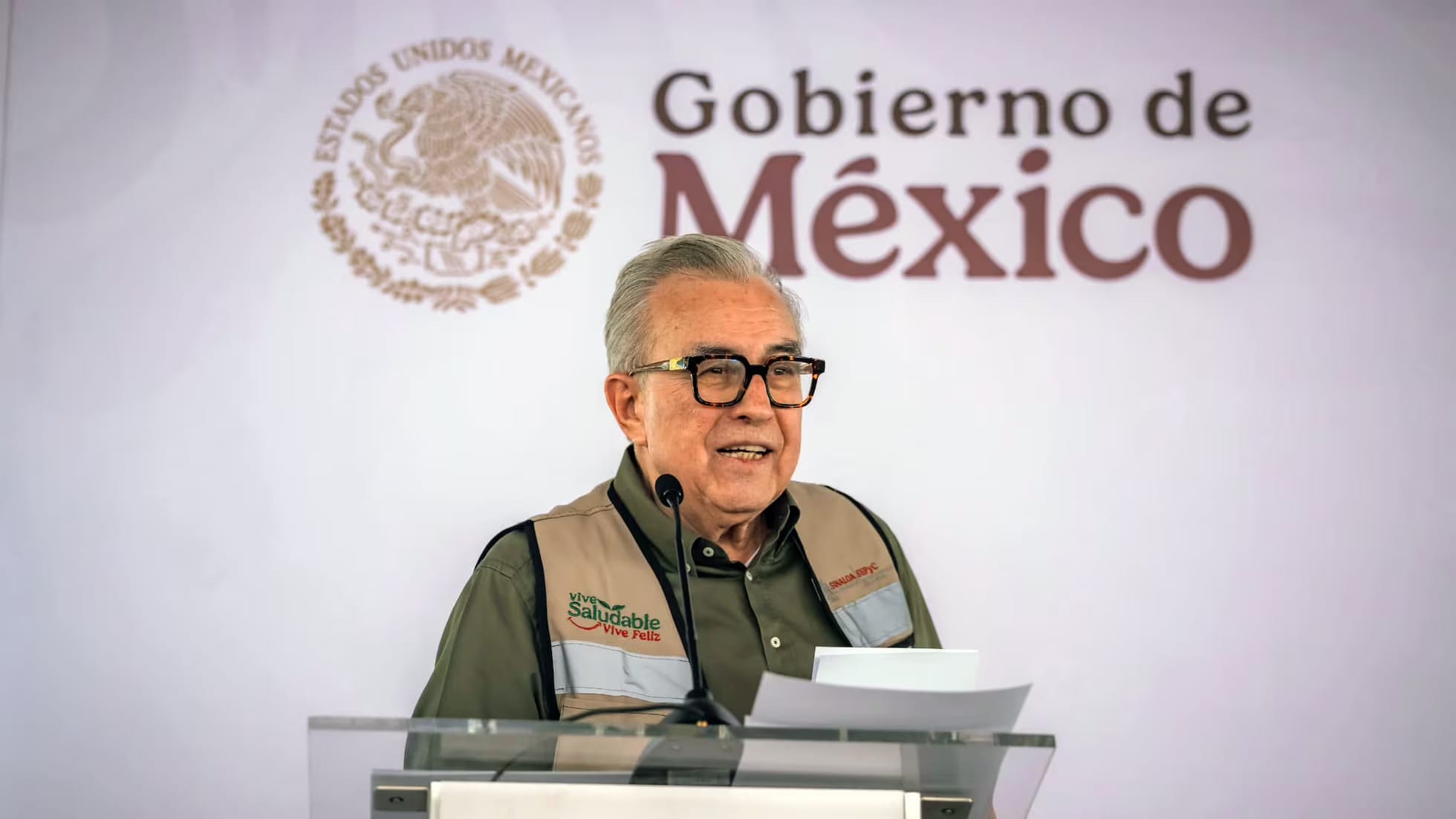
Sinaloa’s Congress approved that second leave request unanimously in an extraordinary session on Sunday, August 23. Congressional President Manuel de Jesús Guerrero confirmed the vote and said the matter would move to the Constitutional Points and Governance Committee to propose an interim governor.
Speaking to reporters in Mexico City the same day, Sheinbaum offered her most direct comment yet on the episode:
“Just as he made the personal decision to return, he also made the personal decision to step aside. I believe it’s what’s best for Sinaloa.”
She added pointedly that she had not spoken with Rocha Moya “since the first time he requested leave,” explicitly denying any personal involvement in his decision to step down, and rejected any suggestion the episode would damage Morena’s broader political movement.
Harsh Words From His Own Circle
Perhaps the most striking detail of the weekend came from Rocha Moya’s own official X account, which — through what appeared to be either a compromised account or an extraordinary internal rebuke — published a message describing him as “a narco-politician backed, covered for, and protected by the Morena government,” calling him “cynical” and “corrupt” for waiting out 112 days on leave in hopes his case would “cool down.”
Whatever the post’s exact origin, the message captured just how thoroughly Rocha Moya’s political standing had collapsed within his own party’s ranks over the course of a single weekend.
With Sinaloa’s Congress now tasked with naming an interim governor to replace him, Rocha Moya’s political future remains genuinely uncertain, as does the underlying U.S. case against him, which continues independently of his state-level political standing.
The episode adds another chapter to a broader pattern of scrutiny facing Sinaloa’s political and security establishment this year, layered atop the state’s ongoing cartel violence and the federal government’s own uneasy relationship with U.S. counter-narcotics pressure. For now, Sinaloa finds itself with neither a sitting constitutional governor nor a clear resolution to the allegations that forced Rocha Moya from office in the first place.