

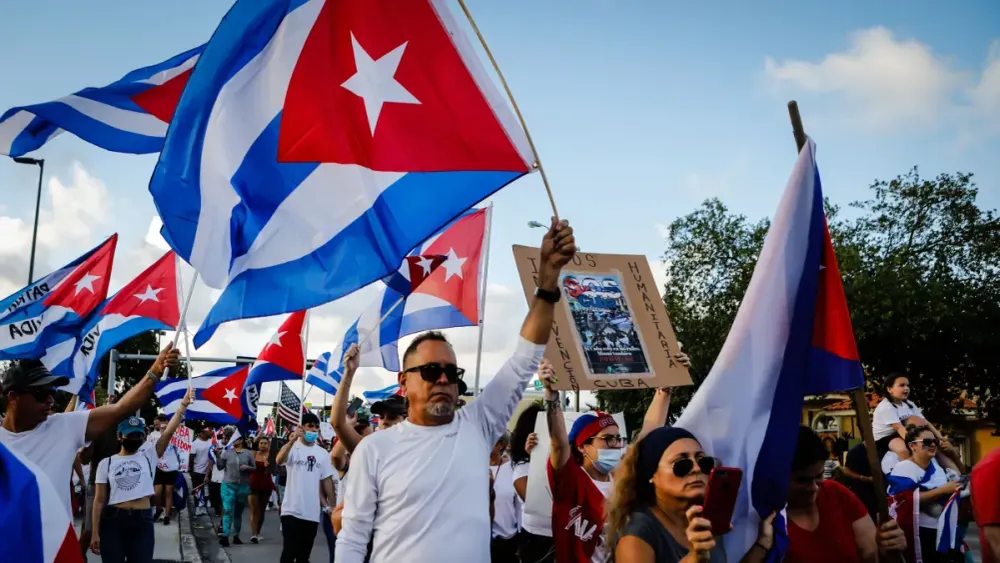
MIAMI — Hispanic voters in Miami-Dade County are still registered overwhelmingly as Republicans, but the immigration crackdown that helped deliver the county to Donald Trump in 2024 is could now be a source of strain for Republicans on the November ballot, from a House seat in Miami to the races for governor and U.S. Senate.
Hispanic voters in Miami-Dade number 807,210, and 348,568 of them, or 43.2%, are registered Republicans, according to the county elections office’s October 1 report. Democrats account for 181,783 (22.5%), and voters with no party or the Independent Party total 271,261 (33.6%).
The percentages are calculated from the county’s counts. Hispanics make up 62% of the county’s registered voters and 76% of its registered Republicans, Axios reported.
Countywide, Miami-Dade flipped to Republican in party registration in May 2025, and President Trump won the county by 11 points in 2024, the first Republican presidential win there since 1988, Newsweek reported.
An NBC exit poll found Trump won 58% of Latino voters statewide, a shift built largely on Cuban and Venezuelan Americans, according to the same report.
The immigration crackdown has reached Miami’s economy and its immigrant communities. The Trump administration began revoking Temporary Protected Status last year for as many as 1.3 million people nationwide, and legal Venezuelan workers in South Florida lost work authorization, Axios reported.
In Doral, Pipo Burgers’ Katia Rios told CBS Miami that “our sales have dropped 70%.” Doral’s Republican mayor, Christi Fraga, said, “I don’t agree with the way things are handled.” Axios also reported that Cuban Americans are being deported in large numbers, including to Mexico and African countries, a notable development in a county where Cuban exiles have long been a Republican anchor.
Polling suggests Hispanic voters separate the goal from the method. A Republican pollster’s August survey shared with Axios found 63% of Hispanic voters supported “deporting illegal immigrants,” while 29% favored how deportations are carried out and 58% opposed it.
The report did not say whether the sample was statewide or limited to Miami-Dade. An FIU Latino Public Opinion Forum survey found 53% of Cubans support Trump and more than 70% back his deportation campaign, and it described Florida as the “least anti-Trump” state among Latinos.
The House Test in Miami
Rep. María Elvira Salazar, a Republican, released an ad on September 17 telling President Trump that “some of your immigration enforcement efforts have gone too far.” It cites ICE data that half of detainees had no criminal convictions or pending charges. Trump won her 74% Hispanic district with 57% of the vote, and a poll by her Democratic challenger, former CBS Miami anchor Eliott Rodriguez, found them tied at 45%. That poll is a campaign internal, and no sample size or dates were published.
Cook moved the race from Likely Republican to Lean Republican on September 25, Newsweek reported.
Trump endorsed Salazar, and said he disagreed with her ad but called her a “nice person.” FIU’s Eduardo Gamarra says she is caught between backing Trump and defending immigrants, two goals he sees as opposed.
Rodriguez accuses her of opportunism, citing her vote for the budget law that funded ICE and her defense of the now-closed “Alligator Alcatraz” detention center.
Salazar has sponsored the bipartisan Dignity Act and opposed ending TPS for Haitians and Venezuelans. Fellow Republican Rep. Mario Díaz-Balart said the administration has heard “this message” for months, Axios reported.
Republicans worry that low turnout among disaffected conservatives could hurt candidates down the ballot, though they do not expect many conservative Hispanics to switch to Democrats, Axios reported.
The Governor’s Race
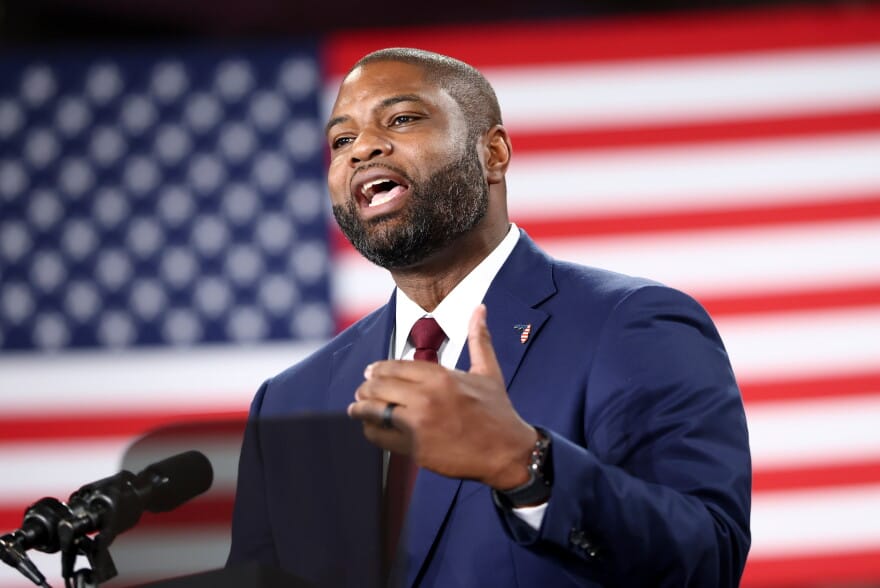
Republican Byron Donalds and Democrat David Jolly are closer than many Republicans expected. A Mason-Dixon poll for NBC6 and Telemundo 51 (Sept. 28–Oct. 1, 625 likely voters, ±4 points) found Donalds ahead 48% to 41%, and 48% to 43% among Hispanic voters.
A mid-September St. Pete Polls survey had Jolly ahead among Hispanics, 48% to 39%, and the two polls used different methods and samples. Neither poll’s published results broke out Miami-Dade.
Donalds has embraced Florida’s enforcement push. He called Alligator Alcatraz “definitely mission accomplished” in June and said he would seek federal reimbursement, and in August he pledged to remove local officials who adopt sanctuary policies.
Miami Mayor Eileen Higgins responded that she intends to revisit the city’s 287(g) agreement with ICE. Jolly has said “Republican leaders are fighting communities, not crime,” and that Democrats must speak to Latino voters’ broader concerns.
The Senate Race
Republican Sen. Ashley Moody leads Democrat Angie Nixon 50% to 40% overall and 47% to 40% among Hispanic voters in the Mason-Dixon poll. A St. Pete Polls survey put the race at 47% to 45%.
Moody’s campaign centers on immigration, crime and the economy, and she has introduced legislation to expand expedited removal for certain immigrants convicted of crimes.
Nixon, a state representative who won the Democratic primary on Aug. 18, is a self-proclaimed “Democratic Socialist.” In the same poll, 57% of Hispanic voters said a “democratic socialist” label would make them less likely to back a candidate, a question that did not name Nixon.
How Much Does Immigration Matter?
Less than prices, for now. In the Mason-Dixon poll, 30% of Florida voters named inflation and cost of living as the top influence on their vote, while 16% named immigration enforcement.
Voters disapproved of Trump’s immigration approach 51% to 46%, but supported local police cooperation with ICE 53% to 45%. FIU’s Eduardo Gamarra argued that most of the Hispanic shift in last year’s Miami mayoral race was about tariffs and prices, not immigration.
Hispanic voters in the poll disapproved of Trump 49% to 45%, while Florida voters overall were split 48% to 48%.
The pattern suggests immigration is hurting Republicans at the margins in Miami, mostly through the economy and the methods of enforcement, without yet moving large numbers of registered Republicans.
The test will be turnout on November 3.