
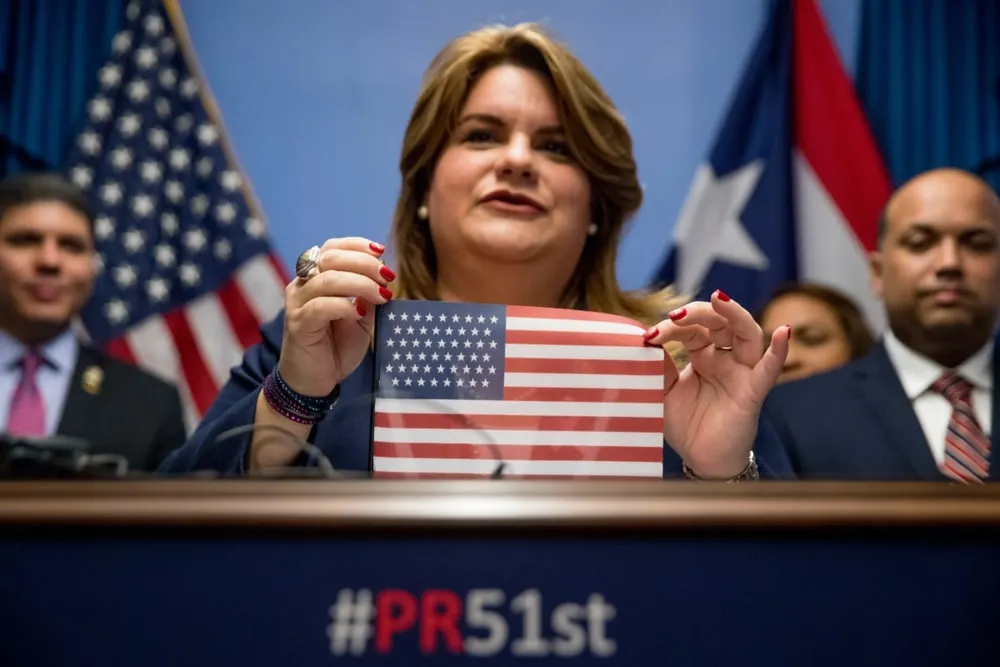
SAN JAUN, P.R. — Puerto Rico closed out its summer with water rationing affecting a third of the island, corruption allegations that reached the U.S. Senate, and a homecoming concert by its most famous musical export that turned into a rallying cry against the current government — a convergence of crises that has placed Governor Jenniffer González-Colón’s administration under the most sustained public pressure of her term.
The Infrastructure Breakdown
Puerto Rico’s water crisis has deepened throughout 2026, with a prolonged drought affecting an estimated 33.31% of the island’s territory.
The severity of the shortage led González-Colón to sign two executive orders on July 31 declaring a state of emergency over water usage.
Rationing has disrupted daily life broadly enough to affect the start of the school year, layering onto an already familiar pattern of chronic electrical blackouts that has defined the island’s infrastructure struggles for years.
Protests in San Juan
The same weekend Puerto Rico’s water crisis reached its most visible point, demonstrators gathered in San Juan specifically to protest González-Colón’s handling of the infrastructure failures.
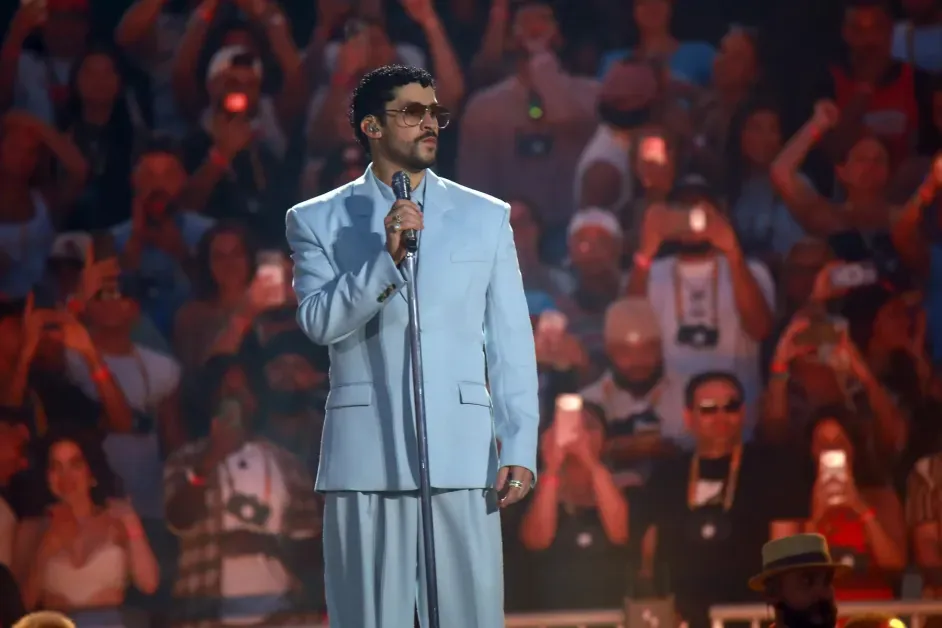
The protests coincided directly with the closing weekend of Bad Bunny’s world tour, held at San Juan’s Hiram Bithorn Stadium — a scheduling overlap that turned an already-charged moment into a nationally watched flashpoint.
During his August 22-23 closing concerts, Bad Bunny — Benito Antonio Martínez Ocasio — addressed the crisis directly from the stage in front of more than 60,000 fans.
“This chaos, this disaster, is created on purpose to try to play with our emotions, to try to make us give up, leave, and continue selling the island piece by piece, and make a Puerto Rico without Puerto Ricans,” he told the crowd.
The artist encouraged concertgoers to join demonstrations against it and calling for González-Colón’s resignation. He also acknowledged the limits of his own platform: “I can’t bring water to those who have no water, nor can I bring light to those who see their power cut every day, but I can bring them joy and pride in being from here."
It’s important to be precise about the nature of this claim. Bad Bunny’s assertion that the government is deliberately engineering the infrastructure crisis to depopulate the island and sell it off to outside buyers is a serious allegation that, as of this writing, is not supported by documented evidence tying the water and power failures to any coordinated depopulation strategy.
But it does reflect a widely held sentiment among critics of large-scale development projects like Esencia and broader concerns about land and housing being purchased by non-resident investors. However, any coordinated depopulation strategy carried out by the government in Puerto Rico remains an unproven, conspiratorial characterization of the infrastructure crisis’s cause rather than an established fact.
A Government Already Under Strain
In May 2026, Sebastián Negrón Reichard resigned as Secretary of Puerto Rico’s Department of Economic Development and Commerce (DDEC), accusing the González-Colón administration — and specifically her powerful Secretary of the Governorship, Francisco Domenech — of improper interference in contract processes and government overreach.
More than ten other DDEC officials resigned alongside him. Domenech denied the allegations, calling them “riddled with lies, half-truths, self-serving documents, subjective characterizations, and distortions,” and filed his own counter-complaints against Negrón with Puerto Rico’s Justice Department and Government Ethics Office.
Domenech and Deputy Chief of Staff Itza García ultimately resigned in late July amid mounting pressure, including from within González-Colón’s own New Progressive Party; Senate President Thomas Rivera Schatz referred García’s case to Puerto Rico’s independent special prosecutor panel.
The controversy reached Washington in June, when Utah Republican Senator Mike Lee questioned González-Colón directly during a U.S. Senate Energy and Natural Resources Committee hearing about whether federal funds sent to Puerto Rico were being properly managed. Opposition figures were unsparing in their assessment of the resignations: Juan Dalmau, secretary general of the pro-independence Puerto Rican Independence Party, called the departures “a shameless whitewash” that “doesn’t resolve the crisis or clean up the current administration.”
The Re-Election Question
Despite the controversies, González-Colón has signaled clear intent to seek re-election in 2028. In a July interview, she said her political ambitions have “always overcome adversities” and that she doesn’t fear a primary challenge, adding that the controversies surrounding her administration “will not weaken my will nor my determination.”
González-Colón remains president of the New Progressive Party (PNP), Puerto Rico’s dominant pro-statehood political organization, and has continued signing legislation this year addressing campaign finance and anti-corruption rules, alongside other governance measures.
Statehood vs. Independence
The infrastructure and corruption controversies unfold against the backdrop of Puerto Rico’s long-running status debate, which voters weighed in on most recently in the November 2024 non-binding referendum.
Statehood won that vote with 58.61% of ballots cast, followed by sovereignty in free association with the United States at 29.57%, and independence at 11.82% — continuing a pattern in which statehood has finished first in each of the last four referendums, in 2012, 2017, 2020, and 2024.
Any actual change to Puerto Rico’s political status would require action by the U.S. Congress regardless of the referendum’s outcome, since these votes remain non-binding under current law.
The same November 2024 election that included the referendum also saw a notably strong showing for the Puerto Rico Independence Party’s gubernatorial candidate, Juan Dalmau, who won 31% of the vote against González-Colón’s 40% — the strongest result to date for a candidate outside Puerto Rico’s traditional two-party establishment, even as González-Colón ultimately won the governorship.
How the Island’s Infrastructure Reached This Point
Puerto Rico’s infrastructure troubles did not begin this year. The island’s power grid was devastated by Hurricane Maria in 2017 and has struggled with reliability ever since, a problem that predates González-Colón’s administration and spans both major political parties’ periods in office.
Puerto Rico privatized management of its electrical grid in 2021, transferring transmission and distribution operations to LUMA Energy, a Canada-based private consortium — a decision that has remained politically contentious, with critics on multiple sides of the island’s status debate arguing the arrangement has not delivered the reliability improvements it promised.
The water system faces a parallel set of pressures: aging infrastructure, drought conditions this year affecting roughly a third of the island, and a public water authority managing a system serving a population whose infrastructure investment has lagged for decades.
Neither crisis is easily attributable to any single administration or decision, reflecting instead a longer accumulation of underinvestment, natural disaster damage, and disputed privatization choices that have shaped Puerto Rico’s utilities for the better part of a decade.
A Summer That Crystallized Public Frustration
Taken together, the water rationing, the DDEC resignations and corruption allegations, and Bad Bunny’s high-profile denunciation from one of the island’s largest stages have combined into a moment of unusually concentrated public attention on Puerto Rico’s governance, even as the island’s underlying political questions — over statehood, over independence, over how much control residents have over decisions shaping their own infrastructure and economy — remain as unresolved as they have been for decades.
Whether this summer’s convergence of crises translates into lasting political consequences for González-Colón’s administration, or fades as previous controversies have, will likely become clearer as Puerto Rico moves toward its next electoral cycle.
🚨🇵🇷 | ALERTA/CARIBBEAN: Governor of Puerto Rico Jenniffer González-Colón hosted a birthday fundraiser at the Fairmont Hotel Saturday night in preparation of campaign activities.
— Sociedad Media (@sociedadmedia) August 23, 2026
Outside, protesters gathered over the island’s water rationing, continued blackouts, and a… pic.twitter.com/4rDGhDb11p