

MANAGUA — Nicaragua’s National Assembly formally approved, in first reading, a constitutional reform excluding opposition parties from future elections — and in the days since, the reaction across Latin America has split sharply, exposing which governments are willing to directly confront Daniel Ortega’s government and which are choosing calculated silence.
The reform, approved unanimously by a show of hands on Tuesday, September 1, bars anyone the Ortega-Murillo government labels a “traidor a la patria” — a traitor to the homeland, the regime’s standard designation for opposition figures — from participating in elections, and extends the presidential term from six to seven years.
Assembly President Gustavo Porras presented the vote as the culmination of a 36-day national consultation process he said involved more than 300,000 people, and said the legislature was simply fulfilling an “order” given by Ortega himself. The session took place in León’s Plaza Juan José Quezada, under the banner “Orgullo de mi País” (“Pride of My Country”), marking the start of Nicaragua’s so-called Month of the Homeland.
Notably, this marks the second time in two years Nicaragua’s constitution has been rewritten to entrench Ortega and Rosario Murillo’s rule: a 2024 reform had already extended the presidential term from five to six years and elevated Murillo, then vice president, to co-president.
Because the reform requires a second legislative vote to take effect, it is not yet in force. That second, effectively guaranteed vote is scheduled for January 18, 2027 — a date Murillo herself specified as when the changes will be “sealed.”
The reform also formally moves Nicaragua’s general elections, originally scheduled for November 2026, out to November 2028.
Rubio’s Response
Secretary of State Marco Rubio reacted immediately on X, writing that the Ortega-Murillo assembly had “gutted what remained of Nicaragua’s democracy” in the country’s second constitutional rewrite in two years.
Rubio announced Washington would implement new measures timed to coincide with the next Organization of American States ministerial meeting, aimed at pushing the hemisphere to stop conducting business as usual with the Ortega government.
In a separate statement, Rubio was blunter still:
“Dictatorships that deny the inalienable rights of their citizens should not enjoy the same economic or political benefits as governments committed to defending hemispheric peace and security. The United States urges its international partners to immediately cease their customary dealings with this brutal dictatorship.”
A Divided Latin America
The regional reaction has broken down along genuinely different lines. Peru’s government, led by President Keiko Fujimori, issued one of the sharpest formal rebukes, sending a letter through its Foreign Ministry warning that the reform “seeks to eliminate the conditions for free elections and thereby weaken democratic institutions.” Costa Rica, Guatemala, and Paraguay also expressed formal concern over the restriction on Nicaraguans’ right to freely choose their leaders.
Guatemala specifically flagged the reform’s effect of pushing the country’s general elections from 2026 to 2027 and challenged the legitimacy of that delay. Bolivia had separately voiced its own “profound concern” in the weeks leading up to the vote.
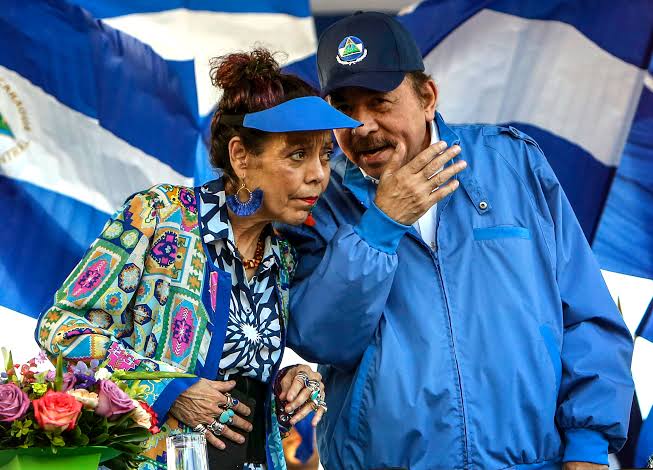
Nicaragua’s government responded to four of those countries — Guatemala, Peru, Paraguay, and Costa Rica — with formal replies. To Guatemala, Peru, and Paraguay, Nicaragua’s Foreign Ministry, through co-chancellor Valdrack Jaentschke, used identical language: “The sovereignty of a people is not up for discussion, much less can it be questioned by other countries with serious problems of legitimacy and unity.”
Costa Rica received a sharper rebuke still: “We do not accept interference by others in our own affairs.” Nicaraguan opposition figure Félix Maradiaga’s organization, Ruta del Cambio, has read that pattern as a deliberate attempt to isolate the rest of Latin America from any direct dealing with Washington on the issue, positioning Ortega’s government instead as a self-styled “symbol of stability” in its own dealings with the Trump administration.
Notable Silence From Brazil & Mexico
Not every regional government has weighed in critically. Former Nicaraguan ambassador to the OAS, Arturo McFields Yescas, pointedly criticized the muted response from Brazil and Mexico specifically, writing on X:
“Nicaragua’s dictatorship is carrying out a constitutional reform that eliminates real elections, with the blessing of Lula in Brazil and Claudia Sheinbaum in Mexico. Deep down, they also want to be like Ortega and Murillo.”
That framing echoes a pattern we’ve covered previously, including Mexico’s own abstention from an August OAS vote calling for urgent ministerial-level discussion of Nicaragua’s crisis, and Brazil’s lone “NO” vote on that same measure.
Reaction From Washington’s Cuban-American Delegation
Florida Republican Congressman Carlos Giménez added his own condemnation, describing the reform as a new step toward concentrating power entirely in Ortega and Murillo’s hands: “The Ortega-Murillo regime’s assembly has just formalized the elimination of any remaining vestige of democracy in the country,” he wrote on X, also directly criticizing the lawmakers who backed the measure.
Exiled opposition figure Juan Sebastián Chamorro and former OAS ambassador McFields Yescas both continued amplifying international criticism of the vote in the days following its passage.
Perhaps the most telling detail to emerge in the days since the vote is what Ortega’s government has chosen not to do: respond publicly to Rubio’s criticism.
According to analysis reported by El Confidencial.digital (Nicaraguan non-state outlet), Nicaragua has maintained diplomatic attacks against Costa Rica, Peru, Paraguay, and Guatemala while notably avoiding direct engagement with U.S. statements — a silence analysts interpret as an attempt to preserve some margin for negotiation with the Trump administration ahead of Nicaragua’s now-rescheduled 2028 elections.
International Bodies Weigh In
Beyond individual governments, the Inter-American Commission on Human Rights (IADHR) has separately warned that the reform risks restricting political competition and the conditions necessary for genuine democratic alternation in power — a formal, institutional echo of the objections raised by Peru, Costa Rica, Guatemala, and Paraguay.
With the reform’s second and effectively certain ratifying vote not scheduled until January 18, 2027, Nicaragua’s political timeline now stretches well past the point most neighboring governments had hoped to see genuine elections restored.
In the meantime, Washington’s promised new measures — expected around the next OAS ministerial meeting — will test whether Rubio’s call to isolate Ortega’s government translates into concrete hemispheric action, or joins the same pattern of divided, uneven regional response that has defined Latin America’s reaction to Nicaragua’s democratic backsliding so far.